
🚦📸 Wasilla “Flock Camera” Claim Meets a Traffic-Signal Reality Check
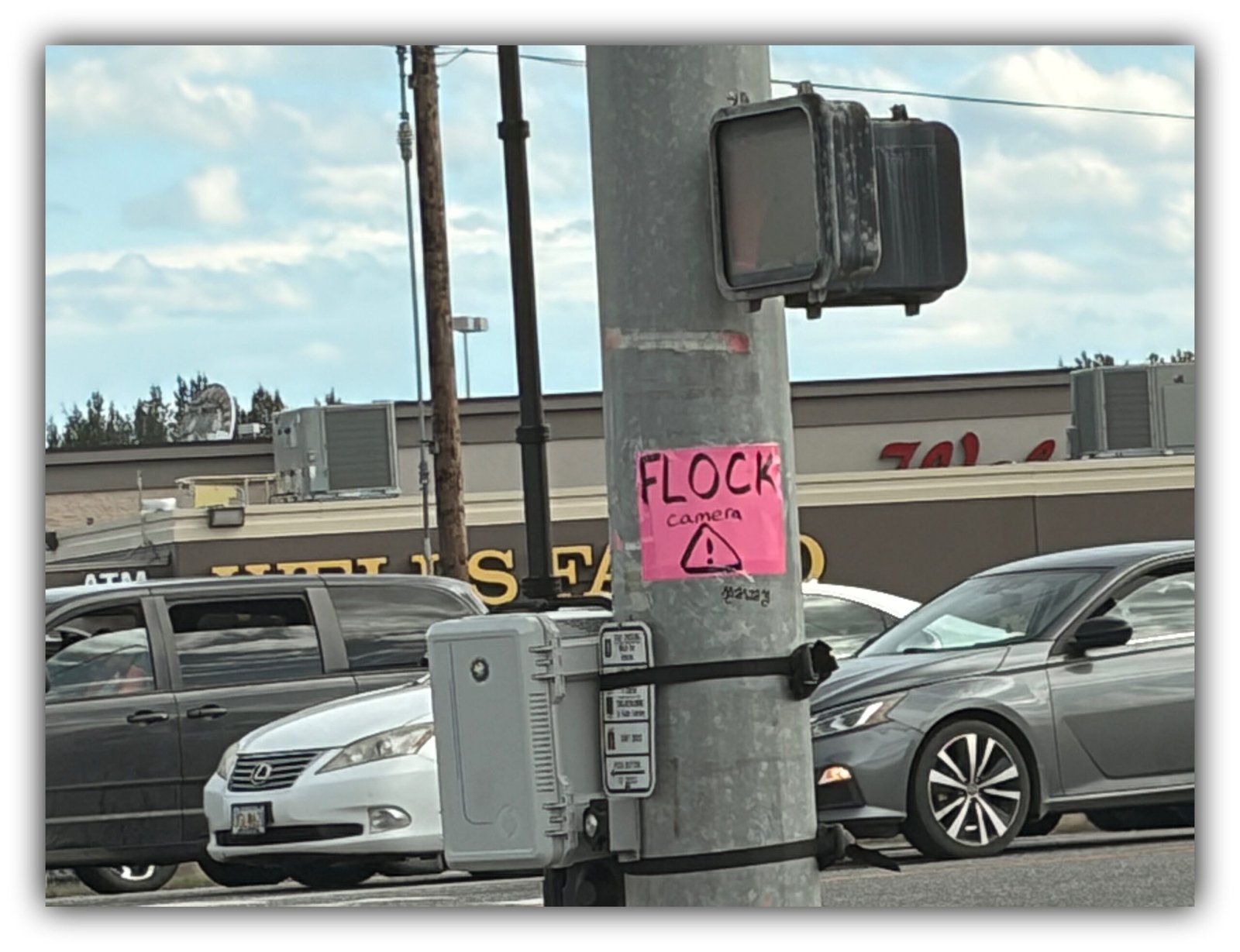
A handwritten sign labels a device at the Parks Highway–Palmer-Wasilla Highway intersection as a “Flock camera.” Alaska DOT&PF has been asked to identify the equipment; its location and the agency’s general guidance suggest traffic-detection infrastructure, not a Flock license-plate reader. | 📸 Alaska Headline Living
Alaska DOT&PF says cameras mounted at traffic signals are used to detect approaching vehicles and help operate intersection signals; the agency has been asked to verify the specific device at Parks Highway and Palmer-Wasilla Highway.
By Gina Hill | Alaska Headline Living | Monday, August 17, 2026
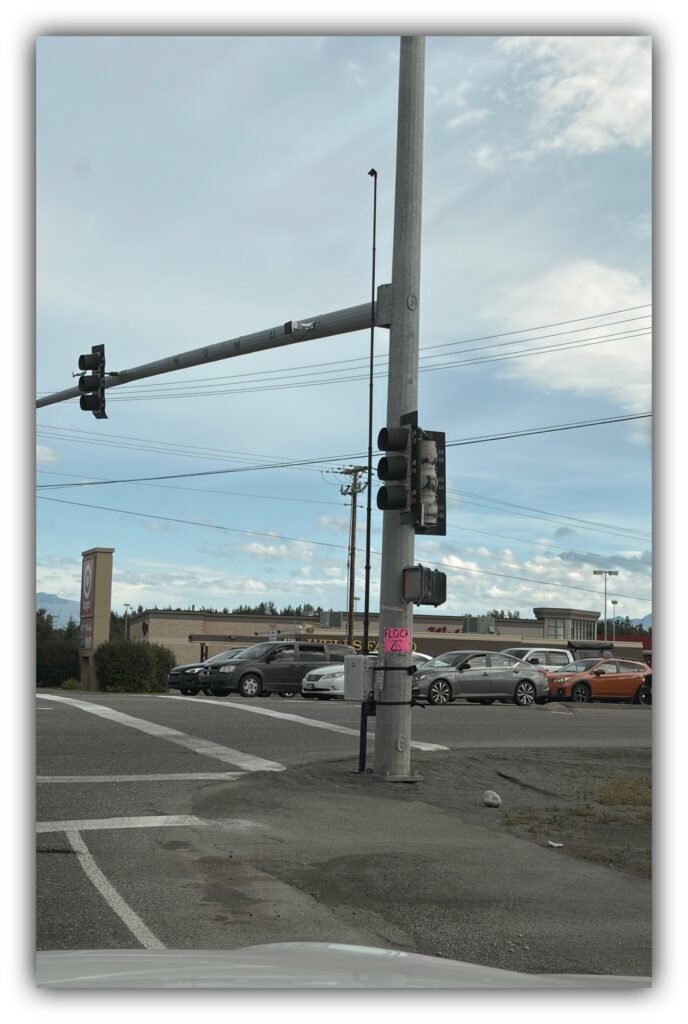
A handwritten sign at the Parks Highway and Palmer-Wasilla Highway intersection in Wasilla identifies a small pole mounted device as a “FLOCK camera.” But the device’s placement on traffic signal infrastructure and Alaska Department of Transportation and Public Facilities’ own published explanation of similar equipment indicates it is more likely traffic detection equipment used to operate the intersection signal.
The device is mounted alongside a traffic signal pole and controller cabinet, not as a stand alone roadside license plate reader installation. DOT&PF has been contacted for confirmation of the exact make, model, operating program, and any applicable data retention policy. No agency response had been received at publication time.
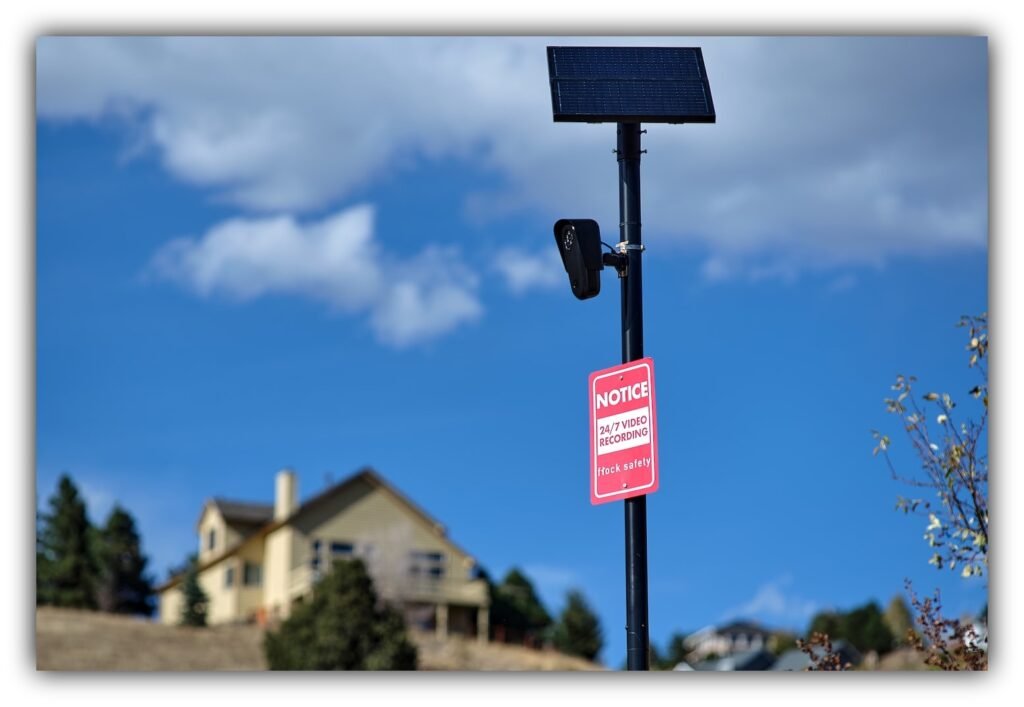
Available public reporting does not show an established Flock Safety camera deployment in Alaska. A March 2026 report described Alaska as the only state without Flock customers. Alaska Headline Living found no official announcement from Flock, Alaska law enforcement agencies, or local governments confirming a Flock installation in Wasilla.
What DOT&PF Says Signal Cameras Do
On a DOT&PF page titled “Traffic Detection,” the department addresses questions it routinely receives about “cameras sitting atop traffic signals” including what they do, what they record, and what information is saved.
DOT&PF’s central explanation is concise: these cameras “simply detect the arrival of vehicles at an intersection and relay that to the signal control system for that intersection.”
In other words, the system is intended to detect whether vehicles are waiting or approaching so the traffic signal can allocate green time to an active movement. That is materially different from the stated purpose of automated license plate reader systems, which are designed to capture and search vehicle identifying information.
DOT&PF’s Rationale for Traffic Detection
DOT&PF says it previously relied on in-ground detection loops. Those systems were susceptible to failure in extreme cold, expensive to repair, and less dependable when snow concealed lane lines. The in-pavement systems could only detect vehicles fully positioned within designated lanes.
Video based detection avoids placing equipment in the road surface, but the agency acknowledges limitations. Sun glare on icy or snow covered roadways can cause a “false call,” meaning a traffic signal may provide a green phase to an approach where no vehicle is waiting. Heavy fog can also make vehicle detection more difficult.
DOT’s Move Toward Radar
DOT&PF says it has converted several intersections to radar detection in recent summers. The agency describes the newer devices as “little white boxes on the signal mast arms,” installed to reduce false calls and improve operation during ice fog conditions.
Radar detection works by establishing a detection area and a baseline of fixed objects at the intersection. Radar beams identify an interruption in the expected distance to those objects, indicating that a vehicle has entered the detection zone. DOT&PF says it plans to shift more intersections to radar as signal upgrade projects occur.
What Remains Unanswered
DOT&PF’s general traffic detection page explains the typical role of signal mounted detection equipment, but it does not independently identify the exact device photographed at the Parks Highway/Palmer-Wasilla Highway intersection.
A request to DOT&PF seeks confirmation of:
- The device’s manufacturer, model, and purpose.
- Whether it is video detection, radar detection, a 511 roadway camera, or another DOT&PF system.
- Whether it records video, captures license plates, or stores/transmits vehicle related data.
- The agency policy governing any data collection and retention.
Until DOT&PF responds, the photos and the agency’s published guidance indicate the device appears consistent with traffic detection infrastructure, not a Flock camera, though the agency has not yet confirmed its specific identity.
What do you feel about this post?

Like

Love

Happy

Haha

Sad