








Supreme Court Blocks New Mail-In Voting Rules
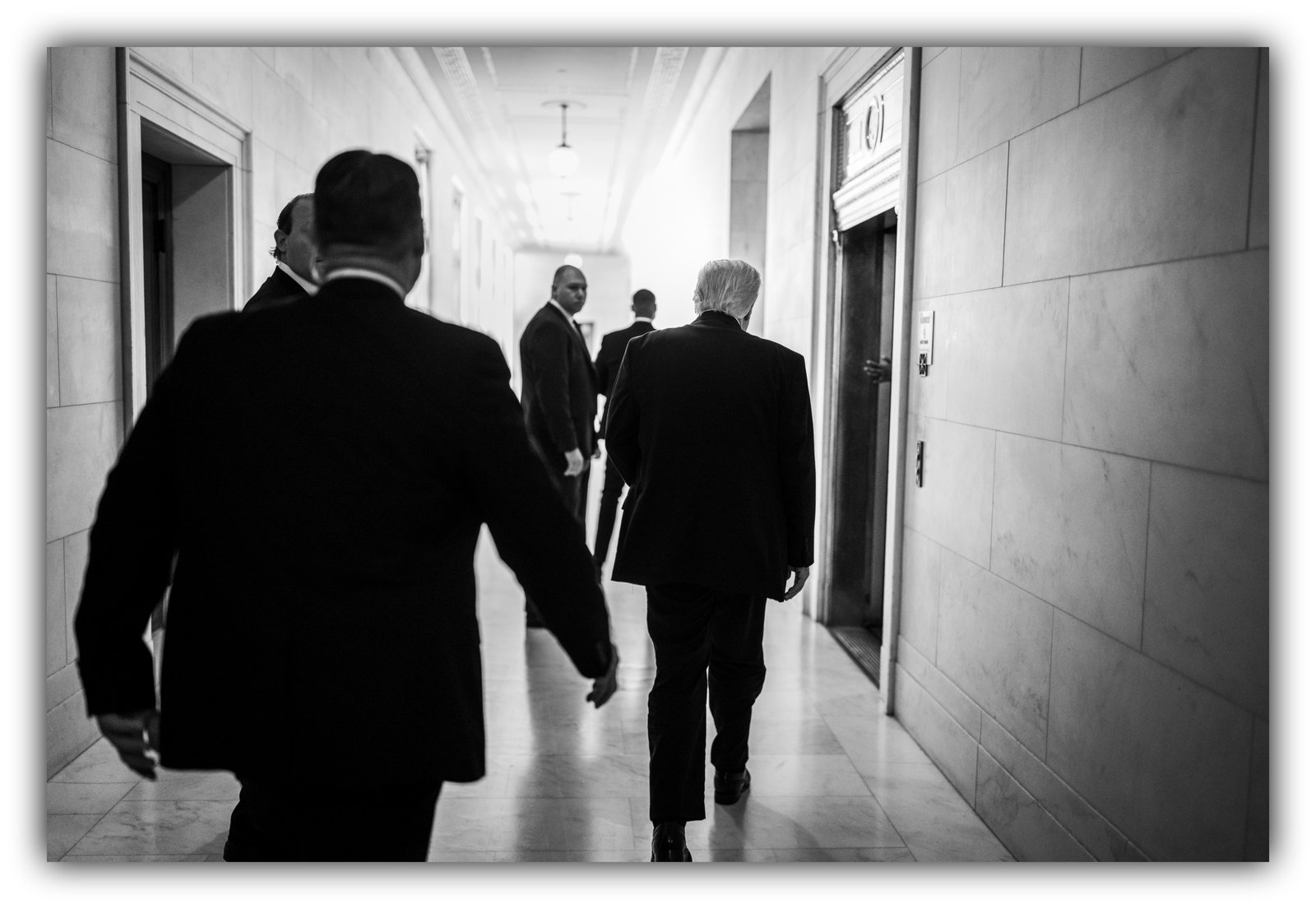
President Donald J. Trump leaves the U.S. Supreme Court after attending oral arguments in a birthright citizenship case on April 1, 2026. The White House photo takes on a different context as the Court blocks his administration’s new mail-in voting rules for the 2026 election.
Trump Says Mail-In Voting Is Cheating. Yet, He Uses It.
The U.S. Supreme Court blocks the Trump administration from putting new federal requirements on mail-in ballots into effect for the 2026 elections.
On Monday, Sept. 14, the Court denied the administration’s request to pause a lower-court ruling that had stopped new U.S. Postal Service rules for election mail. The rules would have required specific envelope designs, voter-specific barcodes and additional information to be submitted to USPS.
For voters, the immediate effect is fairly simple. Those new requirements are on hold, and states can continue using their existing procedures for voting by mail in the 2026 elections while the legal fight continues. The Supreme Court’s action was on the administration’s request for an emergency stay, not a final ruling on the underlying case.
Trump was not exactly thrilled.
In a Truth Social post Tuesday morning, he called the decision “a horrible, highly political” ruling and said it would make cheating on mail-in ballots “a much easier thing to do.” He also praised Justices Samuel Alito and Clarence Thomas, who dissented from the Court’s decision.
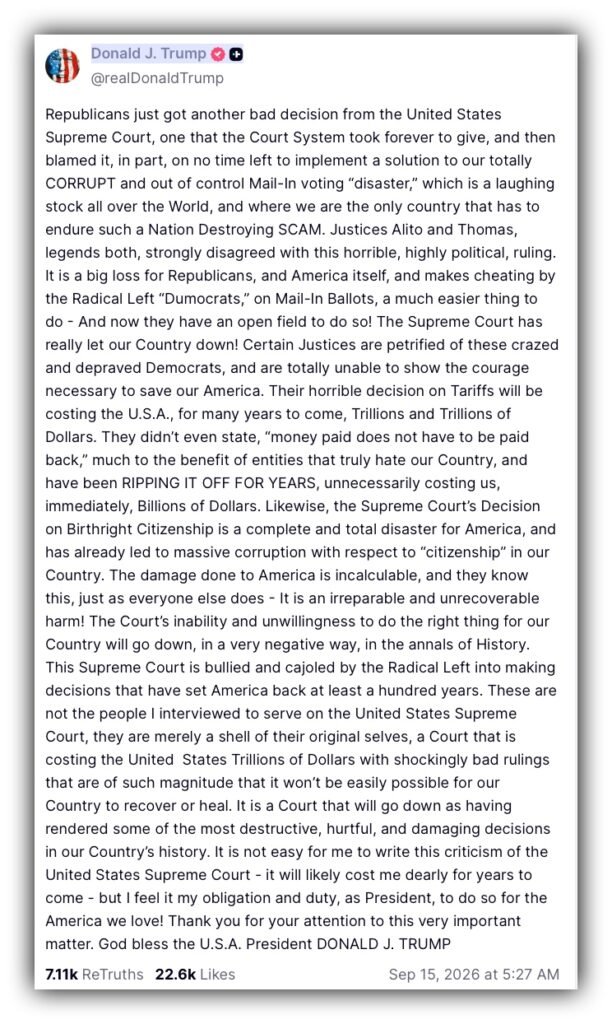
Trump went considerably further, accusing the Court of being “bullied and cajoled by the Radical Left” and saying its decisions have “set America back at least a hundred years.”
Then there’s the part that makes this story considerably more interesting.
Trump and Mail-In Voting
Trump has spent years questioning the security of voting by mail. In March, he put it bluntly during remarks in Memphis.
“Mail-in voting means mail-in cheating,” Trump said. “I call it, ‘mail-in cheating.’”
Yet Palm Beach County’s voter-history record shows Trump voted by mail in Florida’s March 24 special election.
Trump has also acknowledged using absentee voting himself. During a 2020 exchange about his own mail ballot, he said, “Sure, I can vote by mail.”
When asked how he could reconcile that with his criticism of mail voting, Trump answered: “Because I’m allowed to.”
And technically, he’s right. Voting by mail is legal. The rules vary by state, and absentee voting has been part of American elections for generations.
For Alaska, this isn’t some abstract argument happening in Washington. The Alaska Division of Elections allows any eligible voter to request an absentee ballot by mail without giving a reason. In a state where ballots may have to travel hundreds of miles, sometimes between communities that aren’t connected by roads, how election mail moves is a practical issue, not just a political talking point.
That’s also why the Supreme Court’s ruling is narrower than some of the rhetoric surrounding it. The justices did not decide whether Alaskans or other Americans can vote by mail. They decided whether the administration’s new USPS requirements could be put into effect for the 2026 elections while the lower-court challenge continues.
For the person sitting at the kitchen table filling out a ballot, the message is pretty simple: Follow the mail-voting instructions provided by your state. Those existing rules remain in place for 2026.
The legal fight isn’t over.
And neither is the debate over mail-in voting.
But the public record leaves voters with an interesting juxtaposition: Trump calls mail-in voting “mail-in cheating,” while his own voting history shows he has used it.
Sources
- U.S. Supreme Court: United States Postal Service v. California
- Supreme Court docket, No. 26A305
- Donald J. Trump, Truth Social post, Sept. 15, 2026
- GovInfo: Trump’s March 23, 2026 Memphis remarks
- GovInfo: Trump’s 2020 remarks
- Alaska Division of Elections
- Palm Beach County Supervisor of Elections
What do you feel about this post?

Like

Love

Happy

Haha

Sad