




Alaska’s Friday Five
Five Alaska Stories Worth Knowing Before The Weekend
An endangered whale turned up dead after a cruise ship arrived in Sitka. Alaska State Parks is changing its reservation system. The court system has added text reminders for hearings. Two hunters needed a dramatic rescue on Alaska’s North Slope. And, naturally, the bears are getting ready to compete for the title of fattest bear in the land.
Here are five Alaska stories worth knowing before you head into the weekend.
A Dead Fin Whale Raises Questions In Sitka
A fin whale was found dead on the bow of the Norwegian Joy after the cruise ship arrived in Sitka Thursday, Sept. 17.
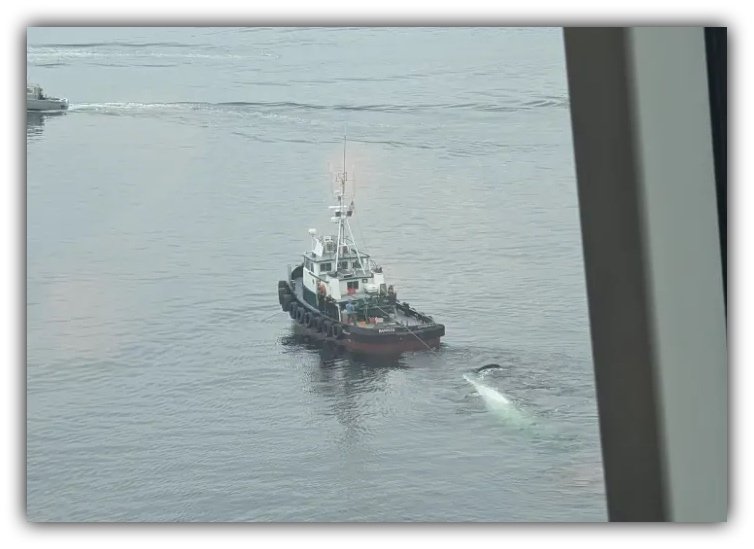
The Alaska Marine Mammal Stranding Network, working with NOAA Fisheries, responded to the incident. The cause of death has not been confirmed.
And that distinction matters.
We know the whale was found dead on the ship. We do not yet know where the whale encountered the vessel, whether it was alive when the encounter occurred, how fast the ship was traveling or whether a vessel strike caused its death.
Fin whales are enormous animals. NOAA Fisheries lists them as endangered throughout their range, with vessel strikes among the threats facing the species. NOAA advises vessels to watch their speed in areas where marine mammals occur and says keeping speeds at 10 knots or less can reduce the potential for injury.
Alaska has a documented history of whale-vessel collisions. A NOAA review identified 108 reported whale-vessel collisions in Alaska from 1978 through 2011, including 25 known whale deaths. The study also noted that documenting collisions in Alaska can be difficult because of the state’s remoteness and limited resources.
The Center for Biological Diversity is calling for cruise companies to slow down in whale habitat and is advocating for 10-knot speed limits in areas where whales are concentrated. That is the organization’s policy position, not a finding about what happened to this particular whale.
For now, the important question is still the simplest one: What happened?
The answer will depend on the examination of the whale and whatever investigators can determine about its final hours.
Alaska’s waterways are shared by enormous ships and enormous wildlife. When those two worlds collide, the consequences can be enormous, too.
Planning A Cabin Getaway? Alaska State Parks Is Changing The System
If your idea of a good Alaska weekend involves a little cabin, a little wilderness and considerably less cell service, there’s a reservation-system change coming that you’ll want to know about.
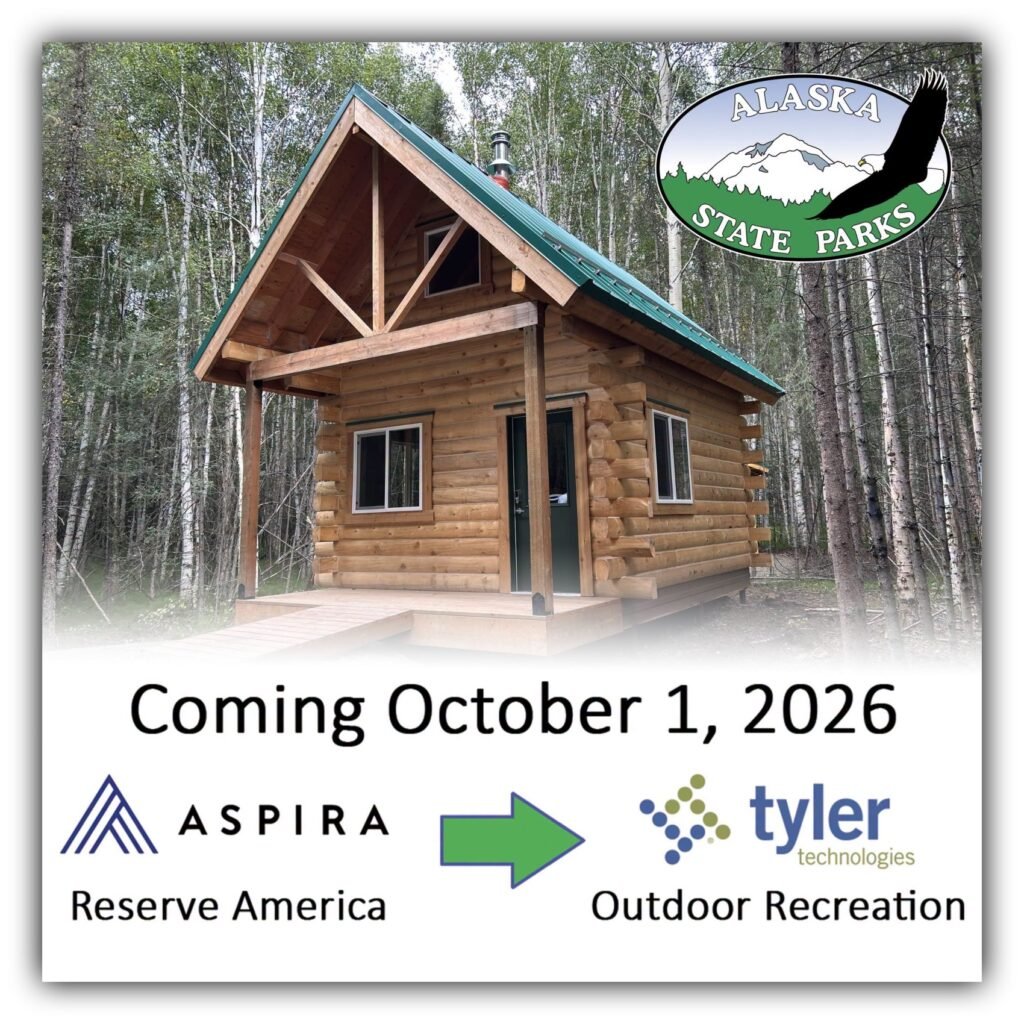
Alaska State Parks will launch its new Outdoor Recreation Reservation System on Oct. 1, 2026. The system will handle reservations for public-use cabins, campsites, picnic shelters, pavilions, group camping areas and other reservable facilities.
But there’s a three-day gap in the middle.
The current Aspira/ReserveAmerica contract ends Sept. 27. From Sept. 28 through Sept. 30, you can still view your existing reservation information through your current account, but you won’t be able to make a new reservation or change, cancel or modify an existing one.
Then, on Oct. 1, the new system takes over.
The biggest change for most Alaska State Parks users is the reservation window. Instead of planning six months ahead, the new system will use a rolling three-month reservation window.
There are exceptions. The Wood-Tikchik Region and cabins on Afognak and Shuyak islands will continue with a six-month reservation window.
There’s also a new $4.50 reservation fee, but Alaska State Parks says there will be no cancellation or change fees under the new system.
Already have an account or a reservation? Don’t panic and start digging through your email for a backup cabin.
Alaska State Parks says existing accounts and reservations will transfer to the new system. Account holders will receive instructions by email explaining how to access their accounts and create new passwords using the email address associated with their current account.
If you’ve been waiting for the right time to buy a gift card, you’ll have to wait a little longer. Gift card purchases through Aspira are no longer available during the transition and are expected to resume when the new system launches.
Beginning Oct. 1, reservations for all facilities will be available for dates beginning Jan. 1, 2027, and the new rolling three-month reservation window will begin.
Alaska Courts Add A Text Reminder For Hearings
For anyone who has ever had a court date buried somewhere between 47 other things on a calendar, Alaska’s court system now has a new reminder option.
The Alaska Court System announced Sept. 15 that it is offering text reminders for state court hearings. The service allows people to opt in by texting a case number to 575-222-8484 and following the confirmation instructions.
The system sends one reminder per court event for each case enrolled.
There is an important catch, because of course there is: The text is a courtesy reminder, not a substitute for knowing when you are supposed to appear.
The court system says it and wireless providers are not responsible for delayed or undelivered messages, and people remain responsible for attending their hearings.
The court system also says it will not sell or share users’ mobile numbers with third parties or affiliates for marketing or promotional purposes.
So if you’ve got an Alaska court date coming up, the text could be a useful nudge.
Just don’t let your phone become your lawyer.
Two Hunters Rescued After Rising Water Trapped Them North Of Kotzebue
Sometimes Alaska’s wilderness gives you a reminder that a satellite communicator is not a luxury.
It’s equipment.
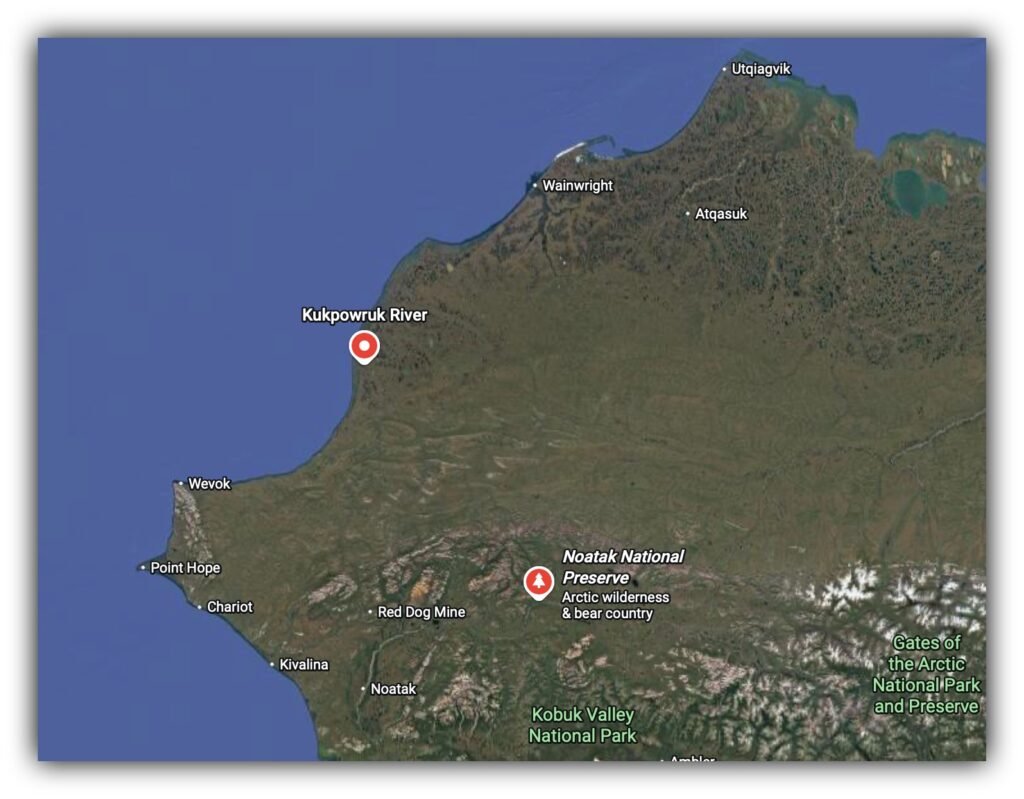
On Sept. 11, two hunters became stranded on the bank of the Kukpowruk River about 120 miles north of Kotzebue after rising water put them in danger and prevented them from getting themselves out.
They had a two-way satellite communication device, which they used to communicate with rescue officials and provide their location and changing weather conditions.
The Alaska Rescue Coordination Center requested help from the Alaska National Guard’s 176th Wing.
An HC-130J Combat King II carrying pararescuemen located the hunters using the coordinates from their satellite device. Low clouds complicated the operation, so the pararescuemen conducted a low-altitude jump with a pack raft to reach them. The HC-130 crew also dropped another raft and survival equipment near the site.
The pararescuemen used the raft to reach the hunters and get them to shore, then started a fire to help keep everyone warm while they waited for extraction.
When weather conditions improved, North Slope Borough Search and Rescue flew an S-92 helicopter to the site and extracted the hunters and pararescuemen. The group was taken to Utqiaġvik before the hunters and rescuers transferred to the HC-130 for transportation to Joint Base Elmendorf-Richardson.
The Alaska Rescue Coordination Center’s advice afterward is pretty straightforward: If you’re heading into remote Alaska, carry a charged and registered two-way satellite communication device.
Because sometimes the difference between “We’re having a rough day” and “We need a rescue” is a rising river.
Fat Bear Week Is Back, And Alaska Is Ready To Get Chonky
And now, something considerably more cheerful.
The bears are getting fat.
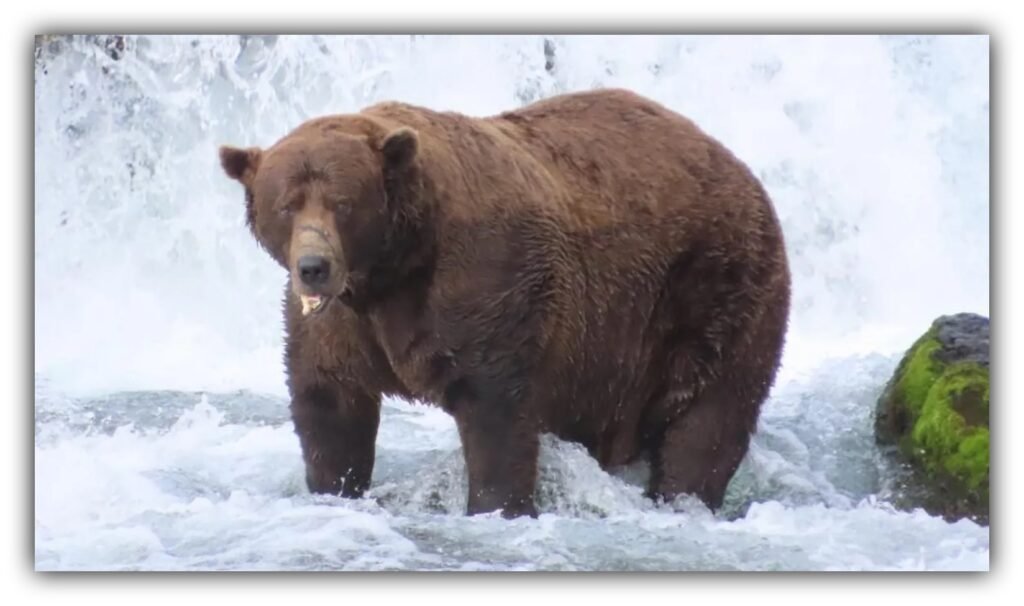
Fat Bear Week returns to Katmai National Park and Preserve Sept. 22-29, with the public choosing which brown bear has done the best job preparing for winter. The 2026 bracket is being revealed Sept. 18.
This isn’t just an internet excuse to look at spectacularly chunky bears, although that is certainly part of the appeal.
The competition celebrates the biological reality of Alaska’s brown bears. They spend the summer feeding heavily on salmon and building the fat reserves that help carry them through winter. Large bears can add hundreds of pounds of fat before heading into their winter dens.
Last year’s competition drew more than 1.7 million votes from more than 100 countries. Bear 32, nicknamed “Chunk,” took the 2025 crown.
This year’s competition runs Sept. 22 through Sept. 29, with no voting on the weekend and the champion crowned on Fat Bear Tuesday.
So sharpen your bear-watching skills.
Study the cheeks.
Consider the belly.
Respect the salmon consumption.
Want to cast your vote? Fat Bear Week 2026 voting opens Sept. 22 at FatBearWeek.org. 🐻🏆
And remember: In Alaska, sometimes being called chunky is a compliment.
One More Thing Before You Go
Five stories, five very different pieces of Alaska.
A dead whale leaves questions. A cabin reservation system is changing. Court reminders are getting a little easier. Two hunters got a hard lesson in rising water and the value of staying connected.
And then there are the bears, doing what bears do best this time of year.
Eating.
A lot.
Of course, when the cooler weather hits Alaska, bears aren’t the only ones preparing for winter.
Alaskans start growing their own version of “winter fur.”
You know what I mean. 😂
Have a great weekend, Alaska. Stay warm, stay safe and maybe put down the second helping. The bears don’t have a choice. 🐻
Sources
NOAA Fisheries: Fin Whale; Summary of Reported Whale-Vessel Collisions in Alaskan Waters
Alaska Department of Natural Resources, Division of Parks & Outdoor Recreation: Alaska State Parks Updating Reservation System; Public Use Cabins
Alaska Court System: Text Reminders for State Court Hearings; Court Guide Text Hearing Reminders
Alaska National Guard: Alaska National Guard PJs Jump To Save 2 Stranded Hunters North Of Kotzebue
National Park Service, Katmai National Park & Preserve: Fat Bear Week 2026; Fat Bear Week: Past and Present; Bears of Katmai
What do you feel about this post?

Like

Love

Happy

Haha

Sad