






Judge Rejects Trump Bid to Block Alaska Senate Result if Sullivan Loses
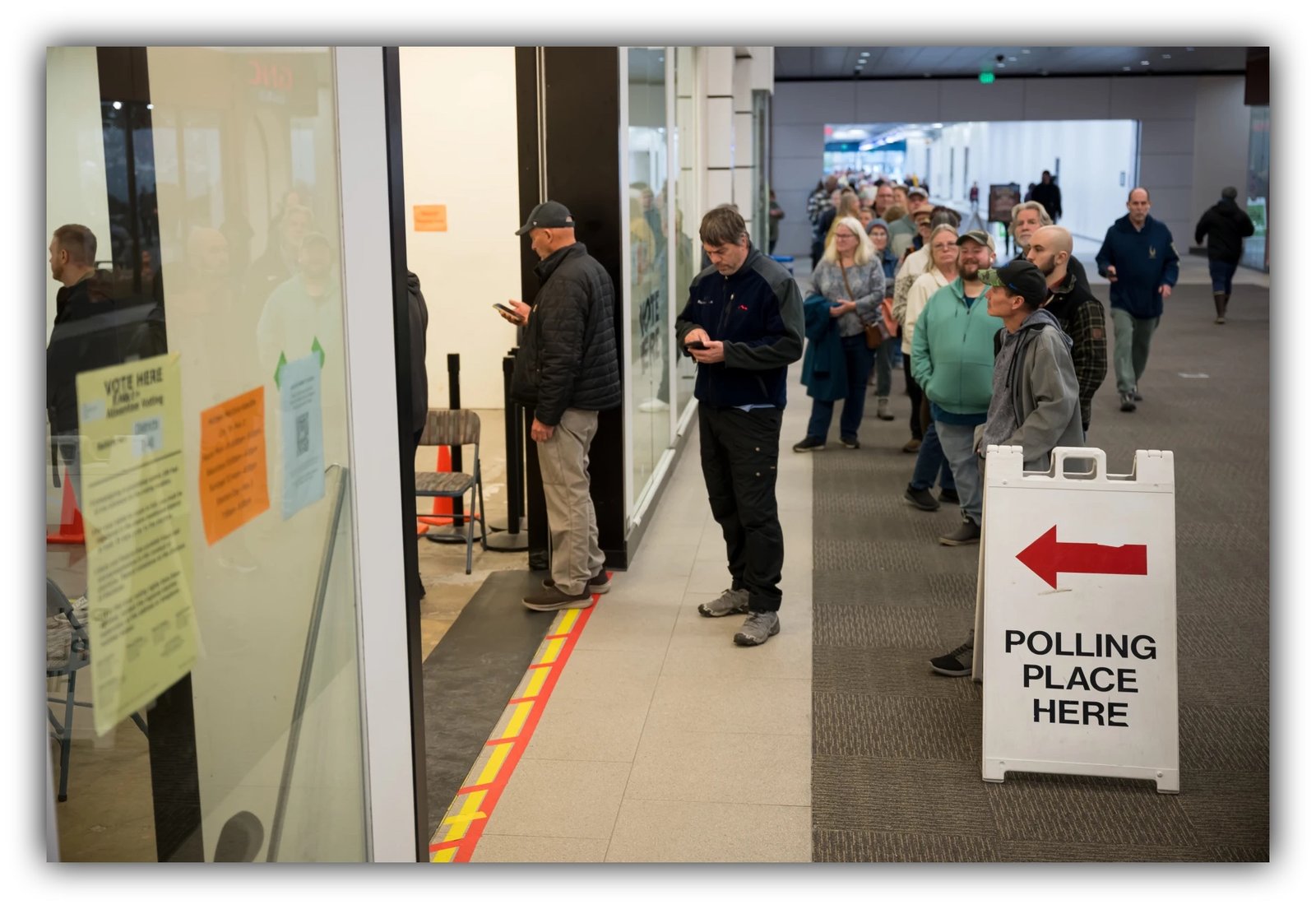
Voters line up at Anchorage’s Midtown Mall on Oct. 19, 2026. By Nov. 2, more than 90,000 Alaskans had voted in person or returned mail ballots, according to On Point Politics’ early-vote tracker. Photo: Matt Faubion / Alaska Public Media.
Alaska Republicans accuse Democrats of using a spoiler candidate … after fighting to keep an imprisoned candidate on the ballot against Peltola.
The Trump administration is appealing to keep alive a lawsuit with a one-sided trigger: hold up Alaska’s Senate result if Republican Sen. Dan Sullivan loses and votes for a namesake candidate could save him.

A federal judge Sunday rejected the Trump administration’s bid to stop Alaska from certifying its Senate election under conditions that applied only if Republican Sen. Dan Sullivan lost. The Justice Department appealed.
The administration alleges Democratic operatives helped put another candidate, Daniel J. Sullivan, on the ballot to confuse voters and hurt the incumbent. Those allegations remain unproven in this case.
Its proposed remedy was openly one-sided: stop certification if the senator lost but could win by receiving all the other Sullivan’s votes. Federal officials would then investigate whom those voters meant to support.
Your Vote Is Private

Judge Sharon Gleason identified the basic problem: Alaska has secret ballots. Officials cannot trace a ballot back to its voter and ask what that person intended. The government offered no workable way to conduct its investigation while protecting that right.
Gleason also warned that threatening voters with investigation could discourage voting. She dismissed the lawsuit without deciding whether the allegations about the namesake candidate were true.
Republicans Defended a Potential Spoiler, Too
Alaska Republicans have a recent history worth remembering.
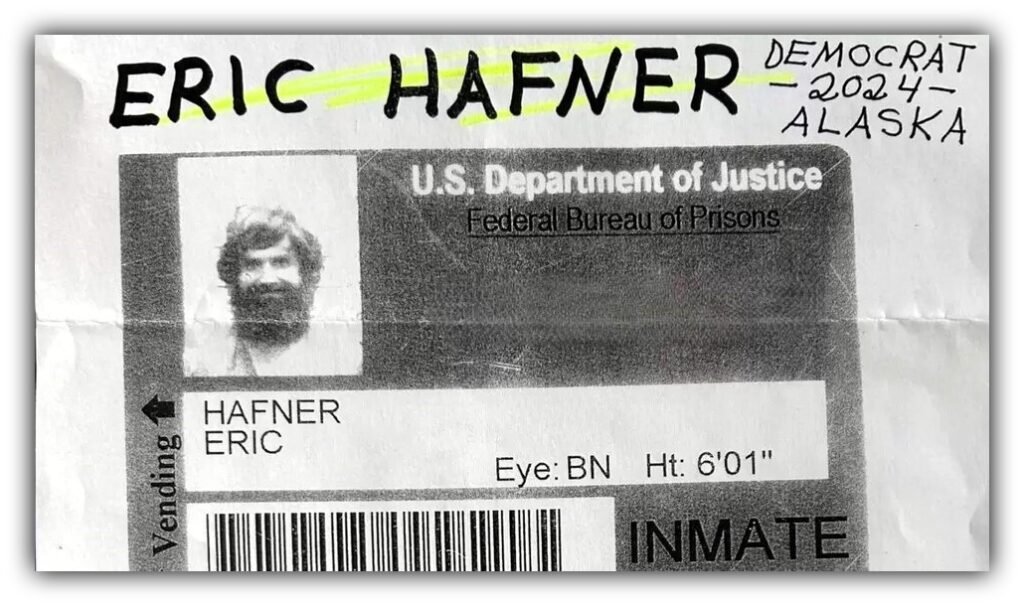
In 2024, the Alaska Republican Party went to court to defend Eric Hafner’s place on the ballot against Mary Peltola. Hafner ran as a Democrat while imprisoned in New York. He finished sixth in the primary, then advanced after two higher-finishing Republicans withdrew.
The record establishes that Republicans defended his ballot access, not that they recruited him. But the contrast is plain: the party now attacking an alleged Democratic spoiler effort fought to keep another Democrat on the ballot alongside Peltola.
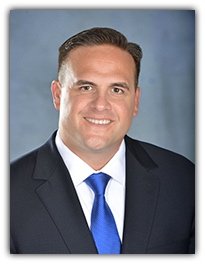
Florida offers a more direct example. Former Republican state senator Frank Artiles was convicted of felony election and campaign-finance violations in a ghost-candidate scheme. Prosecutors called him its “mastermind.”
None of that settles the Alaska allegations. But the demand was clear: if Peltola wins and the other Sullivan’s votes could reverse the outcome, delay certifying her victory while investigating whether those voters meant to choose the incumbent.
Alaskans know the difference between protecting their votes and protecting a politician from losing.
Sources and Photo Credits
Court records, official statements and election data support this article. Photo credits appear with each image.
- United States v. State of Alaska, amended complaint, October 29, 2026: the administration’s allegations and proposed conditions for blocking certification.[courtlistener]
- Judge Sharon Gleason’s dismissal order, November 1, 2026: ballot secrecy, concerns about discouraging voters and the legal grounds for dismissal.[courtlistener]
- Justice Department notice of appeal, November 1, 2026.[courtlistener]
- Alaska Superior Court order in the 2024 Eric Hafner ballot case: his imprisonment, sixth-place primary finish and advancement after two Republican candidates withdrew.[public.courts.alaska]
- Alaska Supreme Court opinion in Alaska Democratic Party v. Beecher: the Alaska Republican Party’s intervention defending Hafner’s ballot access.[caselaw.findlaw]
- Miami-Dade State Attorney’s statement on the Frank Artiles verdict: his convictions in the ghost-candidate scheme.[miamisao]
- On Point Politics, “Alaska Early Vote Tracker 2026,” November 2, 2026: reported 90,570 ballots cast—58,262 in person and 32,308 by mail. Used for the featured-photo caption.[onpointpolitics]
- Politico, “Artiles Formally Resigns From State Senate,” April 21, 2017: background on the racist and sexist remarks preceding his resignation. Used for the Artiles photo caption.[politico]
Alaska Headline Living ©️ | Stay informed. Stay inspired. Stay curious.
What do you feel about this post?

Like

Love

Happy

Haha

Sad