








Alaska Is Not Russia’s Bargaining Chip
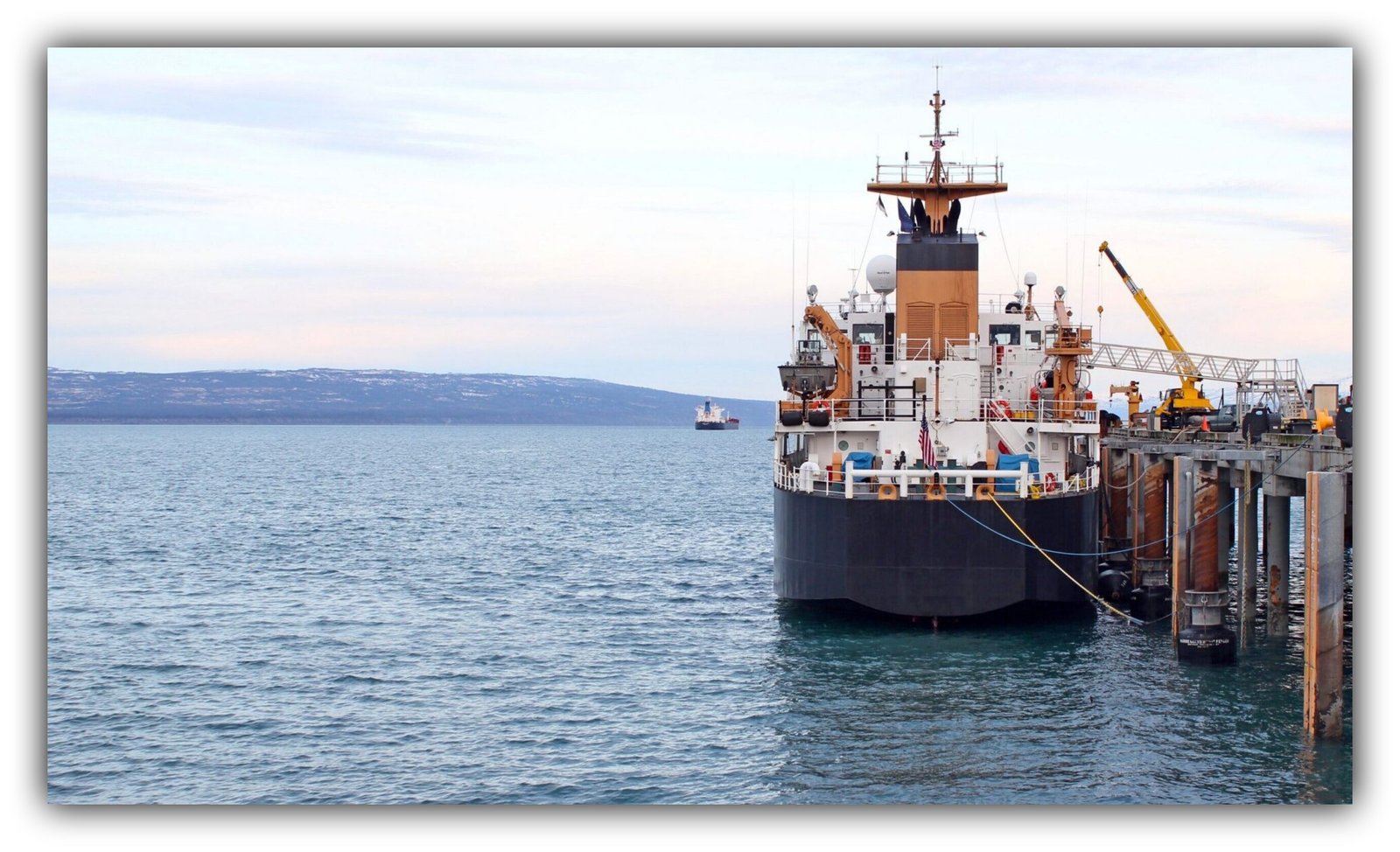
Operations at the center of a geopolitical storm: A Polar LNG facility vessel docked following revelations of hidden ties to Russian energy investors on Alaska’s North Slope. Photo: Polar LNG.
Who stands to benefit when Russian interests enter Alaska’s energy equation?
Alaska’s resources are not Washington’s to put on the table in a deal with Russia.
Yet a Russian energy giant reportedly helped finance a proposed Alaska natural gas export project while the Trump administration was discussing broader energy cooperation with Russian President Vladimir Putin.
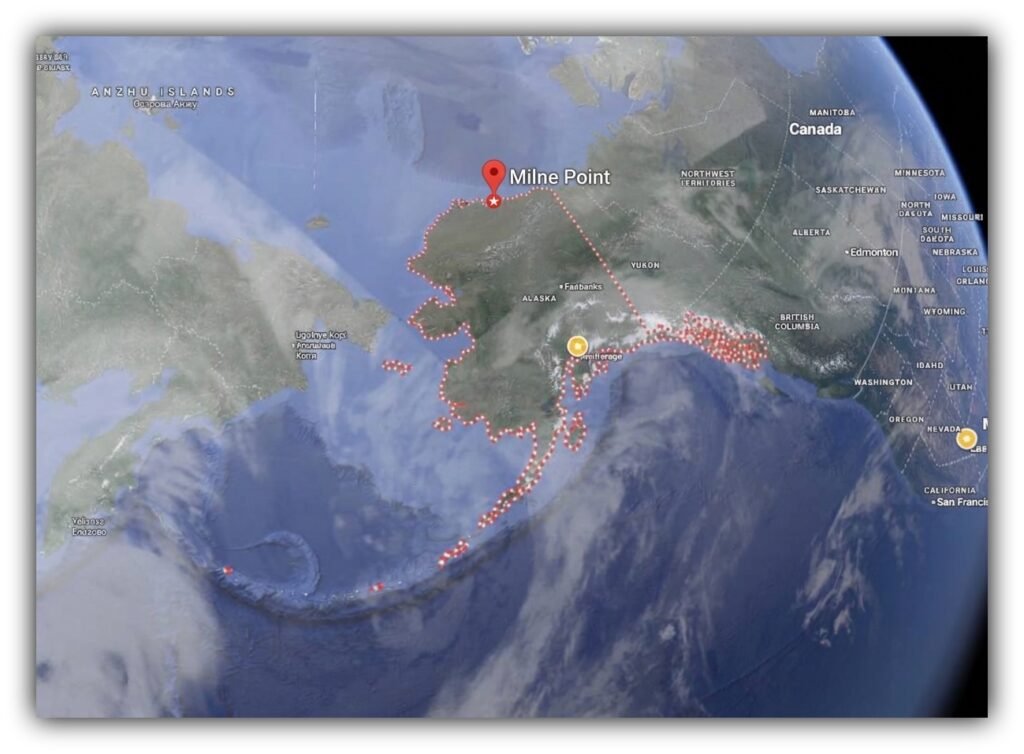
The project, called Polar LNG, would develop a natural gas export facility near Milne Point on Alaska’s North Slope. It would rely on specialized LNG technology and equipment tied to Russia’s energy giant Novatek.
The reported Russian financing, the company’s disputed explanation and Russia’s public statements about a role in Alaska’s energy development raise questions Alaskans deserve answers to.
Who is financing this project? What does Russia expect to gain? And are Alaska’s interests being protected as Washington discusses energy cooperation with Moscow?
Who Is Financing Alaska’s Polar LNG Project?

Source: The New York Times, October 23, 2026, by Anton Troianovski and Eric Lipton.
Read the full article
A New York Times investigation reported that Novatek secretly provided financing to Polar LNG through Tech Wave Industrial Projects Management, an Abu Dhabi-based company.
Former Polar LNG CEO Joel Riddle told the Times he believed the financing came from Tech Wave. He said he later learned that at least some of the money originated with Novatek. Riddle resigned in September, saying he was uncomfortable with Novatek’s alleged financing and influence over the project.
The Times reported that messages showed Novatek executives discussing as much as $15 million in funding for Tech Wave to support Polar LNG, including an anticipated initial transfer of $5 million. That does not establish that the full amount, or even the proposed initial amount, was transferred.
Polar LNG disputes Riddle’s account. The company says its financing came through its Abu Dhabi-based parent company, Tech Wave. It also says it has applied to the U.S. Treasury Department for authorization to purchase unfinished LNG equipment from Novatek.
That explanation leaves an important question:
Was Russian money flowing into an Alaska energy project through an intermediary while the company was seeking U.S. approval to purchase Russian equipment?
The company says it is operating in compliance with U.S. law and has characterized Riddle as a disgruntled former employee. The competing accounts have not been resolved publicly.
Why Is Putin Discussing Alaska’s Natural Gas?

Photo: Alaska National Guard / Staff Sgt. Seth LaCount.
Russia is not keeping its interest in Alaska’s energy project quiet.
On October 28, Kremlin Deputy Chief of Staff Maxim Oreshkin said the use of Russian-built offshore LNG platforms in Alaska was being actively discussed. He argued that Russian technology could make the project more economically efficient than American alternatives.
The platforms are associated with Novatek’s construction facility in Russia. The technology uses a massive concrete-and-steel foundation, known as a gravity-based structure, to support equipment that liquefies natural gas near the coast. Polar LNG wants to acquire an unfinished structure for its proposed North Slope project.
Russian President Vladimir Putin had previously discussed joint energy projects in Alaska with President Donald Trump following their August 2025 summit. The Alaska proposal also came up during September 2026 discussions between Putin and Trump’s envoys, Steve Witkoff and Jared Kushner.
According to reporting by Alaska Public Media, there is no indication the two envoys knew about Polar LNG or its alleged financial ties to Novatek when the proposal was discussed. A U.S. official said the project was mentioned broadly, without detailed discussions.
Novatek has acknowledged agreements involving its technology for the Alaska project and has indicated interest in becoming a minority shareholder. It denies that its participation depends on the United States lifting sanctions against its Arctic LNG 2 project.
The timing raises important questions. The New York Times reported that Novatek secretly financed the Alaska project through an Abu Dhabi-based intermediary. Polar LNG disputes its former CEO’s account of the financing. Meanwhile, Russia is openly promoting its technology and seeking a role in the project.
There is no public evidence that Washington has agreed to give Russia control of Alaska’s natural gas resources. But Alaskans deserve to know what was discussed, what was promised, and whether sanctions or other political concessions are part of the larger negotiations.
When Russia talks about energy cooperation with the United States, what does it expect in return, and who is making sure Alaska’s interests come first?
What About U.S. Sanctions?
The sanctions issue needs careful attention.
Novatek has been subject to targeted U.S. financial restrictions since 2014. Its Arctic LNG 2 project was placed under much broader U.S. blocking sanctions in 2023.
Those restrictions are not all the same. Sanctions against Novatek do not mean every possible transaction involving the company is automatically prohibited. But dealings involving blocked entities or property can require specific authorization from the Treasury Department.
Polar LNG says it has applied to the Treasury Department’s Office of Foreign Assets Control, known as OFAC, for permission to purchase the unfinished equipment.
An application is not an approval.
As of the latest public reporting, the Treasury Department had not announced an enforcement finding establishing that Polar LNG violated sanctions. The financing allegations remain disputed, and no public ruling has settled the question.
That distinction matters. Alaskans should not be told a sanctions violation has been proven when it has not. But neither should the unanswered questions about the money and the Russian company’s role be brushed aside.
What Does This Mean for Alaska?
Polar LNG is not the same project as the proposed Alaska LNG pipeline being advanced by Glenfarne and the Alaska Gasline Development Corporation. Polar LNG proposes a separate, nearshore export facility using specialized LNG technology and tankers.
The company says its project could bring investment, jobs and new markets for North Slope natural gas. It has also discussed the possibility of supplying gas to Southcentral Alaska.
Those are possibilities, not guarantees. The company is targeting gas deliveries by the end of 2030, but that depends on financing, permits, engineering and other approvals.
There are also concerns beyond financing and geopolitics. The Alaska Eskimo Whaling Commission has raised objections to the project, including concerns about LNG tanker and icebreaker traffic and potential effects on bowhead whale migration and subsistence whaling.
Alaska’s natural resources are not simply an economic opportunity on a map. Decisions about their development affect communities, wildlife, subsistence users, local economies and the state’s long-term interests.
How Can Alaskans Protect Alaska’s Interests?
Alaskans do not have to wait until a project is built to ask questions. Public officials have a responsibility to explain what they know, what they have approved and what safeguards are in place.
Here are practical steps residents can take:
- Contact Alaska’s congressional delegation. Ask U.S. Sens. Lisa Murkowski and Dan Sullivan and U.S. Rep. Nick Begich what they know about Novatek’s reported financing, the OFAC application and any discussions involving Alaska’s natural gas and Russia.
- Ask Gov. Mike Dunleavy’s administration for answers. What state-level discussions have taken place with Polar LNG? What permits or state approvals would be required? How will Alaska’s interests be protected?
- Follow the permitting process. Watch the Alaska Department of Environmental Conservation’s LNG permitting information and participate in public comment opportunities when they become available.
- Pay attention to Alaska Native communities. Subsistence hunting, wildlife migration and local concerns must be part of the discussion, not an afterthought.
- Share verified information. Keep the questions focused on documented facts, public records and answers from officials. The more Alaskans understand what is being proposed, the harder it is for important decisions to happen without public scrutiny.
Alaska has vast natural resources, but the people who live here should not be left in the dark about who is financing their development, who may influence them and what other countries expect in return.
The question is not whether Alaska should develop its natural gas. It is whether development will serve Alaska and the United States, with transparent financing, proper oversight and meaningful public involvement.
Alaska’s energy future should be decided in Alaska’s interests, not negotiated behind closed doors with Moscow.

Credit: Alaska Department of Fish and Game (ADF&G).
Sources
- The New York Times: In U.S. Gas Talks With Kremlin, Hidden Financing for Alaska Project Emerges
- Alaska Public Media: Russian Energy Giant Secretly Funded Alaska Natural Gas Project, According to New York Times
- Polar LNG: Leadership Change and Project Statement, October 23, 2026
- bne IntelliNews: Russia Says U.S. Is in Talks to Use Its LNG Technology in Alaska
- Alaska Department of Environmental Conservation: LNG Permitting
- Alaska Eskimo Whaling Commission
Alaska Headline Living ©️ | Stay informed. Stay inspired. Stay curious.
What do you feel about this post?

Like

Love

Happy

Haha

Sad