








Alaska Underreported: DeepGreen’s AI Data Center Gamble in Cook Inlet
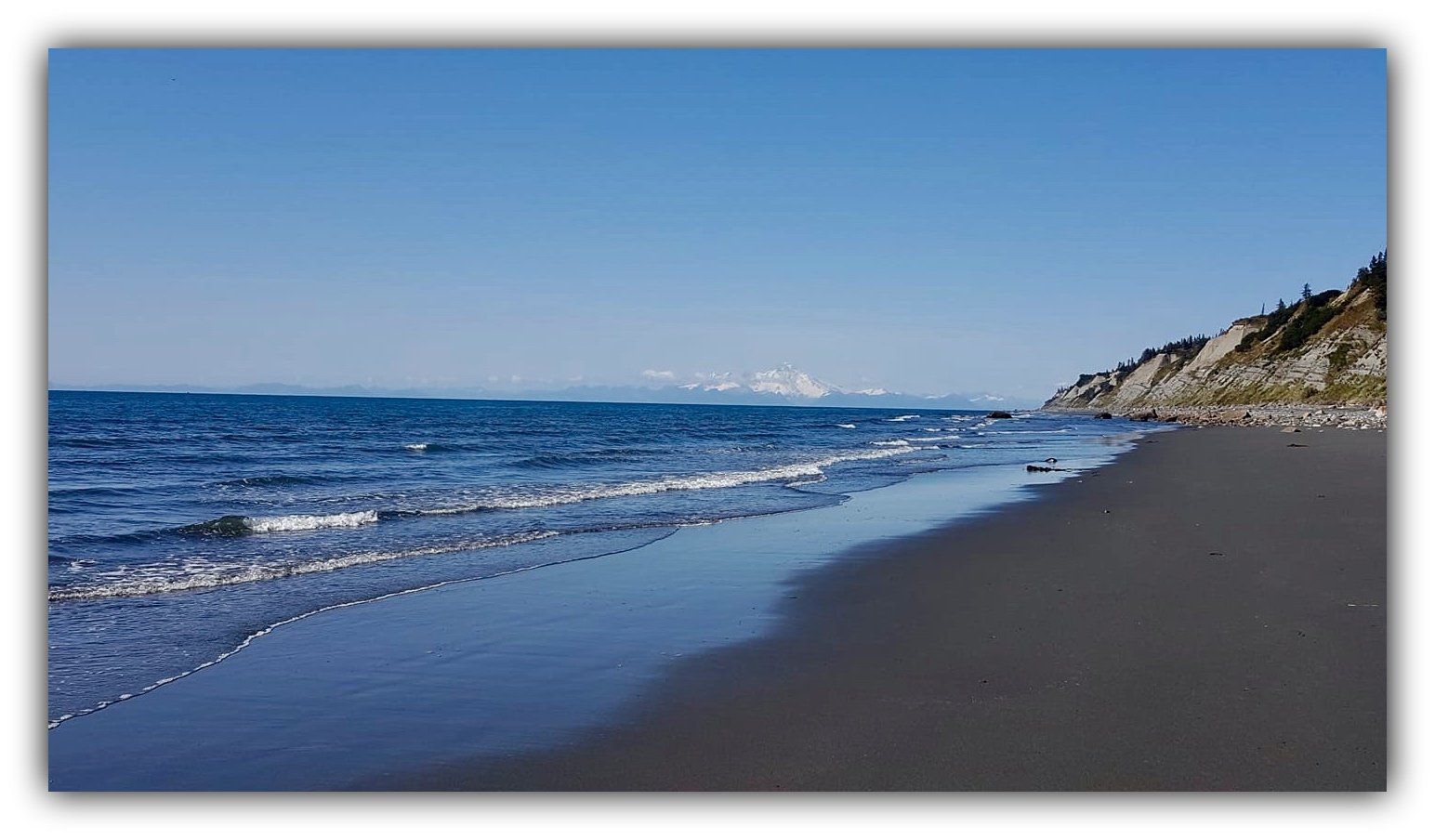
The mouth of Kachemak Bay meets Cook Inlet, with Iliamna Volcano rising in the distance. This vast, tidal marine environment is the setting for DeepGreen’s proposed underwater AI data center and tidal-energy project. Photo: Beeblebrox, September 3, 2018.
A proposed underwater AI data center promises tidal power and seawater cooling. But who owns it, who’s financing it and what could it mean for Cook Inlet?
By Gina Hill | Alaska Headline Living | Thursday, August 20, 2026
A proposal now before federal regulators would put an artificial intelligence data center underwater in Cook Inlet, using the inlet’s powerful tides to generate electricity and its cold seawater to cool the computers. Instead of building a large data-center campus on land and relying on conventional cooling systems, DeepGreen wants to combine tidal power with underwater computing.
The location matters. Cook Inlet supports commercial, recreational and subsistence fisheries, including salmon, as well as the endangered Cook Inlet beluga whale population. Its powerful tides move enormous amounts of sediment, and seasonal sea ice creates additional engineering challenges.
The company behind the proposal is also very new.
Who Is DeepGreen?
The project is being proposed by DeepGreen Cook Inlet SPV LLC, whose parent company is DeepGreen Holdings LLC. DeepGreen Holdings was formed in January 2026, shortly before the company filed preliminary-permit applications with the Federal Energy Regulatory Commission for projects in Alaska and Maine.
Louis Wolfson, a Needham, Massachusetts, real-estate developer, is publicly identified as managing member of DeepGreen Holdings. That does not establish him as the company’s sole owner. Public information available through August 20, 2026, does not disclose DeepGreen’s complete beneficial ownership.
That’s an important distinction. We know who is publicly identified as managing the company. We don’t have a complete public picture of everyone who ultimately owns it.
Who Is Paying for It?
DeepGreen says preliminary engineering and environmental work would be funded through private equity and “Green-AI” investors. The company estimates approximately $4.5 million for preliminary studies over four years.
That’s not the same as having construction financing in place.
As of August 20, no major institutional investor, technology company, hyperscale data-center customer or construction-financing partner has been publicly identified for the Cook Inlet project.
DeepGreen’s Maine project offers some context. The company originally estimated that project at approximately $415 million and said construction would be financed through private equity and institutional green-AI investors. Maine reporting indicated the company was still seeking investors and partners.
For Alaska, the bottom line is simple: DeepGreen has described how it intends to raise money, but publicly identified construction financing has not been established.
What Does DeepGreen Want to Build?
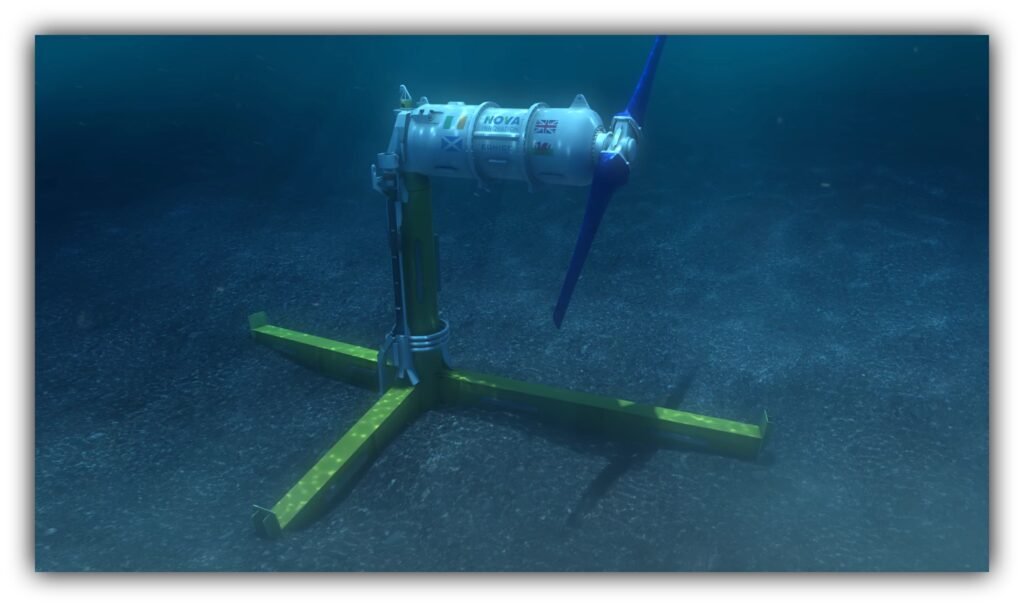
Source: London School of Economics and Political Science, “What is tidal stream energy?”
DeepGreen’s February 2026 FERC filing proposes a 100 MW underwater data center, as many as 350 marine hydrokinetic turbines and up to 66 underwater “hives” containing AI servers.
The proposed operating area covers approximately 1,650 acres in Upper Cook Inlet, off the west side of the inlet near Nikiski.
The turbines would capture energy from tidal currents while the computers would use surrounding seawater for cooling.
Cook Inlet really does have an extraordinary tidal resource. The question is whether the proposed system can reliably capture enough energy to support a 100 MW data center while operating in Alaska’s demanding marine environment.
And 100 MW is a capacity figure, not a guarantee that 100 MW would be continuously available. Tidal output rises and falls, and actual production would depend on turbine performance, maintenance, currents, ice and other conditions.
What Does 100 MW Have to Do With the Cook Inlet PowerLink?
The Cook Inlet PowerLink, being developed by the Alaska Energy Authority, is a planned 38-mile high-voltage direct-current transmission connection between Nikiski and Beluga. AEA says the project is intended to improve Railbelt reliability and allow electricity to move between regions. Its estimated cost is roughly $413 million.
DeepGreen’s proposal references the PowerLink, and its 100 MW data-center load has raised questions because of the roughly 200 MW capacity figure associated with the transmission project.
That does not mean the PowerLink is a 200 MW dedicated line for DeepGreen or that DeepGreen has 100 MW reserved for its project.
There’s another wrinkle: AEA says DeepGreen never contacted the agency about the proposal. AEA CEO Curtis Thayer told the Anchorage Daily News that AEA had not heard of DeepGreen and that some of the company’s information about the PowerLink was incorrect.
So DeepGreen should not be described as an AEA partner. The company has contemplated using or connecting with AEA infrastructure, but AEA has not confirmed a partnership.
Yes, The Data Center Would Heat the Water
The computers would generate heat, and the proposed cooling system would transfer that heat into Cook Inlet.
At 100 MW, the facility would produce approximately 100 megajoules of heat every second, or about 8.64 terajoules per day, if it operated continuously at that level.
That does not mean the entire Cook Inlet would become warmer. The concern is the localized thermal plume created by the cooling discharge.
How significant that plume would be depends heavily on the amount of seawater moved through the system, the temperature difference between intake and discharge, where the discharge occurs and how tidal currents carry and mix the warmer water.
For perspective, if 100 MW of waste heat were distributed through 1,000 cubic meters of seawater every second, the average temperature increase would be about 0.043°F. At 100 cubic meters per second, it would be about 0.43°F. At 10 cubic meters per second, it would be about 4.3°F.
Those are illustrations, not predictions of DeepGreen’s system. They show why the cooling-system design matters.
The environmental questions include whether warmer water could overlap fish habitat or affect plankton, shellfish and organisms living on the seafloor. Winter conditions and sea ice would also have to be considered.
Hundreds of Turbines Mean More Than Electricity
The project would also put as many as 350 turbines into the inlet.
Turbines extract energy by changing the movement of water. Individual turbines create wakes and turbulence, and hundreds operating together could affect local flow patterns.
That raises questions about fish movement, sediment transport, erosion, deposition and benthic habitat.
Upper Cook Inlet already carries enormous amounts of sediment, which powerful tides move across the seabed. DeepGreen’s design includes systems intended to protect the infrastructure from scour and sediment.
But FERC’s June review found that the original application did not provide enough information about the dimensions and physical characteristics of several components, including silt-protection systems.
Seabed disturbance isn’t merely an engineering issue. It can affect water clarity, bottom-dwelling organisms, habitat and sediment patterns.
What About Salmon and Belugas?
Cook Inlet is a working fishery. NOAA’s August 17 salmon catch report showed more than 602,000 sockeye, nearly 38,600 coho, more than 54,700 chum and more than 16,000 pink salmon recorded in the federal Cook Inlet reporting area.
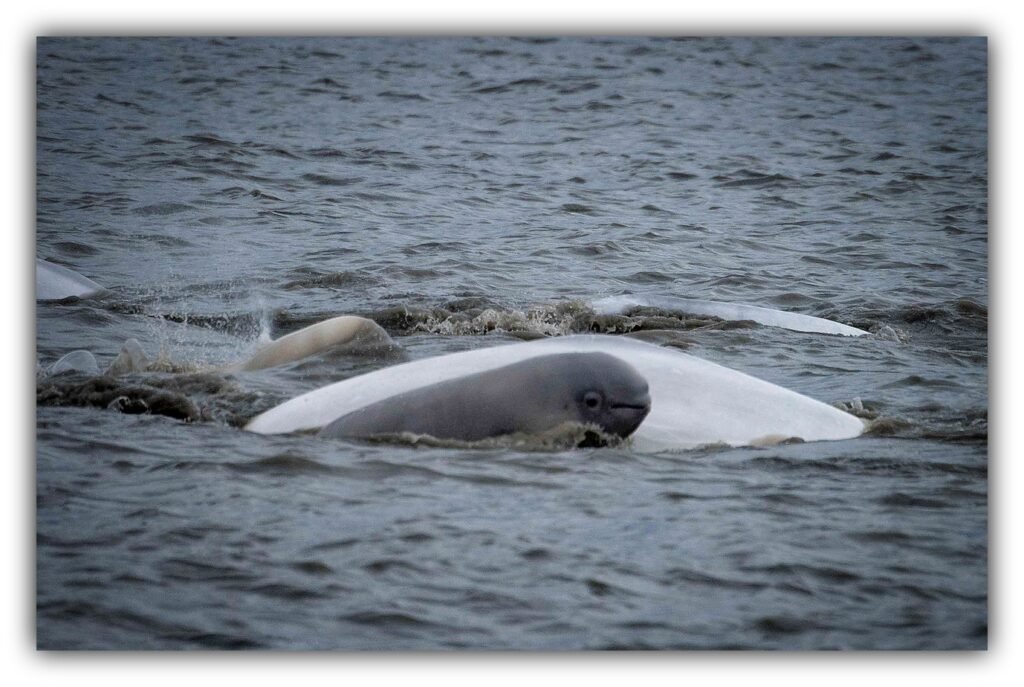
Those numbers change as the season progresses, but they illustrate the scale of the fishery.
A serious environmental review would need to examine more than the possibility of fish colliding with turbines. It would need to consider migration, behavior, habitat, underwater noise, sediment, currents and access to fishing areas. Commercial, recreational and subsistence users all have a stake.
Then there’s the endangered Cook Inlet beluga whale.
Belugas depend heavily on sound for communication, navigation and finding food. Construction vessels, installation activity, turbines, machinery and maintenance could introduce additional underwater noise.
The question isn’t only whether a turbine could physically injure a whale. Researchers would also need to consider whether noise, altered habitat or changes in prey distribution could affect where belugas feed, travel or spend time.
Sea Ice Is Part of the Equation
Cook Inlet is an unusually challenging place for permanent underwater infrastructure.
Seasonal sea ice, powerful currents, sediment movement and severe weather all have to be considered. Ice can interact with cables, structures and turbines, while sediment can affect foundations and protective systems.
The technology isn’t simply an ordinary data center placed underwater. It would be a new industrial marine system that has to survive in one of Alaska’s most dynamic waterways.
FERC Has Already Asked for More Information
DeepGreen is seeking a preliminary permit, not construction approval.
FERC’s June 18 deficiency letter identified missing information about proposed equipment, including the subsea platform, turbine array, docking cradle, computing hives and silt-protection systems. FERC also identified problems involving notifications to municipalities, tribes and Alaska Native corporations. DeepGreen subsequently submitted additional information. As of August 20, 2026, the Alaska project has not received a preliminary permit.
That’s important. There is a proposal and a federal regulatory process. There is not an approved construction project.
Maine Offers a Reality Check
DeepGreen is pursuing a similar project off Eastport, Maine.
Its original proposal called for as much as 51 MW and 170 turbines. After FERC identified deficiencies, DeepGreen reduced the proposed project to a maximum of 15 MW, with 16 turbines in Phase I and 34 in Phase II.
Eastport’s City Council subsequently adopted a 180-day moratorium on underwater data-center development.
That doesn’t mean Alaska’s project will follow the same path. It does show that early proposal numbers can change substantially during regulatory and commercial review.
The Bigger Question Is What’s Left Behind
There are legitimate potential benefits here. Tidal power is renewable. Underwater computing could reduce the need for conventional land-based cooling and freshwater use. A successful project could bring investment, construction work and technology jobs to Alaska.
But renewable doesn’t mean impact-free.
The real question isn’t whether DeepGreen’s project is “green.” It’s what its total environmental footprint would be at this location and at this scale.
Alaskans need clear answers about the cooling discharge and thermal plume, turbine effects on currents and sediment, underwater noise, fish and beluga habitat, sea ice, navigation and fishing access.
They also need clear answers about the power system. If DeepGreen expects to use the Cook Inlet PowerLink, what exactly is that relationship? Has AEA agreed to anything? Has any Railbelt utility agreed to provide or purchase power? How much electricity would the turbines actually produce when the tides aren’t at peak strength?
And then there’s the money.
Who ultimately owns DeepGreen? Who are the investors? How much money has actually been committed? Who would finance construction? Who owns the infrastructure? And who pays to remove it if the project fails?
Those aren’t anti-development questions. They’re basic questions about a potentially massive industrial project.
Before We Call This Green
DeepGreen has proposed an intriguing combination of tidal power, underwater computing and seawater cooling in a location with extraordinary renewable-energy resources.
But the proposal also involves a newly formed company, an incomplete public picture of ownership, financing that has not been publicly tied to a major construction investor, a proposed 100 MW computing load, hundreds of underwater turbines and a site in one of Alaska’s most important marine ecosystems.
DeepGreen has publicly identified Louis Wolfson as its managing member and says it plans to rely on private equity and “Green-AI” investors. It has referenced the Cook Inlet PowerLink, but AEA says it was not contacted by the company and has not confirmed a partnership.
FERC has also required additional information before the Alaska proposal can move forward.
So no, an underwater data center is not “coming to Cook Inlet” yet.
A company is proposing one.
That distinction matters.
Before Alaska gets sold on the promise of “green AI,” the public deserves to know who owns the company, who is putting up the money, how the technology would actually work, what it could do to Cook Inlet and who would be responsible if it doesn’t work.
That’s the story worth watching.
Sources
Federal Energy Regulatory Commission: DeepGreen’s preliminary-permit filings and FERC deficiency correspondence for the Alaska and Maine projects.
Alaska Energy Authority: Cook Inlet PowerLink information and statements concerning DeepGreen’s proposal.
NOAA Fisheries: Cook Inlet salmon catch information and resources concerning endangered Cook Inlet belugas.
Anchorage Daily News: Reporting on DeepGreen, the Cook Inlet proposal, AEA’s response, ownership and financing.
WABI / The Maine Monitor: Reporting on DeepGreen’s Maine project, FERC deficiencies, the project’s reduction to 15 MW and Eastport’s moratorium.
Needham Observer: Reporting on Louis Wolfson, DeepGreen’s formation, financing plans and the Maine project.
DeepGreen Holdings / DeepGreen Cook Inlet FERC Filings: Company descriptions of the proposed 100 MW facility, turbines, underwater computing hives and project area.
Louis Wolfson’s Professional Profile: Public identification of Wolfson as managing member of DeepGreen Holdings beginning in January 2026.
Editor’s Note: This article reflects publicly available information through Thursday, August 20, 2026. DeepGreen’s Cook Inlet proposal remains in the preliminary regulatory and development stage. A FERC preliminary permit would not authorize construction.
What do you feel about this post?

Like

Love

Happy

Haha

Sad