




Would You Fly Today? FAA Says Yes. Here’s What Travelers Should Know
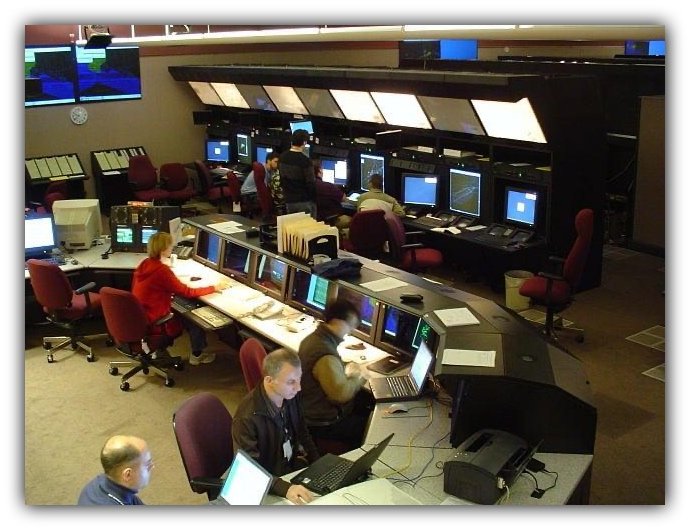
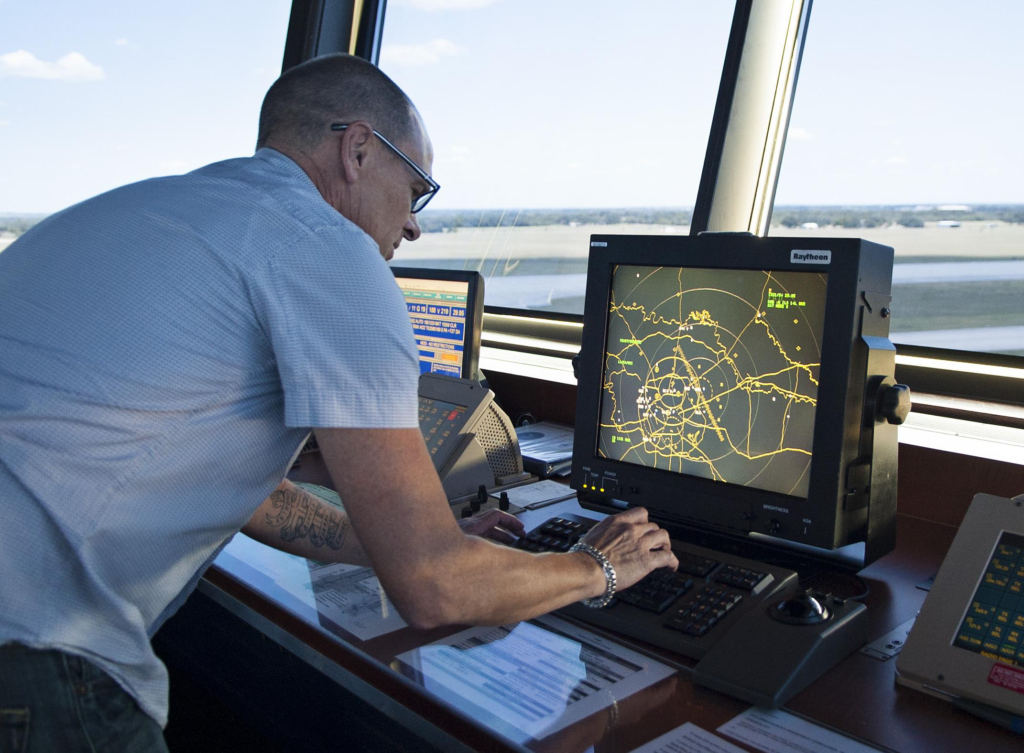
The Anchorage Air Route Traffic Control Center’s Advanced Technologies & Oceanic Procedures Operations Area. The November 13 disruption raised questions about the technology and infrastructure air traffic controllers rely on to keep aircraft moving safely. (Photo courtesy of the Federal Aviation Administration, U.S. Department of Transportation)
A nationwide air traffic control failure affected 17 of 22 control centers. Flights are moving again, but questions about aging equipment, contractor oversight and modernization funding remain.
If you had a flight scheduled today, would you get on that airplane?
It’s a question worth asking after a telecommunications failure inside the Federal Aviation Administration (FAA) air traffic control system brought U.S. air travel to a near standstill Friday, November 13.
The nationwide ground stop lasted nearly five hours. Thousands of flights were canceled, travelers were stranded, and airlines spent the weekend trying to get their operations back on schedule.
The FAA says the system is stable and it is safe to fly. But the incident exposed vulnerabilities in the technology responsible for managing America’s airspace.
The immediate problem has been isolated. The underlying cause, however, remains under investigation.
Here’s what happened, what the FAA says about passenger safety, and what travelers should know before heading to the airport.
What Happened Friday?
On November 13, the FAA experienced a technical problem involving its telecommunications network, known as the FAA Telecommunications Infrastructure (FTI).
The network carries information used by air traffic controllers to communicate with aircraft and receive radar data.
According to the FAA and Transportation Secretary Sean Duffy, data began flooding the network at a rate of more than 1,000 connection attempts every four to five seconds.
The resulting instability affected 17 of the nation’s 22 Air Route Traffic Control Centers, which manage aircraft traveling between airports.
The FAA ordered a nationwide ground stop as a precaution.
The scale of the technical disruption is significant:
| What happened | Reported figure |
|---|---|
| Air Route Traffic Control Centers affected | 17 of 22 |
| Connection attempts flooding the network | 1,000 every 4–5 seconds |
| Similar routers disabled as a precaution | Approximately 60 |
| Aircraft in the air when the ground stop was ordered | Approximately 3,500 |
| Nationwide ground stop | Nearly 5 hours |
The FAA emphasized that this was not a complete loss of communications. Some radio frequencies and radar feeds remained operational, allowing controllers and pilots to follow established safety procedures.
The agency says all aircraft landed safely and all passengers arrived safely.
Air traffic operations resumed at approximately 8:15 p.m. Eastern time Friday.
What Caused the Failure?
The preliminary investigation points to equipment installed during routine maintenance by L3Harris, the FAA’s telecommunications network contractor.
The work involved replacing aging copper telecommunications lines with fiber-optic connections at a remote facility in El Dorado, Arkansas.
According to Duffy, a newly installed router at that location triggered problems involving another recently replaced router at an FAA facility in Amarillo, Texas.
The routers began sending excessive amounts of data through the network, overwhelming other equipment and disrupting communications and radar data at air traffic control centers.
The FAA and L3Harris isolated the affected locations and disabled the broadcasting function on the originating routers. The FAA also disabled the same functionality on approximately 60 similar routers as a precaution.
But there is an important unanswered question.
Was the problem caused by an installation error, a defective router, or something else?
As of Sunday, November 15, investigators had not established the ultimate root cause.
L3Harris says it is supporting the FAA’s investigation. The company also reported that more than 70% of its planned conversion of the FAA’s legacy copper communications network to fiber-optic technology has been completed.
The FAA says it has no evidence of a cyberattack or outside malicious interference.
America’s Aging Air Traffic Control System
Friday’s failure has renewed scrutiny of the technology supporting America’s aviation system.
According to Duffy, the routers involved in the incident were purchased in 2001 and considered obsolete by 2006.
That means equipment that should have been replaced nearly 20 years ago was still part of the infrastructure supporting air traffic control.
This is not the first time aging technology has contributed to a major aviation disruption.
In January 2023, an FAA computer system failure involving accidentally deleted files forced a nationwide ground stop that disrupted approximately 11,000 flights.
Other problems have involved damaged fiber-optic cables, equipment failures and aging communications infrastructure.
The FAA has been working to modernize its systems, but replacing equipment while maintaining uninterrupted air traffic operations is a complicated undertaking.
The agency also faces a shortage of several thousand air traffic controllers.
These are separate challenges, but together they raise questions about whether the nation’s aviation infrastructure is keeping pace with the demands placed on it.
The $50 Billion Question
Following Friday’s failure, Duffy renewed his call for $50 billion in additional funding to modernize the nation’s air traffic control system.
But that request has raised questions in Congress.
Congress approved $12.5 billion in 2025 for air traffic control modernization. According to Democratic lawmakers on the House Transportation and Infrastructure Committee, approximately $11 billion of that money remained unspent as of Saturday.
Duffy responded that the previously approved money was designated for specific projects and did not include funding for new software to manage the nation’s airspace.
Here’s where the funding debate stands:
| Modernization funding | Amount |
|---|---|
| Approved by Congress in 2025 | $12.5 billion |
| Amount lawmakers say remains unspent | Approximately $11 billion |
| Additional funding requested by Duffy | $50 billion |
The disagreement deserves attention.
Before taxpayers are asked to approve another $50 billion, they deserve a clear accounting of the money already appropriated, the work completed, the projects still underway and what additional investments are actually needed.
Replacing obsolete equipment is important. So is explaining how the government and its contractors will prevent another failure.
How Many Flights Are Still Affected?
Although the FAA lifted the ground stop Friday evening, the disruption continued through the weekend.
Airlines had to reposition aircraft, locate available crews, accommodate stranded passengers and rebuild flight schedules.
Reuters reported the following nationwide figures for Sunday, November 15:
| Flight status | Number of flights |
|---|---|
| Canceled | More than 1,600 |
| Delayed | Nearly 3,600 |
| Total affected | More than 5,200 |
The impact varied considerably by airline.
Reuters reported these cancellation percentages for Sunday:
| Airline | Percentage of flights canceled |
|---|---|
| JetBlue | 27% |
| American Airlines | 13% |
| Southwest | 3–5% |
| United Airlines | 3–5% |
| Delta Air Lines | 3–5% |
These numbers are a snapshot of Sunday’s disruptions, not a measure of airline safety.
Transportation Secretary Duffy predicted that airline operations would return largely to normal by Monday, November 16.
Even after the FAA restores normal operations, individual airlines may need additional time to work through scheduling problems.
Football Games Caught in the Fallout

The disruption didn’t stop with stranded airline passengers. College football teams trying to reach Saturday games were also caught in the nationwide ground stop.
Several programs had to scramble for new flights or switch to buses, and conferences adjusted kickoff times to give teams more time to arrive.
Utah’s game at Arizona and Arizona State’s game at Central Florida were each pushed back three hours. Washington’s game at Michigan State was delayed 75 minutes. Auburn took a bus to Mississippi State, and that kickoff was moved later.
The biggest change: Mississippi’s game at Oklahoma was postponed until Sunday, November 15, at 1 p.m. Eastern.
A communications failure in the nation’s air traffic control system had now altered the plans of players, coaches, fans and entire college football communities.
What Should Travelers Do?
If you’re flying today or in the coming days, don’t rely solely on the original itinerary you received when booking your ticket.
Take a few minutes to check:
- Your airline’s website or app. Verify your flight number, departure time, gate and any schedule changes.
- Flight status before leaving home. Check again because delays and cancellations can change throughout the day.
- Connecting flights. A delay on the first leg can affect the rest of your trip.
- Rebooking and refund options. If your flight is canceled or significantly changed, contact your airline about available alternatives and applicable refund rights.
Useful resources:
- FAA National Airspace System Status
- FAA Newsroom
- FlightAware Flight Cancellations
- U.S. Department of Transportation
So, Would I Fly Today?
Would I board a commercial airplane in the United States today?
Yes. But I would have questions, and I wouldn’t confuse the FAA restoring operations with the investigation being finished.
There is an important distinction between an air traffic control communications failure and an unsafe aircraft. The FAA says its established safety procedures worked, controllers and pilots maintained safe operations, and every aircraft involved in Friday’s disruption landed safely.
Those facts matter. So do the unanswered questions.
Why did a routine equipment installation trigger a problem that affected 17 of 22 air traffic control centers? Why was equipment considered obsolete nearly two decades ago still part of the system? And what safeguards will prevent another disruption of this scale?
Americans shouldn’t have to choose between trusting the people flying and controlling their airplanes and questioning the infrastructure those professionals depend on.
The FAA says it is safe to fly. Now the agency needs to demonstrate that it is building a system capable of staying that way.
How I Would Make My Travel Decision
I wouldn’t automatically cancel a flight because of Friday’s failure. But I would look carefully at the circumstances before heading to the airport.
| Situation | My decision |
|---|---|
| Direct domestic flight on an established airline | I would fly. |
| Flight with multiple connections | I would reconsider. |
| Flight where arriving on time is critical | I would consider postponing. |
| Airline experiencing significant cancellations | I would look for another flight. |
| Flight affected by an active FAA safety restriction | I would not board until the restriction was lifted and the airline confirmed the flight could operate. |
Before traveling, I would also check these official and operational resources:
- FAA National Airspace System Status for current airspace restrictions, airport conditions and operational notices.
- FlightAware flight cancellations and delays for a snapshot of airline disruptions.
- FAA Newsroom for official announcements and updates.
An airline’s decision to operate a flight does not, by itself, mean every operational concern has disappeared. At the same time, a delayed or canceled flight is not evidence that an aircraft is unsafe. Those are two different issues.
Accountability Cannot Be Passed Along
There is one more issue that deserves attention: accountability.
President Donald Trump has pointed to the Biden administration, while Transportation Secretary Sean Duffy has pointed to the contractor and aging equipment. Those issues deserve investigation, but pointing fingers does not fix the system.
Trump has been back in office for nearly two years. His administration is now responsible for the agencies overseeing the nation’s aviation system. It cannot keep looking backward while asking the public to trust that the problems will be fixed going forward.
The FAA needs to finish its investigation, explain what failed, identify where responsibility lies and show the public what is being done to prevent another breakdown.
Americans do not need another political blame game. They need reliable equipment, responsible oversight, transparency and leaders willing to take responsibility. Public confidence in America’s aviation system should be earned through results, not demanded through reassurances.
Sources
Primary sources
- Federal Aviation Administration: Nationwide Ground Stop Questions and Answers, November 15, 2026
- U.S. Department of Transportation: Secretary Duffy and FAA Administrator Bedford’s November 14 briefing
Additional reporting
- Reuters: U.S. Air Travel Disruptions Continue Into Third Day, November 15, 2026
- Reuters: U.S. Aviation Shutdown Blamed on L3Harris-Installed Router, November 14, 2026
- FlightAware: Flight Tracking and Cancellation Data
Alaska Headline Living ©️ | Stay informed. Stay inspired. Stay curious.
What do you feel about this post?

Like

Love

Happy

Haha

Sad