




Shadows Unveiled | Alaska Media Watch
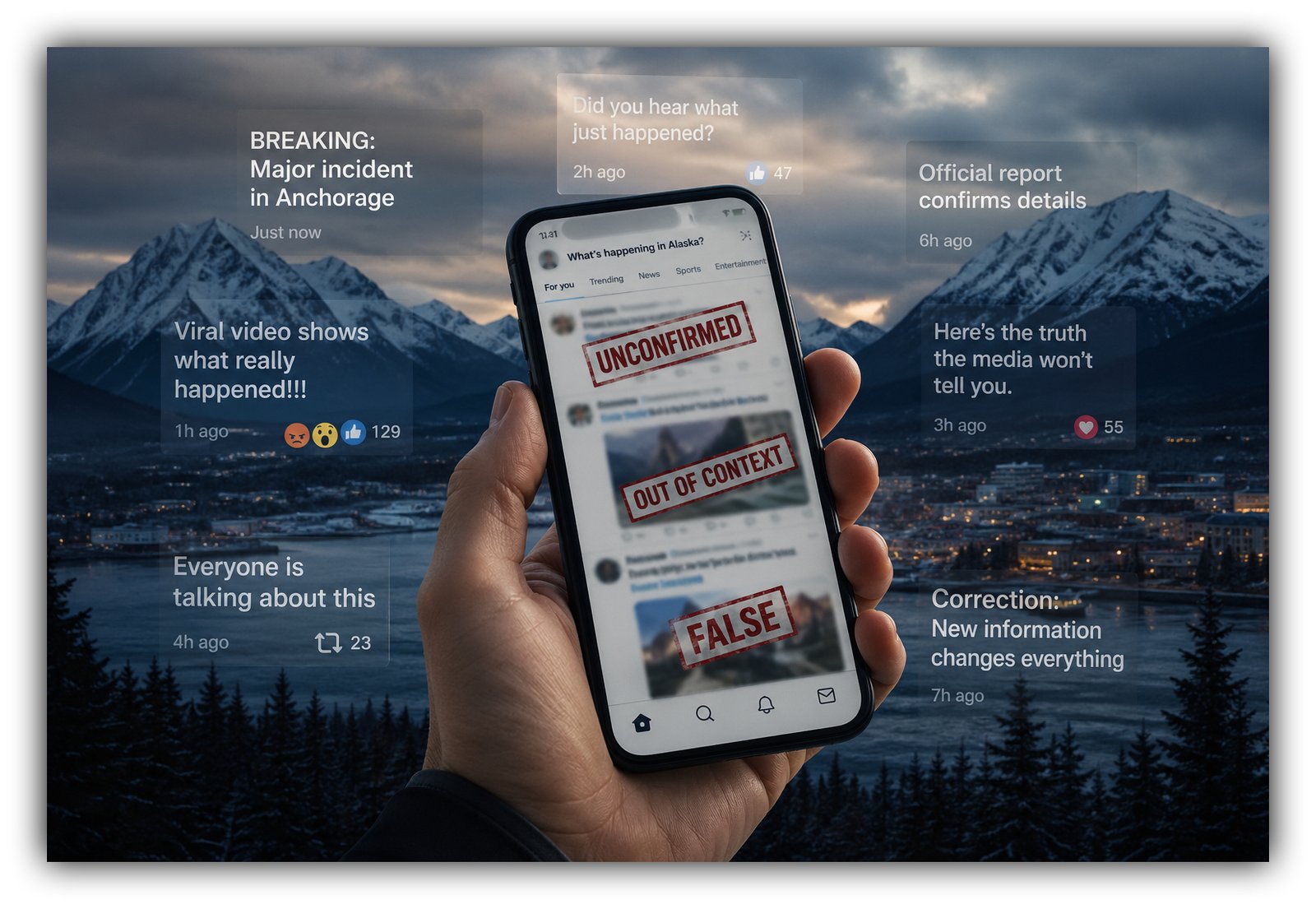
A smartphone becomes the front line of modern news, where Alaska’s landscape sits behind a feed of breaking claims, corrections, and competing versions. In the space between “unconfirmed” posts and official reporting, the story is already being decided long before it is verified. 📸 AI generated by ChatGPT | Alaska Headline Living ©️
In Alaska’s New Information Environment, Access Is Not Understanding And It Is Not Truth
By Gina Hill | Alaska Headline Living | April 30, 2026
Across Alaska, most people are not dealing with a lack of information. They are dealing with too much of it, arriving too fast, with too little structure to make sense of it.
Information now shows up in real time on phones, feeds, and group threads. A crash on the highway, a wildfire update, or a rumor about a local decision can appear instantly on platforms like Facebook, TikTok, and Instagram. Most people don’t go looking for it. It finds them.
But what shows up first is not always what is accurate. And what feels widely shared is not the same as what is confirmed.
That gap is where the modern information crisis begins.
The Newsroom Filter Did Not Disappear. It Fractured.
For decades, Alaska’s news pipeline followed a structured process. Reporters gathered facts, editors verified them, and organizations like the Anchorage Daily News and Alaska Public Media shaped them into coherent, contextual stories before publication.
That system created a shared baseline. Even when people disagreed with coverage, they were reacting to the same underlying facts.
That structure still exists, but it no longer controls what people see first.
A partial claim can spread before a full report is written. A screenshot can travel farther than the article it came from. A short clip can define a public understanding before context arrives. By the time verification catches up, the first impression is already established.
The filter did not disappear. It fractured across platforms, networks, and timelines that do not operate in sync.
Access Is Not Understanding And It Is Not Truth
Seeing information is not the same as understanding it.
Most people now experience news in fragments. A post, a clip, a comment thread, a reposted headline. Each piece carries a sense of urgency, but not necessarily completeness.
The problem is not only misinformation. It is incomplete information becoming complete in people’s minds before the reporting is finished.
Once that happens, corrections rarely carry the same weight as the original version. The first exposure tends to stick, even when it is wrong or missing context.
So the issue is not lack of access. It is that access arrives without structure, and interpretation fills the gaps.
The Algorithm Replaces The Newsroom Filter
On platforms operated by companies like Meta Platforms, what people see is not arranged by editors or reporters. It is arranged by engagement signals.
What gets pushed forward is what people react to, pause on, or share. That can include accurate reporting, but it can just as easily include speculation, emotion, or incomplete claims that spread faster than verified information.
Instead of journalists shaping what is most important before publication, algorithms shape what becomes most visible after publication.
In daily life, that shows up when a rumor appears in a feed before any official reporting exists, or when a clip defines a story before the facts are fully established.
Fragmented Reality in Everyday Life
This is not abstract.
Two people in the same Alaska community can walk away from the same event with different understandings because they saw different pieces of it online. One saw a clip. One saw commentary about the clip. One saw a later correction.
They are not reacting to different events. They are reacting to different stages of the same event as it moved through the information system.
That is why conversations about what “happened” often turn into disagreements about what people even saw in the first place.
When Political Pressure Meets Newsroom Independence
At the same time, traditional journalism is operating under its own pressures.
One documented case involved Carpenter Media Group–owned newspapers including the Homer News, Kenai Peninsula Clarion, and Juneau Empire.
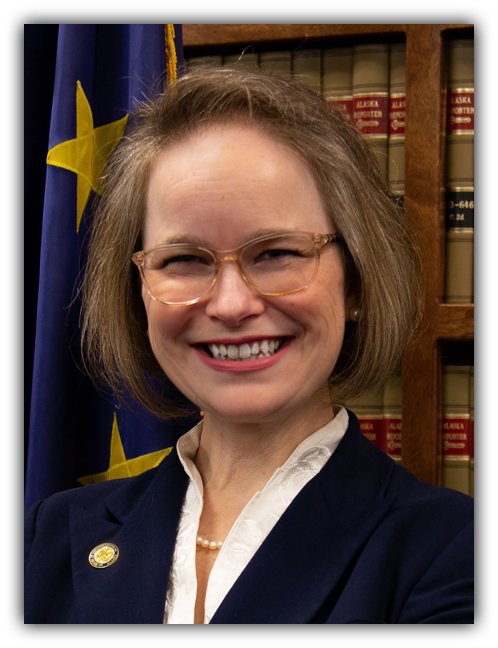
According to reporting by Alaska Public Media, Alaska State Representative Sarah Vance objected to coverage of a memorial service for conservative activist Charlie Kirk. She sent a formal letter on legislative letterhead criticizing the article.
Following that complaint, Carpenter Media Group approved edits to the published story. Journalists at those outlets resigned in protest, citing concerns about editorial independence and outside influence affecting newsroom decisions.
The sequence moved from public objection by an elected official to ownership response, to editorial revision, and then to newsroom resignations.
It did not involve formal censorship. But it did show how external pressure can still shape what is published and how it is presented.
What People Are Actually Dealing With
The result is not just faster news. It is unstable news. That’s not good news.
People are trying to understand events while the information about those events is still forming. The first version they see is not always the final or correct one. And the corrected version often arrives after belief has already formed.
That shifts the burden onto the reader in a way earlier media environments did not require as intensely.
It requires slowing the first reaction, resisting the assumption that the first version is the full version, and recognizing that visibility is not the same as verification. None of that is optional anymore if you want to stay oriented in what is actually happening.
Alaska’s information landscape is no longer defined by a single editorial gate.
It is shaped by algorithms deciding what appears, engagement deciding what spreads, ownership structures influencing editorial stability, and journalism working to verify after exposure has already occurred.
In that structure, the critical distinction is no longer where information comes from. It is whether it was verified before or after it landed in your feed, your group chat, and your understanding of what’s real.
And that is where the modern information crisis actually lives.
What do you feel about this post?

Like

Love

Happy

Haha

Sad