






Could Mr. Fusion Help Solve Alaska’s Energy Problems?
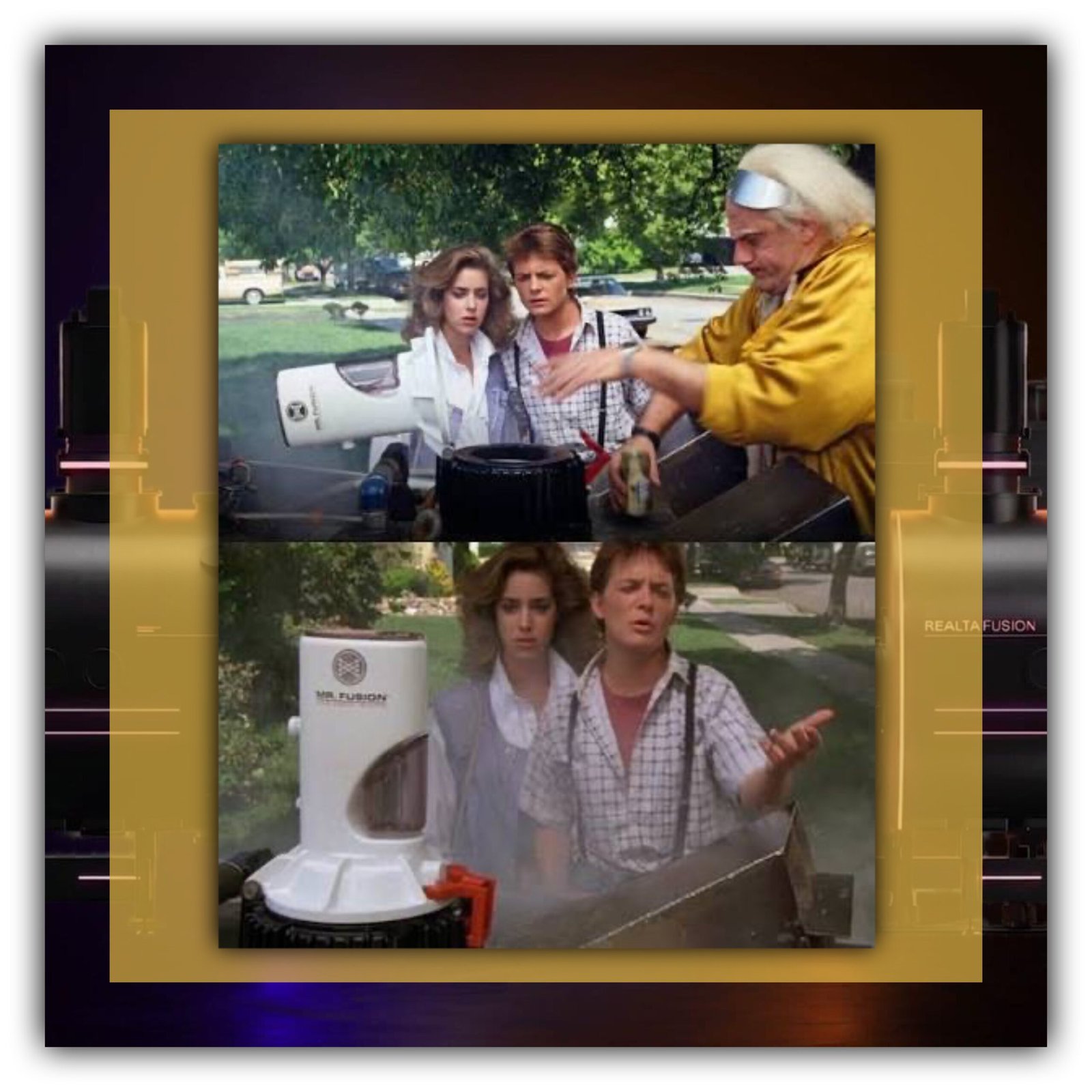
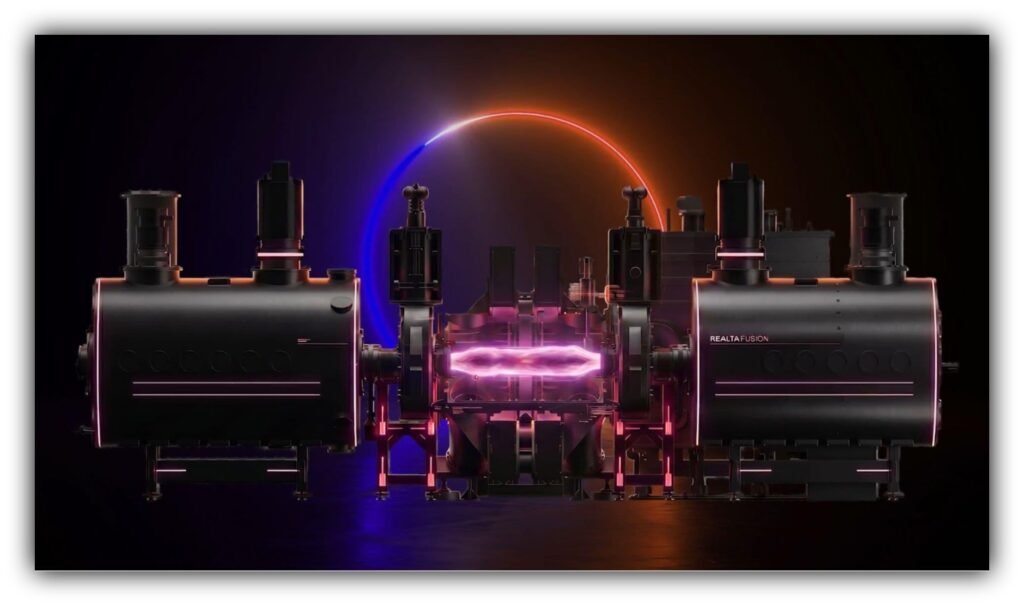
Great Scott! Doc Brown and the Mr. Fusion Home Energy Reactor meet Realta Fusion’s vision of tomorrow’s energy. The fictional garbage-powered gadget from Back to the Future Part II gets a real-world counterpart in the engineering ambitions behind Realta’s proposed magnetic mirror fusion system. | Background image source: Realta Fusion, Technology. Film image credit: Screenshot from Back to the Future Part II (1989), Universal Pictures.
Wisconsin is investing $15 million in a nuclear fusion company. Could the technology eventually help Alaska’s remote communities, high energy costs and dependence on diesel?
Remember Mr. Fusion?
In Back to the Future Part II, Doc Brown has a clever little contraption attached to the DeLorean. It looks suspiciously like a Mr. Coffee machine, except this one doesn’t brew your morning caffeine fix. It’s a fictional home energy reactor that turns household garbage into fuel.
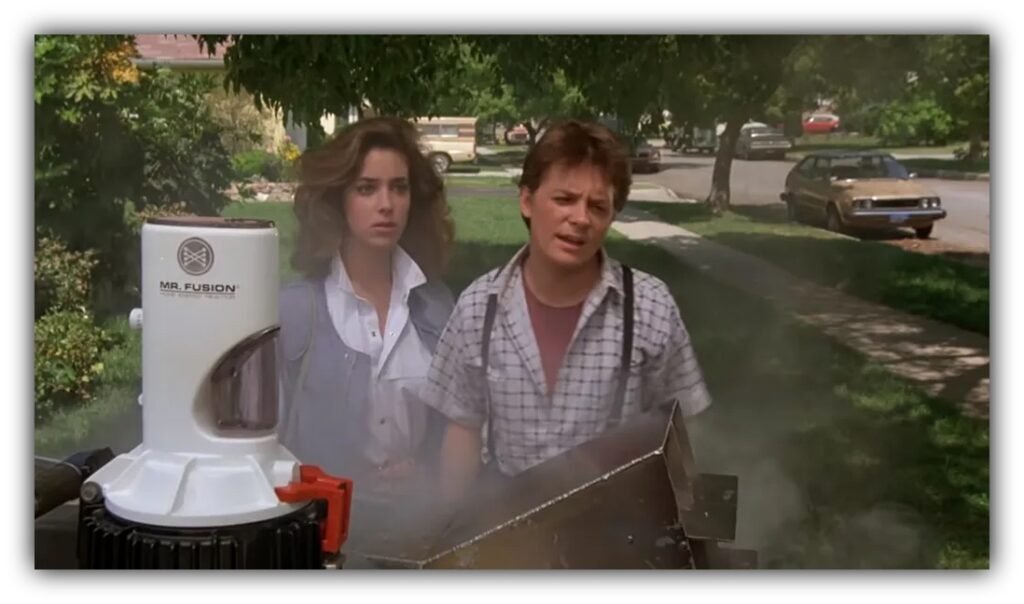
Banana peels? Trash? Toss them in. The DeLorean has the energy it needs to travel through time.
If only Alaska’s energy problems were that easy to solve.
But while Doc Brown’s Mr. Fusion belongs in Hollywood, a real company in Madison, Wisconsin, is working on something that sounds like it could have come straight out of a science fiction movie.
It’s called nuclear fusion, and the technology could eventually change how electricity and industrial heat are produced.
That raises an interesting question for Alaska: Could a technology being developed in Wisconsin eventually help communities that pay some of the highest electricity prices in the country and still depend heavily on diesel fuel to keep the lights on?
The answer isn’t as simple as tossing a banana peel into a coffee maker. But it’s worth investigating.
What Is Nuclear Fusion, Anyway?
Fusion is the process that powers the sun.
It happens when the nuclei of lightweight atoms combine to form a heavier nucleus, releasing energy in the process.
Scientists are working to recreate that process inside specially designed machines here on Earth.
The basic idea is to heat hydrogen fuel until it becomes an extremely hot, electrically charged gas called plasma. Powerful magnetic fields hold the plasma in place while scientists work to create the conditions needed for atomic nuclei to fuse.
When fusion occurs, energy is released.
That energy could eventually be captured and used to produce electricity or industrial heat.
Fusion is different from the nuclear power plants most people know about. Traditional nuclear power plants use fission, which splits heavy atoms apart. Fusion joins lighter atomic nuclei together.
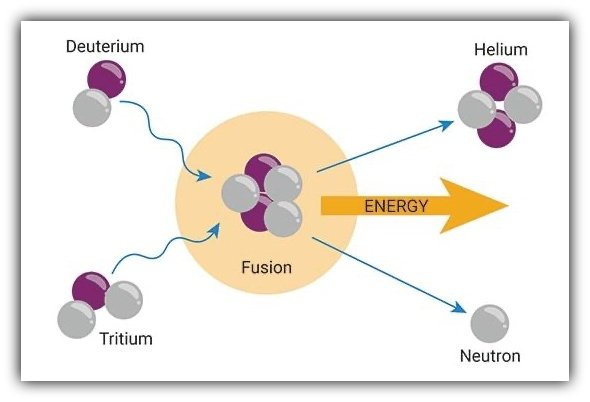
The U.S. Department of Energy explains that fusion could become an important source of energy if scientists can develop practical systems to harness it.
The Nuclear Regulatory Commission also makes an important distinction: Fusion machines do not operate through the self-sustaining chain reaction associated with conventional nuclear fission reactors.
In other words, this isn’t another version of the nuclear power plants people may remember from school science books.
Wisconsin Is Putting $15 Million Behind the Technology
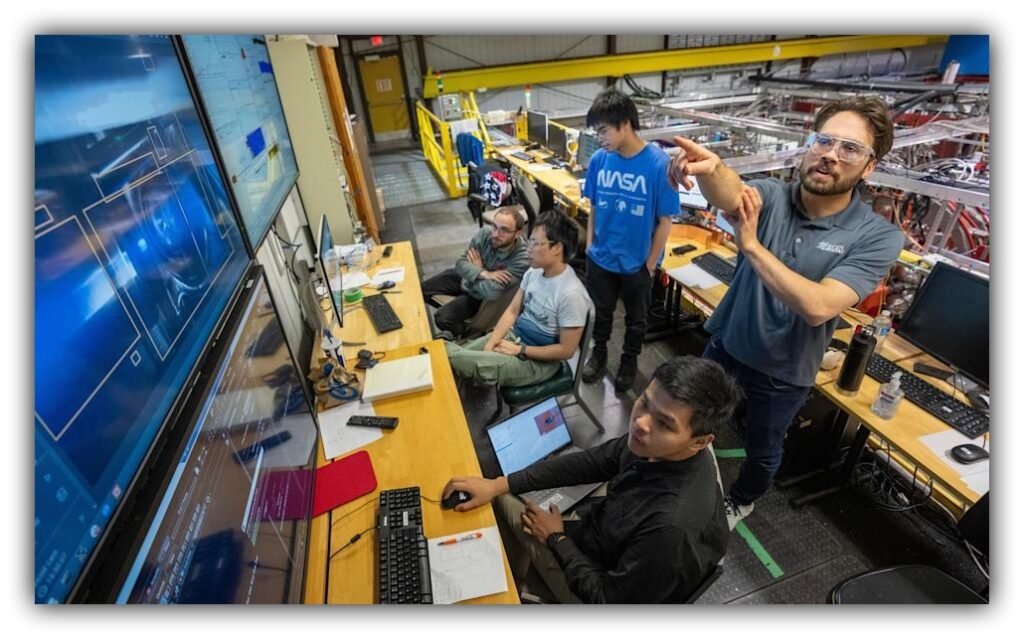
Realta Fusion is developing a magnetic mirror fusion system in Madison.
On November 18, 2026, Wisconsin Gov. Tony Evers and the Wisconsin Economic Development Corporation announced that the state would provide up to $15 million in performance-based Enterprise Zone tax credits for the company’s planned $800 million headquarters and research and development project.
The project will occupy the former Oscar Mayer plant, where Realta plans to establish a research and manufacturing facility called The Realta Forge.
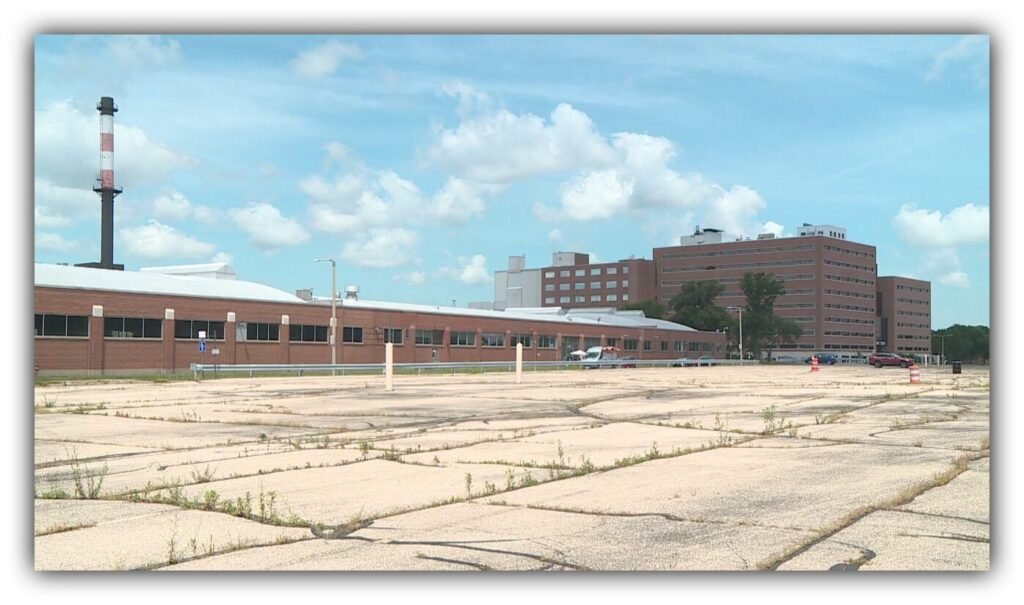
The company expects the project to create more than 500 jobs.
The state incentives are tied to the company’s capital investment and job creation. The full $15 million is not an unconditional cash payment.
Madison has also approved a separate $2.8 million Tax Incremental Financing loan for the redevelopment.
The city’s agreement requires Realta to retain 43 full-time equivalent jobs and create another 157 positions under the specified employment commitments.
So Wisconsin is making a substantial economic development bet on the company’s future.
But what exactly is the company trying to build?
Realta’s Version of Mr. Fusion
Realta is pursuing something called magnetic mirror fusion.
Instead of using the doughnut-shaped design associated with some other fusion experiments, its approach uses powerful superconducting magnets positioned at either end of a chamber.
Those magnetic fields help contain the extremely hot plasma.
The company’s design is intended to be compact and scalable, with potential applications in industrial heat and electricity production.
Its planned Madison prototype is called Hammir.
Realta is also working with the University of Wisconsin-Madison on technology that could convert some of the energy carried by charged particles directly into electricity.
In June 2026, the company announced that it had demonstrated this process using the Wisconsin HTS Axisymmetric Mirror, known as WHAM.
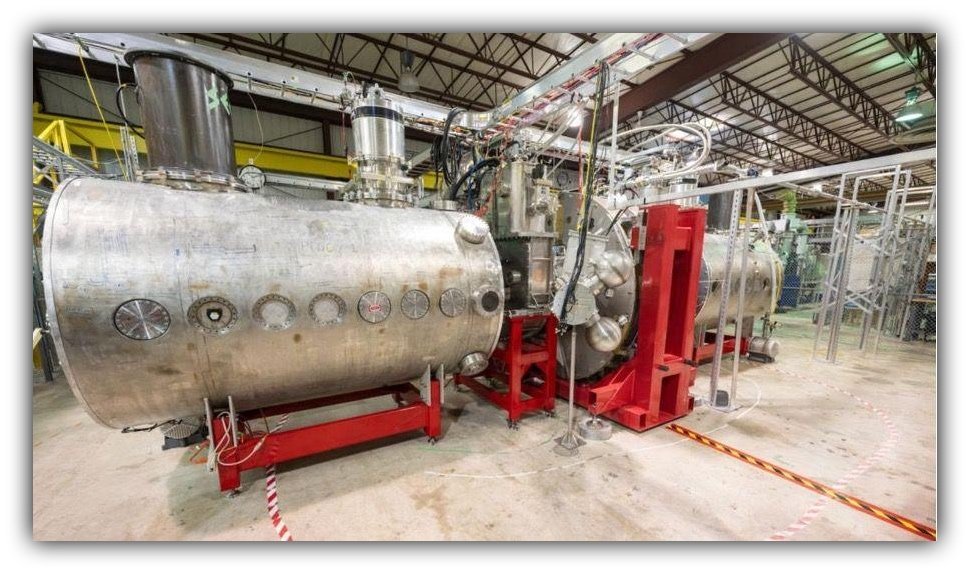
That is an important development, but there is a catch.
Realta’s own announcement says the experiment produced enough electrical output to illuminate a few lightbulbs. It also explicitly states that the demonstration did not establish net electricity production or large-scale conversion of fusion-generated energy into electricity.
That’s an important distinction.
The company has demonstrated a piece of the technology. It has not demonstrated a commercially operating fusion power plant.
And that brings us to Alaska.
Why Alaskans Should Pay Attention
Alaska’s approximately 200 isolated microgrid systems make the state a natural place to watch emerging energy technologies. According to the U.S. Department of Energy, most of those systems rely almost exclusively on imported fuel, primarily diesel, for electricity and other energy needs. That dependence leaves remote communities exposed to high fuel costs and supply disruptions. With diesel becoming an increasingly expensive foundation for long-term power planning, Alaskans have reason to pay attention to alternatives.
The military is also exploring nuclear microreactors, which use fission, not fusion, to produce electricity and heat on a much smaller scale than conventional nuclear power plants. The Department of the Air Force has selected Eielson Air Force Base as the preferred location for a microreactor pilot in Alaska, with a proposed system capable of producing up to 5 megawatts of electricity. The Army has also moved forward with its Janus Program, selecting five vendors and five initial military locations for microreactor development. These projects are still in development and face licensing and construction steps, but they signal growing interest in compact nuclear power for remote and mission-critical locations.
Fusion research, fission-based microreactors and renewable energy are different technologies, but all are part of a changing energy landscape. For Alaska, the question is whether these emerging options can eventually provide reliable power at a cost communities can afford, reducing dependence on diesel that must be transported over long distances.
The technology is not a ready-made answer to Alaska’s energy challenges. But with fuel costs weighing heavily on long-term planning, Alaskans should be watching what develops.
Sources
- U.S. Department of Energy: DOE Explains Fusion Reactions
- U.S. Nuclear Regulatory Commission: Fusion FAQs
- Wisconsin Economic Development Corporation: Realta Fusion to Receive up to $15 Million in Incentives
- City of Madison: Realta Fusion Tax Incremental Financing Resolution
- Realta Fusion: Technology
- Realta Fusion: A Fusion First, Direct Energy Conversion Demonstration
- University of Wisconsin-Madison: First Plasma Marks Major Milestone in Fusion Energy Research
- U.S. Department of Energy: Alaska Microgrid Partnership
- U.S. Department of Energy: What Is a Nuclear Microreactor?
- Eielson Air Force Base: Microreactor Pilot
Photo credits
- Back to the Future Part II (1989), © Universal City Studios, Inc. and Amblin Entertainment, Inc. Screenshots from the film.
- Former Oscar Mayer plant: Photo courtesy of WMTV 15 News.
- Elliot Claveau and WHAM device: Bryce Richter / University of Wisconsin-Madison.
- How Nuclear Fusion Works graphic: U.S. Department of Energy.
- Direct energy converter: Realta Fusion.
Featured image: Screenshot captured from Back to the Future Part II (1989), directed by Robert Zemeckis. Mr. Fusion Home Energy Reactor scene. Universal Pictures.
The film image is included as a pop-culture reference. It is not a depiction of actual fusion technology.
What do you feel about this post?

Like

Love

Happy

Haha

Sad