





Across Alaska: Fuel Prices, Public Decisions, and Red Dress Gala Support
What’s Hitting Your Wallet, Your Community, and Your Week
By Gina Hill | Alaska Headline Living | May 6, 2026
You feel it in small ways first. A higher total at the pump, decisions being made without much notice, and reminders to get ready for what the season can bring. It adds up faster than you expect.
Fuel Prices in Alaska: What You Notice Every Time You Stop for Gas
You don’t need an article to tell you fuel is expensive. You already feel it every time you pull up to the pump and hesitate for a second before swiping your card.
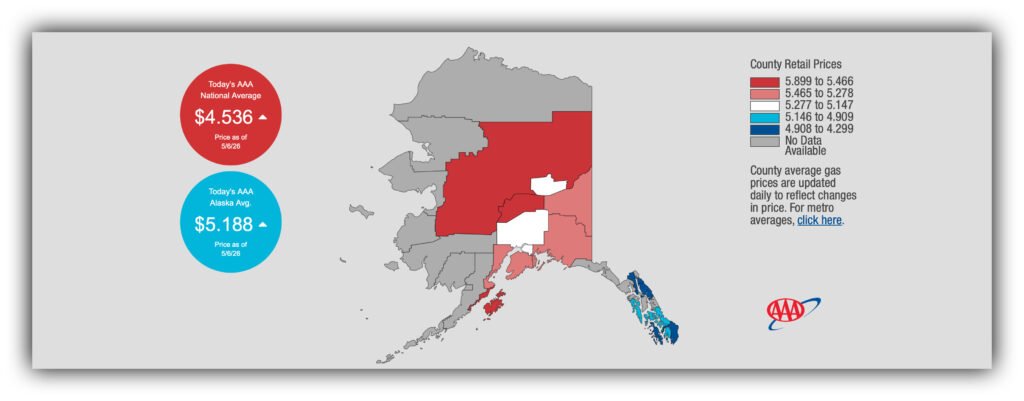
Right now, Alaska gas prices are climbing fast. According to AAA, the statewide average for regular is about $5.18 a gallon, with diesel pushing close to $5.95. That is up more than 30 cents from just a week ago, and more than $1.50 higher than this time last year.
Prices have been rising week over week:
- Regular: $5.18 now vs. $4.86 a week ago
- Mid-grade: $5.33 now vs. $5.07
- Premium: $5.61 now vs. $5.31
- Diesel: $5.94 now, staying consistently high
Zoom out a little and it hits harder. Just one month ago, regular gas in Alaska averaged around $4.62, meaning prices have jumped more than 50 cents in a matter of weeks. A year ago, it was closer to $3.60. This is not random. Prices are moving with global oil markets, where instability tied to the Iran conflict has pushed costs up nationwide, with U.S. averages also jumping sharply in recent weeks.
What it means for you is simple and immediate. Every errand costs more. Every commute adds up faster. And those small trips you don’t think about start showing up in your weekly total.
It starts in small ways, but it lands like a big hit.
Mat-Su Borough Budget Decision: Where the Things You Rely On Get Decided

The Mat-Su Borough Assembly meets Thursday, May 7, 2026 at 6pm in Palmer at the DSJ Building for a special meeting focused on budget deliberations and possible adoption.
This is where the decisions get made that show up later in everyday life, often in ways people feel before they see the details. Road maintenance schedules, emergency services, community funding, and basic infrastructure planning all run through this process.
Mat-Su Borough Mayor Edna DeVries highlighted the upcoming budget deliberations in a borough Facebook post, pointing to the importance of public participation as final decisions come together.
👉🏿 Public comment is available by phone at 855-225-2326.
Once a budget is adopted, it shapes what gets prioritized and what gets delayed for the year ahead. For residents, it often shows up in small but noticeable ways: how quickly roads get serviced, how local services are staffed, and how responsive the system feels when something changes.
This is one of the last chances to weigh in before those decisions are locked in for the year.
Alaska Election Policy Update: SB 64 Veto Override Fails

With the Governor’s veto of Senate Bill 64 not overridden, the proposed election reforms will not move forward this session.
The vote fell short, with 23 in favor and 17 opposed in the House, and 15 in favor and 5 opposed in the Senate. A total of 40 votes were required to override the veto.
The Alaska Federation of Natives said the decision keeps barriers in place that many rural voters already face. Voting depends on weather-dependent mail flights. In-person options are limited. Long distances and tight timing make getting a ballot in and counted a constant challenge outside road-system communities.
Supporters say Senate Bill 64 was meant to improve access, transparency, and fairness in Alaska’s elections, especially for rural and Alaska Native communities. It was also meant to reduce preventable ballot rejection and modernize how the system works so more eligible voters are counted the first time their ballot is submitted.
Anchorage Emergency Management: Wildfire Season Is Not Waiting
Get ready now using READY, SET, GO. That’s the message from Anchorage Office of Emergency Management and the State Division of Forestry and Fire Protection.
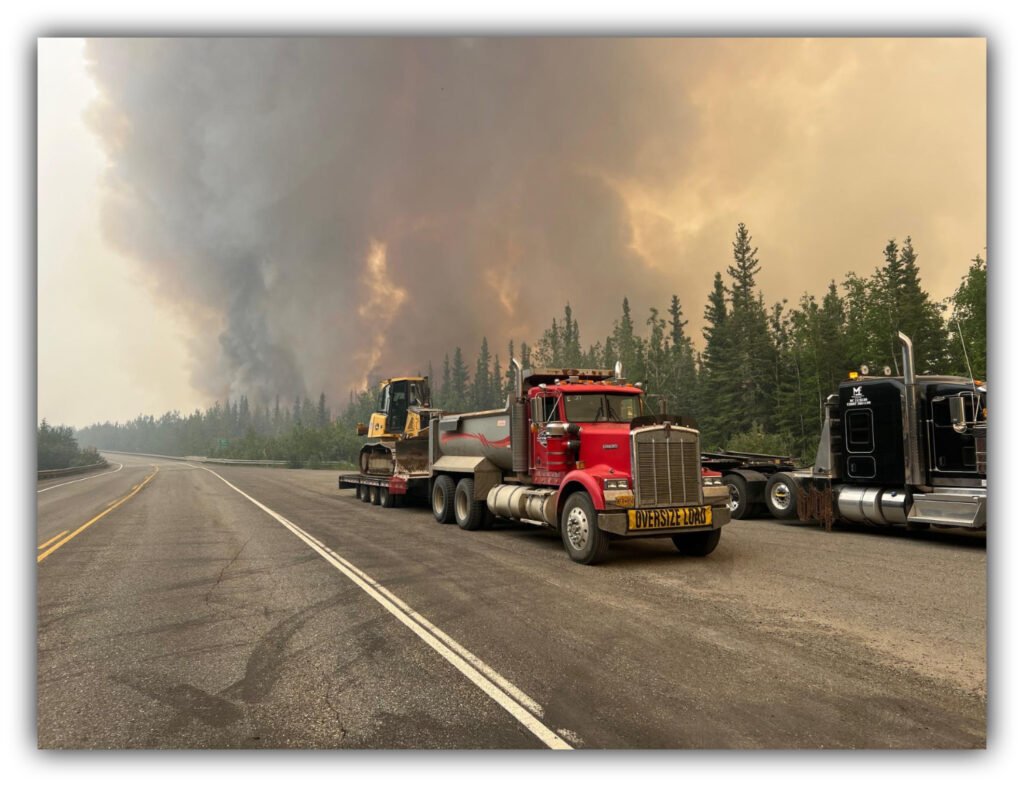
Recent drought monitoring in Alaska through the current season has shown pockets of abnormally dry to moderate drought conditions in parts of Southcentral and Interior Alaska. That dryness means vegetation ignites faster and fire spreads more easily once it starts.
Alaska is seeing wildfire conditions that increasingly resemble the Lower 48.
In a typical Alaska fire season, roughly a million acres can burn statewide depending on weather and lightning conditions. Some years are lighter, some are heavier, but the pattern is consistent: when conditions line up, fire spreads quickly and over large areas.
That is why preparation matters before anything is happening near you.
That means:
- Clearing brush and anything flammable away from your home
- Keeping grass and vegetation maintained so dry fuel does not build up
- Paying attention to alerts and updates when conditions change
- Having a go bag ready so you are not scrambling under pressure
- Knowing how you would leave and where you would meet if you had to evacuate
- Leaving early if you are told to go, not waiting to see how bad it gets
This is not about living in fear of wildfire season. It is about not being caught off guard when things start moving fast.
MMIWG2S Alaska: Red Dress Gala Silent Auction Support

This is the part of the week where the news shifts from pressure to people.
MMIWG2S Alaska is asking for donations for the Red Dress Gala Silent Auction, which supports awareness and advocacy around Missing and Murdered Indigenous Persons in Alaska.
If you want to help:
- Fill out the donation form before dropping anything off
- Drop off or mail items Monday through Thursday, 9am to 5pm
- Native Movement, 2522 Arctic Blvd, Anchorage
- Questions: (907) 744-3722 or violet@mmiwg2salaska.org
This leads into the 2026 Alaska MMIP Justice Summit and Red Dress Gala at the Dena’ina Civic and Convention Center in Anchorage, May 27 through May 29.
Events include:
- MMIP Justice Summit: May 27 to 28
- Red Dress Gala: May 29
Alaska this week is already moving. Costs are shifting, decisions are locking in, and readiness is not optional for long. What you catch early is what costs you less later.
What do you feel about this post?

Like

Love

Happy

Haha

Sad