
May 5: Remembering Missing and Murdered Indigenous Women and Girls
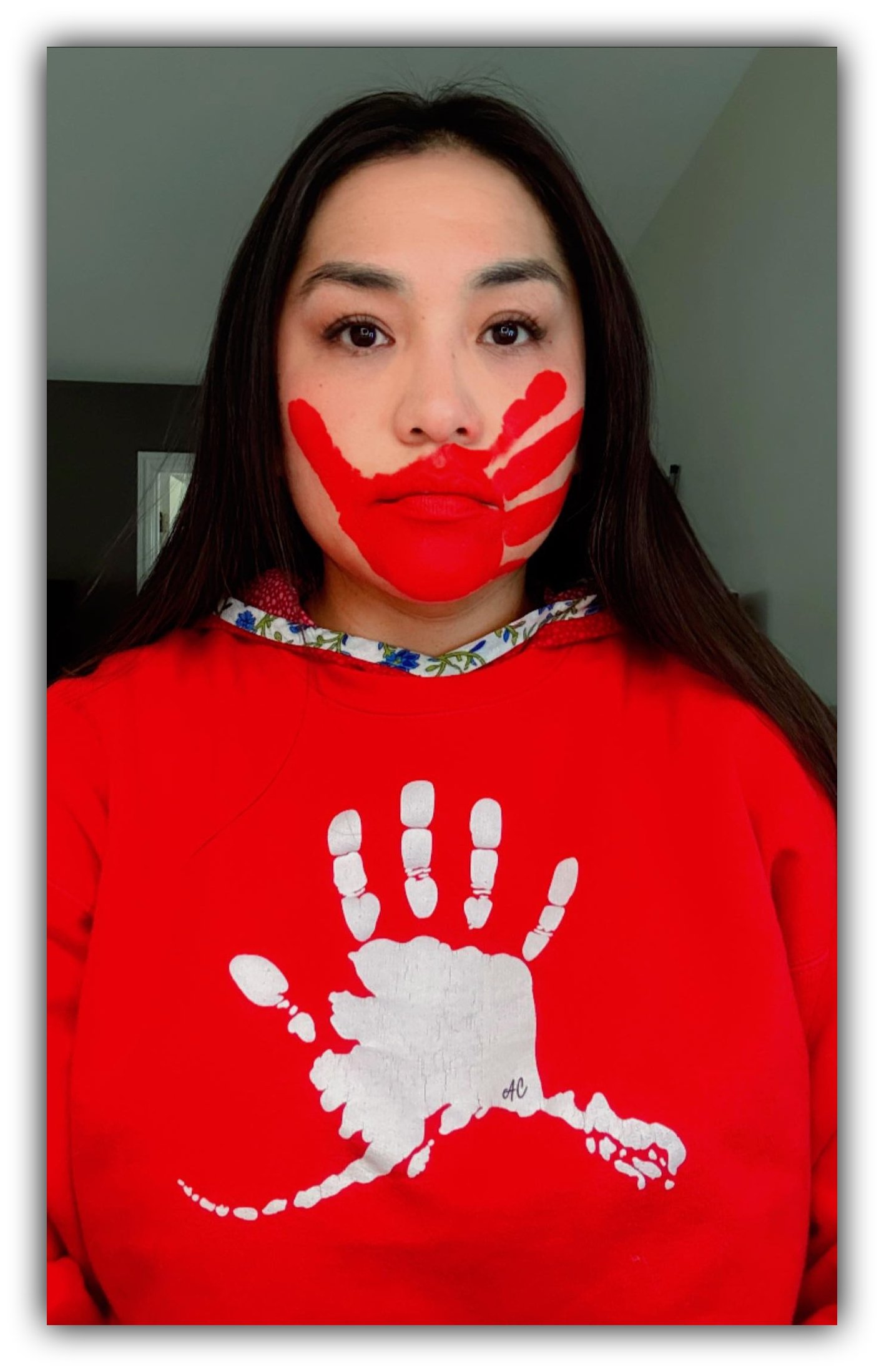
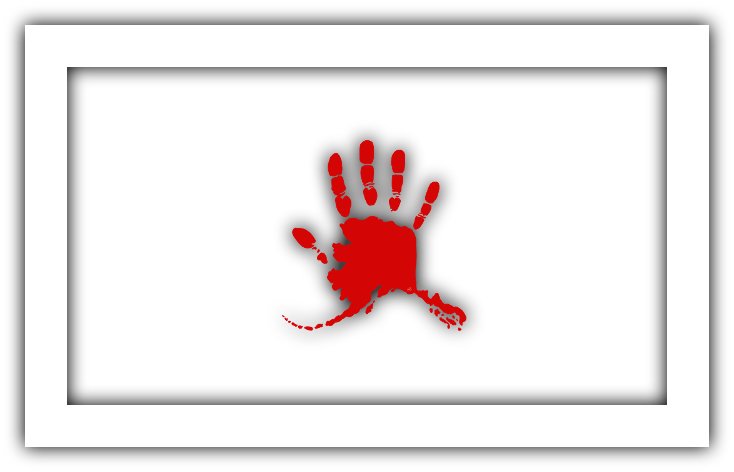
Antonia Commack, an Alaska Indigenous MMIP advocate, shared this image on Facebook wearing a red handprint on her face and the symbol across her shirt. The red handprint is widely used in Missing and Murdered Indigenous Women and Girls awareness to represent silenced voices and those who are missing or murdered. In her post, she called for continued accountability, writing that advocacy must stay loud not just today, but every day.
Missing and murdered. Justice is missing too.
By Gina Hill | Alaska Headline Living | May 5, 2026
This is not confined to one place. Missing and Murdered Indigenous Women and Girls is a nationwide crisis across every state in the United States.
May 5 is the National Day of Awareness for Missing and Murdered Indigenous Women and Girls (MMIWG), also known as Missing and Murdered Indigenous Persons (MMIP) Awareness Day.
It exists because Indigenous women and girls face extreme and disproportionate violence and disappearance in the United States, and too many cases never reach resolution.
Native American and Alaska Native women are more than twice as likely to experience violent crime compared to women overall, according to the Centers for Disease Control and Prevention. More than 80 percent experience violence in their lifetime, based on federal research cited by the National Institute of Justice. Many are harmed or killed by people they know, often within relationships that turn dangerous behind closed doors.
For Native women ages 25–44, homicide is among the leading causes of death, and in some age groups it ranks among the top three, according to CDC mortality data.
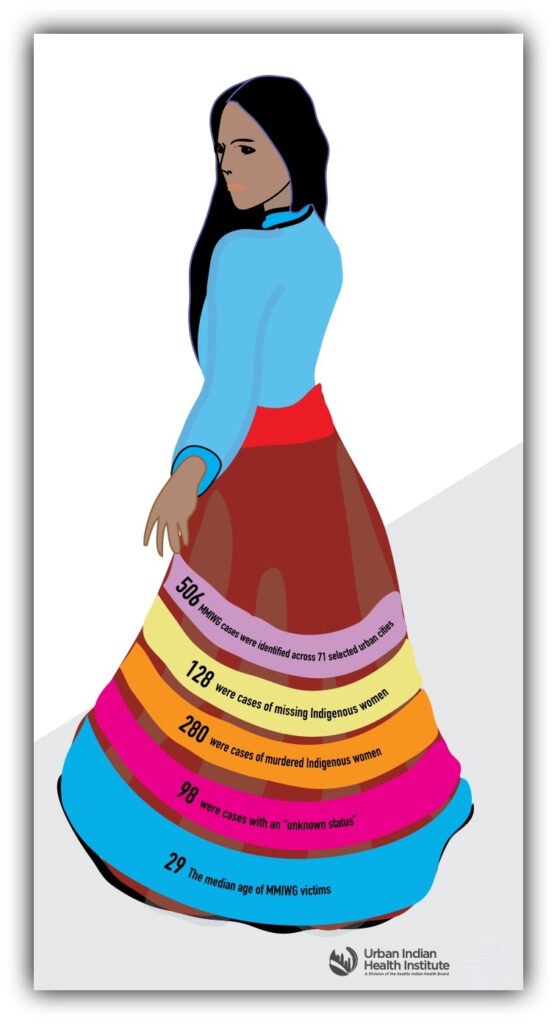
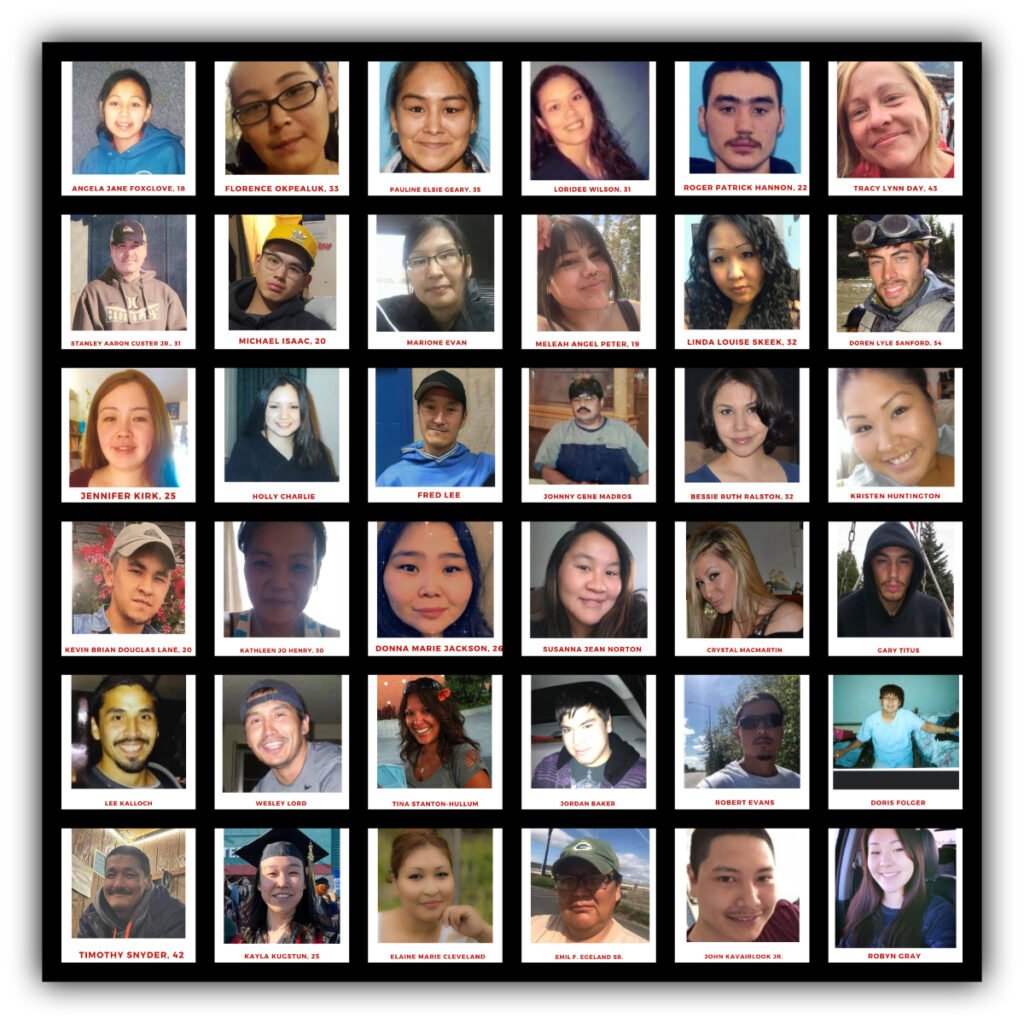
These are not statistics. They are lives interrupted, voices gone, and families grieving without answers.
Even this does not capture the full reality. Many cases are never fully reported or consistently tracked. Responsibility is split across agencies, and when coordination fails, investigations stall or disappear into jurisdictional gaps. Families are left without resolution, often with no timeline and no clear path forward.
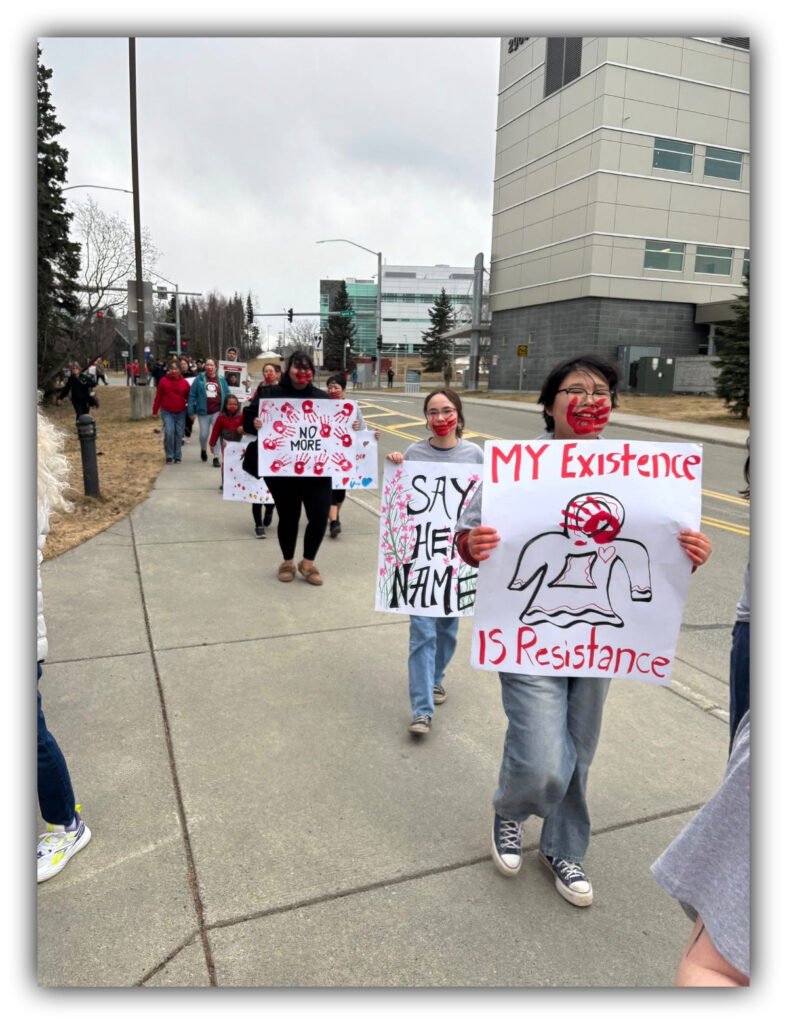
Names must still be spoken so they are not forgotten.
That refusal to let them disappear is what keeps these cases visible when systems fail to respond. It is carried by families still searching and communities that refuse to forget.
In Alaska, one of the most visible expressions of this crisis is a red handprint design created by Antonia Commack, an Alaska-based Indigenous MMIP advocate whose work focuses on raising awareness and pushing for accountability in cases that too often go overlooked. The red handprint has become a symbol of this crisis, used when families and advocates refuse to let these cases be ignored or pushed into silence. It marks those who are missing and those who have been taken, and her design has become part of how people across Alaska recognize this work.
Across Alaska and the United States, Indigenous-led organizations continue work that systems often fail to complete, including the MMIWG2S Alaska Working Group, the Alaska Native Women’s Resource Center, the National Indigenous Women’s Resource Center, StrongHearts Native Helpline, Sovereign Bodies Institute, and Mending the Sacred Hoop. These organizations work directly with families, support safety, and push for accountability where cases have stalled or been mishandled.
Awareness alone does not change outcomes. It has to become action. That means learning from these organizations, sharing accurate information, wearing red on May 5, standing with families still searching, and demanding accountability when law enforcement fails to act with urgency or follow-through.
Support for this work can be shown year-round by purchasing or sharing designs created in support of MMIP awareness, including work by Antonia Commack.
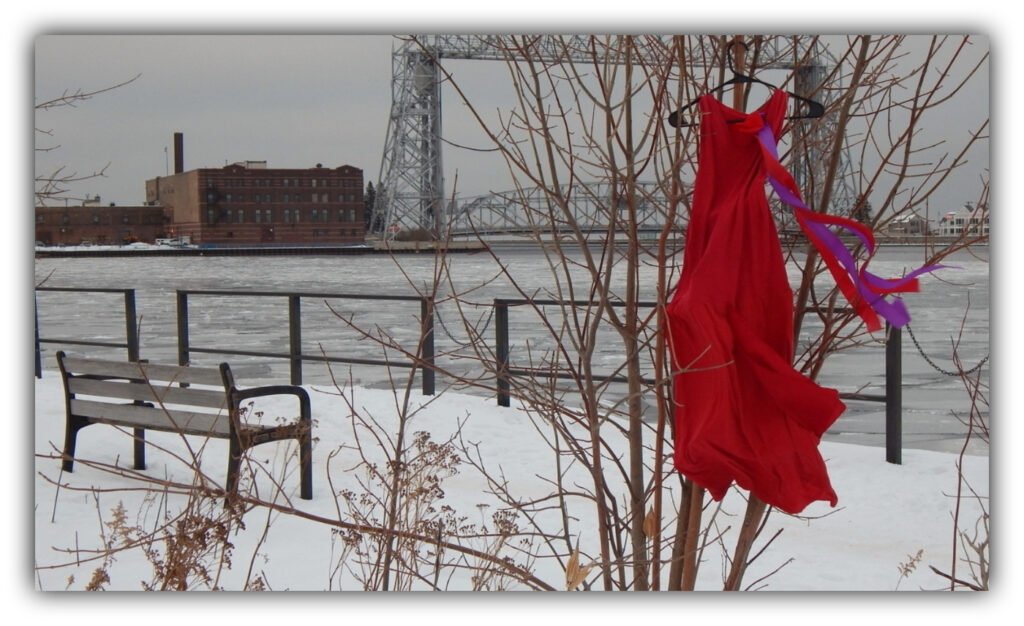
Remembering is how names stay visible when systems fall short, because forgetting makes them disappear twice. But remembering is not enough. The cycle has to end.
SOURCES
- Centers for Disease Control and Prevention (CDC), Violence Against American Indian and Alaska Native Women
- National Institute of Justice (U.S. Department of Justice), Violence Against American Indian and Alaska Native Women
- Urban Indian Health Institute, Missing and Murdered Indigenous Women & Girls Report
- U.S. Department of the Interior, Bureau of Indian Affairs MMIP Resources
- MMIWG2S Alaska Working Group
- National Indigenous Women’s Resource Center
- StrongHearts Native Helpline
- Sovereign Bodies Institute
- Mending the Sacred Hoop
- Alaska Department of Public Safety MMIP Resources
What do you feel about this post?

Like

Love

Happy

Haha
Sad