







Scam Tracker: The Fake Autism T-Shirt Playbook
By Gina Hill | Alaska Headline Living | June 17, 2026
How to spot stolen designs, verify a real retailer, and keep your money out of sympathy scams.
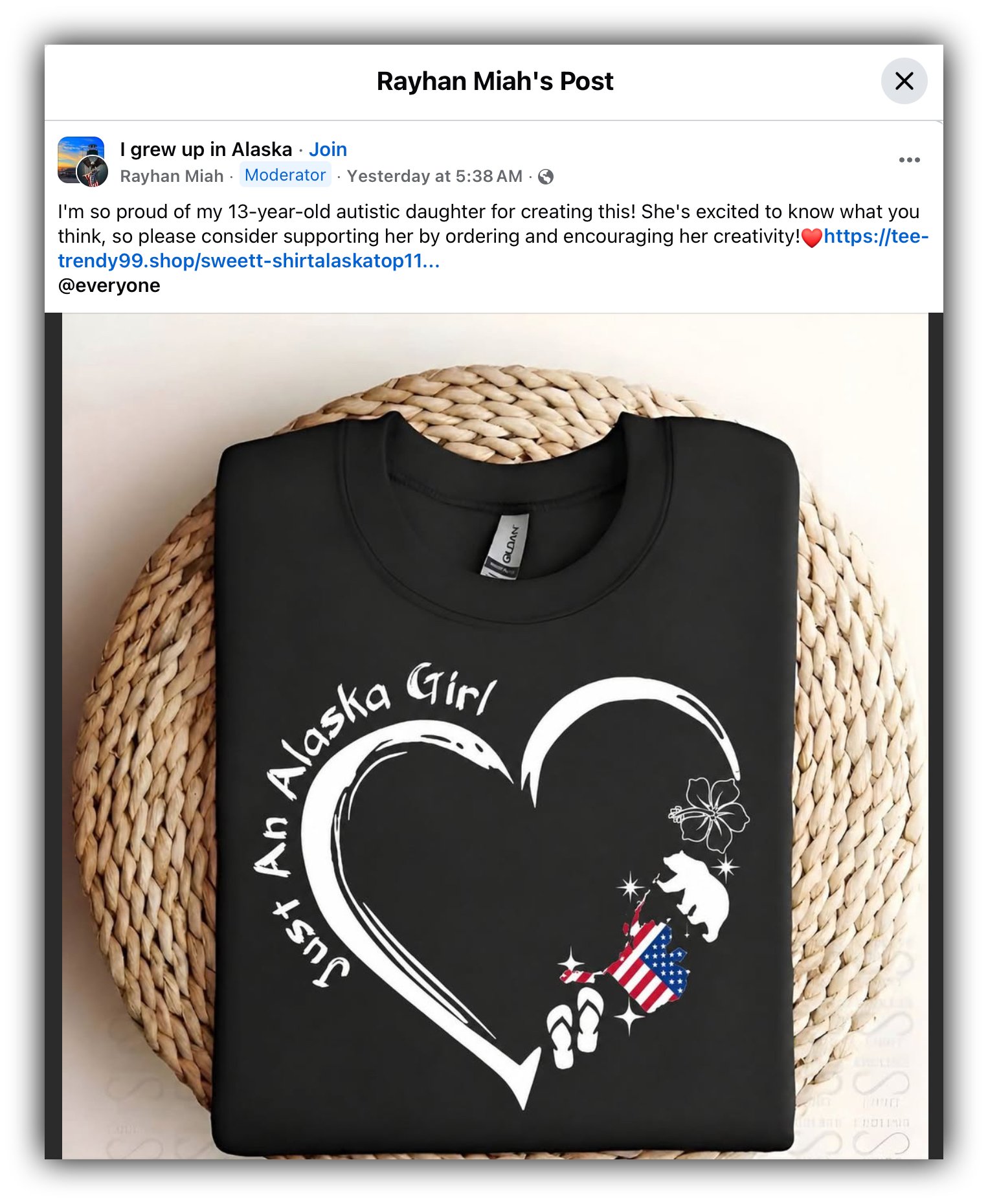
A lot of people have seen a post like this and had the same first reaction: That’s sweet. A parent says their autistic child made a shirt, the story feels local and heartfelt, and before you know it, you’re considering a purchase because it seems like a nice way to encourage creativity. That’s exactly why this scam works. It leans on good intentions and counts on you not pausing long enough to ask where the shirt really came from.
The trouble is, these posts often follow the same tired pattern. The image may already be floating around other pages, the account may be brand-new or barely active, and the store behind the link may have no real history, no clear contact information, and no reliable way to help if the order never shows up. If something about the post feels off, that feeling is usually worth trusting.
The fastest way to test the claim is a reverse image search. If the shirt shows up in multiple places, tied to different names or different towns, that is a strong sign the design was copied or recycled. It also helps to search the exact story and the store name with words like “scam” or “complaint,” because real fraud often leaves a trail of warnings behind it.
A legitimate online retailer should look like one. Readers should be able to find a working contact page, a real physical address, clear shipping and return policies, and a domain that actually matches the business name. Vague policy language, misspelled pages, generic contact info, and unrealistically low prices are all red flags. If the seller is hard to reach before the sale, that usually becomes even harder after the money is gone.
Payment method matters too. Credit cards generally give buyers more room to dispute a bad charge than debit cards, gift cards, or peer-to-peer transfers, which are much riskier when you do not know the seller. If a checkout page pushes you toward a payment method that feels unusual, that is a warning sign worth listening to.
This problem is not just annoying. It is common. The FTC says social media was the costliest fraud contact method in 2025, and shopping scams were the most reported type. In other words, this is not a quirky one-off internet oddity. It is part of a much larger pattern of fraud that starts in a feed, in a group, or in a comment thread.
There is also an enforcement side, though not necessarily a single lawsuit tied to this exact shirt post. Meta says it has taken legal action against scam advertisers and used technical enforcement to suspend payment methods and related accounts, while consumer agencies continue to urge people to report fraud and online shopping problems through official channels. Readers should not assume a visible post has been checked or stopped just because it is still online.
Reader checklist
- Reverse-search the shirt image before buying. Repeated appearances usually mean it was copied.
- Search the story and store name plus “scam,” “complaint,” or “review”.
- Check whether the profile is new, sparse, or has comments turned off.
- Inspect the website’s contact info, policies, and payment methods.
- Avoid debit cards, gift cards, and peer-to-peer transfers for unfamiliar stores.
- If you clicked or paid, contact your bank or card issuer right away, change passwords if you entered personal information, and report the fraud.
If you already clicked
If you already opened one of these links or entered payment information, act fast. FTC guidance says to preserve screenshots, report the scam, and use official complaint channels so the fraud is documented and easier to track. It can also help to tighten your social-media privacy settings so scammers have less information to work with next time.
The bottom line is simple: If a social post pulls at your heartstrings, urges you to buy quickly, and sends you to a website you have never heard of, slow down and verify it first. A few extra minutes of checking can save you from fake merch, stolen card data, and a scammer cashing in on your good nature.
Sources
- FTC Consumer Advice: Online Shopping
- FTC: File A Complaint
- FTC: Contact the Federal Trade Commission
- USA.gov: Where to file a complaint about an online purchase
- FTC: Why Report Fraud?
- Meta: Meta Takes Legal Action Against Scam Advertisers
- Turn To 10: Watch out for new charity t-shirt scam on Facebook
- MSU Broad College: Professional Pointer: Reverse Image Searches
- McAfee: 8 Ways to Know If Online Stores Are Safe and Legit
- Chase: Ways to Check if A Website is Legitimate
What do you feel about this post?

Like

Love

Happy

Haha

Sad