





Why Your MEA Bill Just Jumped in the Valley
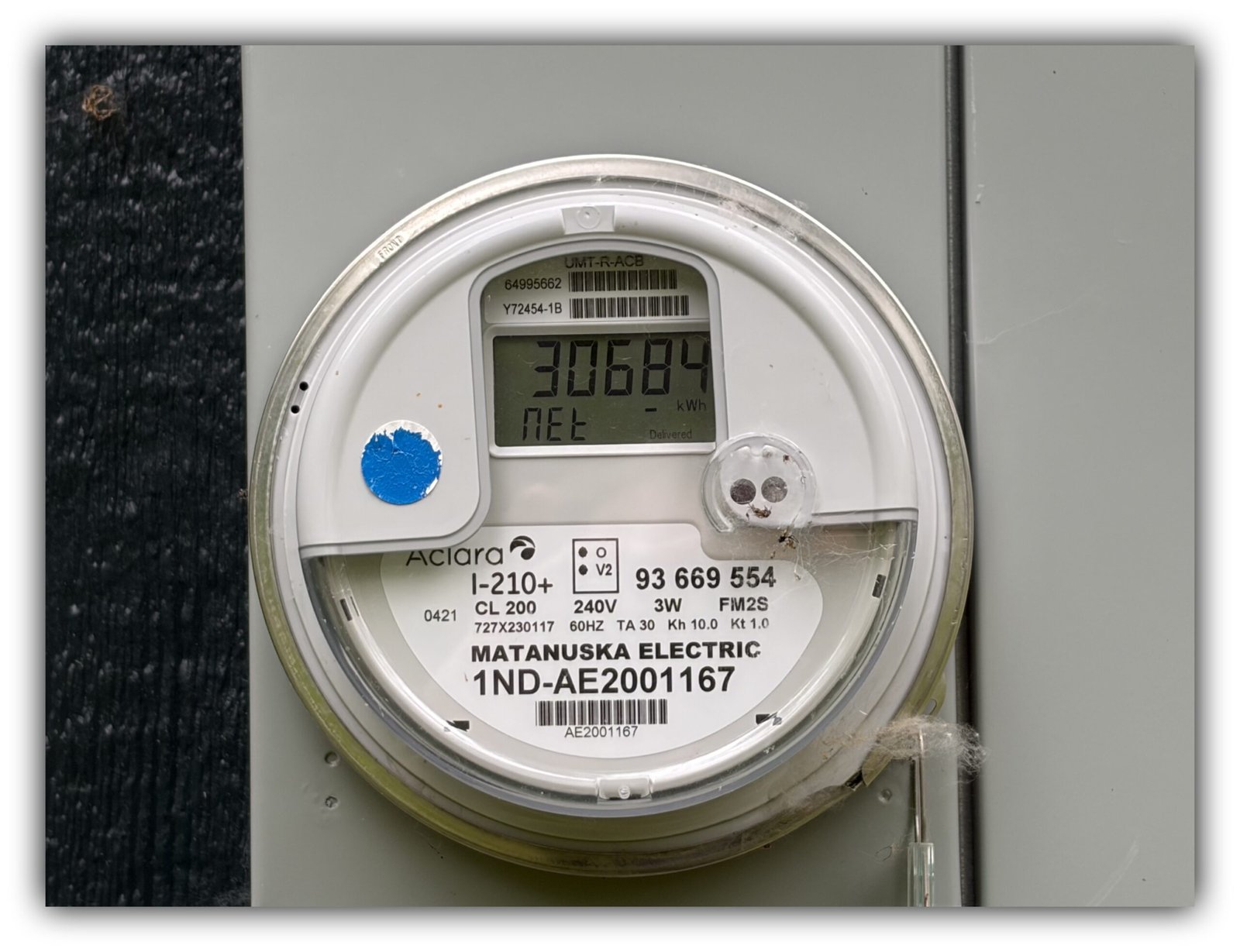
A Matanuska Electric Association smart meter, a small but telling reminder of how higher power costs show up one household at a time. Courtesy of James Hill, Alaska Headline Living ©️
From cold snaps to global oil chaos, here’s who, and what, is behind the spike.
By Gina Hill | Alaska Headline Living | Friday, July 17, 2026
WASILLA, Alaska – If your electric bill felt noticeably higher this month, you’re not imagining it. Matanuska Electric Association’s latest increase hits right where it hurts for Mat-Su households already juggling fuel, groceries, and summer expenses.
The co-op didn’t raise base rates. Instead, the jump comes from the Cost of Power Adjustment (COPA), the pass-through charge that reflects what it actually costs MEA to keep the lights on. For a typical home using 623 kWh, that’s about $14.53 more this month.
MEA’s “typical” 623 kWh/month usage lines up with a modest 1,400m -1,600 square-foot Wasilla or Palmer home. Think a three-bedroom house with a family running standard appliances, maybe a garage freezer, and some electric space heating on cool summer nights.
The Culprits Hitting Your Bill

This isn’t one single cause. It’s a stack of local and global pressures that landed all at once:
- Geopolitical conflict with Iran: U.S. and Israeli military actions, along with Iranian responses, have disrupted oil flows and raised war-risk premiums. Reports note crude moving into the $70–$100+ per barrel range depending on the scenario.
- Strait of Hormuz disruptions: The conflict has curtailed or threatened tanker traffic through this chokepoint, which normally carries about 20 percent of global oil. That tightens supply expectations and lifts prices worldwide.
- Replacement-cost pricing: U.S. refineries and retailers price fuel based on the cost to replace inventory, not what they paid for existing stock. So global crude spikes translate quickly to pump prices, even if the U.S. produces a lot of oil.
- Seasonal and demand factors: Summer brings more expensive fuel blends and higher driving demand, which typically add several cents per gallon on top of geopolitical pressure.
- A colder-than-normal spring in the Mat-Su forced utilities to burn more natural gas than planned just to keep up with demand.
- Less cheap hydro power from across the Railbelt, as low snowmelt and water flow cut generation. That means fewer low-cost electrons flowing into MEA’s system.
- Power plant outages in neighboring utilities, shrinking the pool of shared, lower-cost electricity MEA typically taps into.
- A new $170,000-a-month gas storage tab paid to Hilcorp, now baked directly into what members pay.
- Higher transmission and purchased power costs, including more expensive summer hydro contracts.
- Fewer projected kilowatt-hours sold this summer, which means costs are spread across fewer users. That pushes the per-unit price higher.
What It Means at Home
In practical terms, this is the kind of increase you feel in small, cumulative ways: a higher autopay draft, a tighter grocery run, or rethinking how much you run that extra freezer or space heater on cool nights.
The biggest driver remains natural gas. It is still the backbone of Southcentral Alaska’s power grid. When gas use spikes or prices rise, electric bills follow.
The Bigger Picture in Alaska
There’s also a longer shadow behind this bill: Cook Inlet gas is getting tighter and more expensive. Utilities, including MEA, are already signaling future reliance on imported liquefied natural gas (LNG), which typically comes at a higher cost.
That makes swings like this quarter’s COPA increase less of a one-off and more of a preview.
MEA says the adjustment should ease once the current cost shortfall is recovered, assuming fuel prices and demand stabilize. But for now, Valley residents are left absorbing the hit one kilowatt-hour at a time.
Sources
- Matanuska Electric Association, “Monthly Member Update – 3Q Rate Adjustment, Food Drive & Taproom Tuesdays,” July 17, 2026.
- Matanuska Electric Association, “MEA’s Cost of Power Adjustment (COPA) Increasing for 3Q 2026.”
- Matanuska Electric Association, “3rd Quarter 2026 Rate Sheet” (PDF).
- Matanuska Electric Association, “3Q COPA Release v3” (PDF).
What do you feel about this post?

Like

Love

Happy

Haha

Sad