





Finding Deleted Jan. 6 DOJ Releases
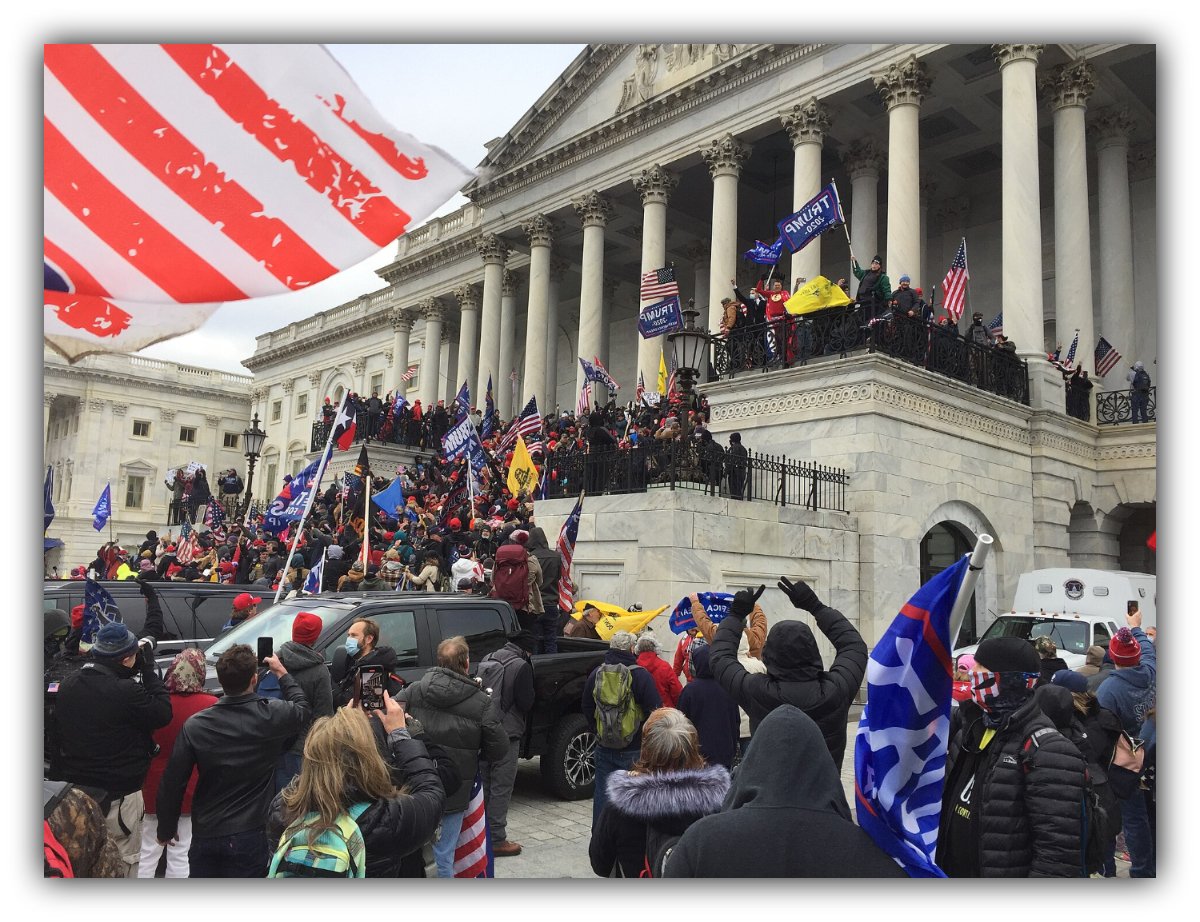
Trump supporters storm the U.S. Capitol on January 6, 2021, at 2:08 p.m. They breach the building and threaten to hang Vice President Mike Pence. The attack results in multiple deaths and triggers the largest criminal investigation in U.S. history. | Photo: Own work by TapTheForwardAssist, January 6, 2021. Source: Wikimedia Commons.
DOJ Scrubbed Jan. 6 Case Pages. Archives Preserve What Was Removed.
The live DOJ website no longer tells the whole story of the Jan. 6 prosecutions. The department has removed hundreds of press releases and case pages documenting arrests, charges, guilty pleas, and sentences, leaving readers to piece together the record from archives instead. Two public archives now let readers find the missing releases and case details: NPR’s Jan. 6 Archive and the Internet Archive’s Wayback Machine.
Why The DOJ Site Is No Longer Enough
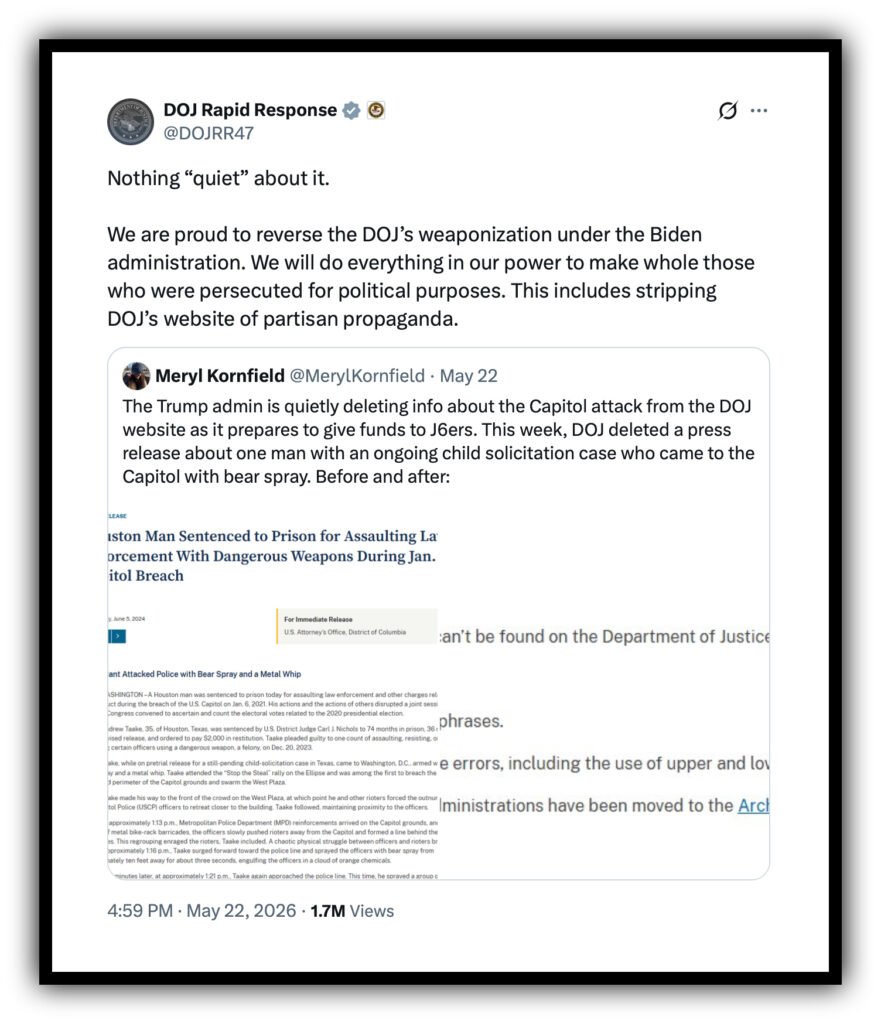
The DOJ site can still show some Jan. 6 material, but much of it has been taken down. The DOJ Rapid Response account on X (@DOJRR47) confirmed the removal, stating: “We are proud to reverse the DOJ’s weaponization during the Biden administration. We are committed to doing everything possible to make whole those who were persecuted for political purposes. This includes stripping DOJ’s website of partisan propaganda”. Among the releases removed were those concerning seditious conspiracy cases against members of the Proud Boys and Oath Keepers. That means a live DOJ search may give you pieces of the story, but not the whole thing.
Legal Warning: The Deletion May Be Illegal
The DOJ’s removal of the Jan. 6 charges database appears to violate federal law. CREW (Citizens for Responsibility and Ethics in Washington) sent a letter to the Archivist of the United States and the DOJ Inspector General stating that deleting the database “appears to be illegal.”
Under federal law, agencies must notify the National Archives when records are unlawfully destroyed. There’s no sign the DOJ did that. If the agency doesn’t act quickly to recover the records, the Archivist must notify the Attorney General and Congress.
Willful destruction of federal records can land a federal employee in prison for up to three years.
Note: The First Amendment gives the public a right to access court filings, but not agency press releases. That’s why the deleted DOJ announcements are harder to fight for legally. The archives now hold what the government removed.
How To Find The Releases Yourself
Use these two tools in order:
- Start with NPR’s Jan. 6 Archive
- Go to: https://apps.npr.org/jan-6-archive/database.html
- Search by defendant name, charge, or keywords like “Capitol breach.”
- NPR says it has tracked every federal Jan. 6 case (1,575 defendants) and preserves information on all of them, including video evidence from DOJ exhibits in hundreds of cases.
- Note: The archive warns that videos contain profanity and violence.
- Use the Wayback Machine when you have a DOJ URL
- Go to: https://archive.org/web/
- Paste the original DOJ press release URL into the Wayback Machine search box.
- Click on a date snapshot to see the release as it appeared before it was removed.
- The Internet Archive has preserved many taken-down government pages, including Justice Department pages related to the Jan. 6 Capitol breach.
If you do not have the DOJ URL, start with NPR’s database and copy the case name or key details, then search for the original release in the Wayback Machine.
What The Archives Preserve
NPR’s archive covers 1,575 criminal cases stemming from Jan. 6 and includes searchable information, timelines, and in many cases video evidence from court filings. NPR says its archive became especially important after the government database was deleted. The Internet Archive adds another layer of backup by preserving older versions of DOJ pages that may no longer exist on the live site.
Why This Is Important
This is about more than convenience. When government pages disappear, the public record becomes harder to verify, quote, and hold up against official revision. Archives like NPR’s Jan. 6 database and the Wayback Machine now serve as the only public backups for deleted materials.
The legal stakes are higher than just accessibility. If the DOJ failed to notify NARA about the deletion, it may have violated federal records law. CREW has urged NARA and the DOJ IG to investigate and take action, including instructing the agency to issue a report in accordance with federal requirements.
Quick Links
- NPR Jan. 6 Archive (searchable case database)
- Internet Archive Wayback Machine (search any URL)
When the government erases its own records, the public doesn’t lose access to history. It loses access to accountability. The archives now hold what the DOJ has removed. They are not just backups; they are the only remaining versions of the record for many of these cases.
Gina Hill | Alaska Headline Living | Thursday, May 28, 2026
Sources
- U.S. Courts, “Accessing Court Documents – Journalist’s Guide”
- DOJ Rapid Response (@DOJRR47) on X, May 22, 2026: “Nothing ‘quiet’ about it. We are proud to reverse the DOJ’s weaponization during the Biden administration…stripping DOJ’s website of partisan propaganda”
- CREW, “Deletion of Jan 6 charges database appears to violate the law,” Jan. 29, 2025
- 44 U.S.C. § 3106, “Unlawful removal, destruction of records”
- 18 U.S.C. § 2071, “Concealment, removal, or mutilation generally”
- NARA 1463, “Unauthorized Destruction or Removal of Federal Records”
- NPR, “Jan. 6 Archive: The Capitol Charges,” searchable database
- NPR, “NPR’s archive preserves the facts of the Jan. 6 Capitol riot,” Jan. 4, 2026
- NPR, “How NPR reporters built an archive to document January 6th,” Feb. 21, 2026
- Internet Archive, Wayback Machine
- Internet Archive, news stories about Jan. 6 database disappearance
- Knight First Amendment Institute at Columbia, “Judicial Secrecy: How to fix the over-sealing of federal court records,” Oct. 20, 2021
- Public Justice, “When It Comes to Sealing Court Records, The Presumption of Public Access Requires More Than Just a ‘Say No'”
- U.S. Courts, “Accessing Court Documents: Journalist’s Guide”

What do you feel about this post?

Like

Love

Happy

Haha

Sad