
By Gina Hill | Alaska Headline Living | January 2026.
Gun rights are colliding with federal immigration enforcement in ways that hit especially hard in a state like Alaska, where the Second Amendment is woven into daily life and political identity.
Minnesota Shooting Sparks Alarm
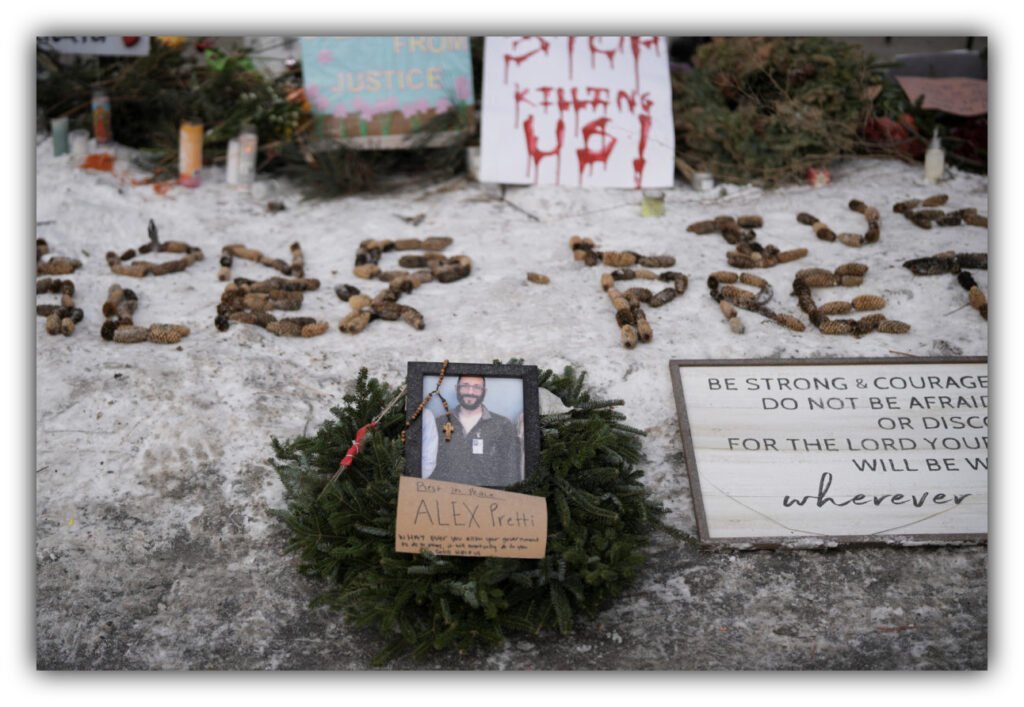
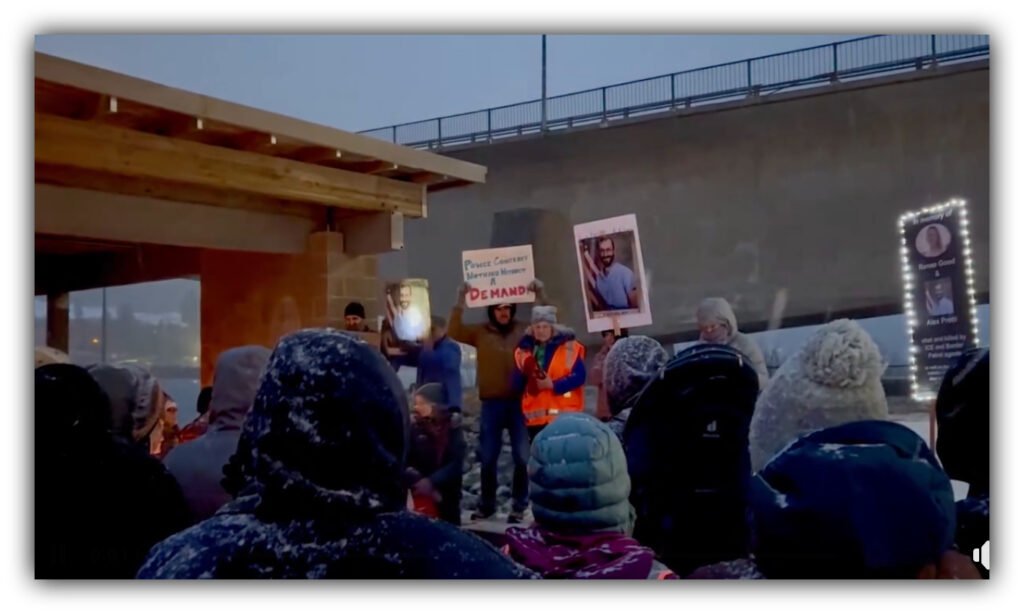
In Minneapolis this month, federal immigration agents shot and killed ICU nurse and protester Alex Pretti, who was legally armed but, according to his parents and eyewitness video, never pointed or even appeared to hold his gun before he was killed. In a public statement, his parents describe him as a kindhearted VA nurse who “wanted to make a difference,” and say he died trying to shield a woman whom ICE officers had pushed to the ground, with his phone in one hand and his other hand raised above his head while he was being pepper‑sprayed.
DHS Account Disputed
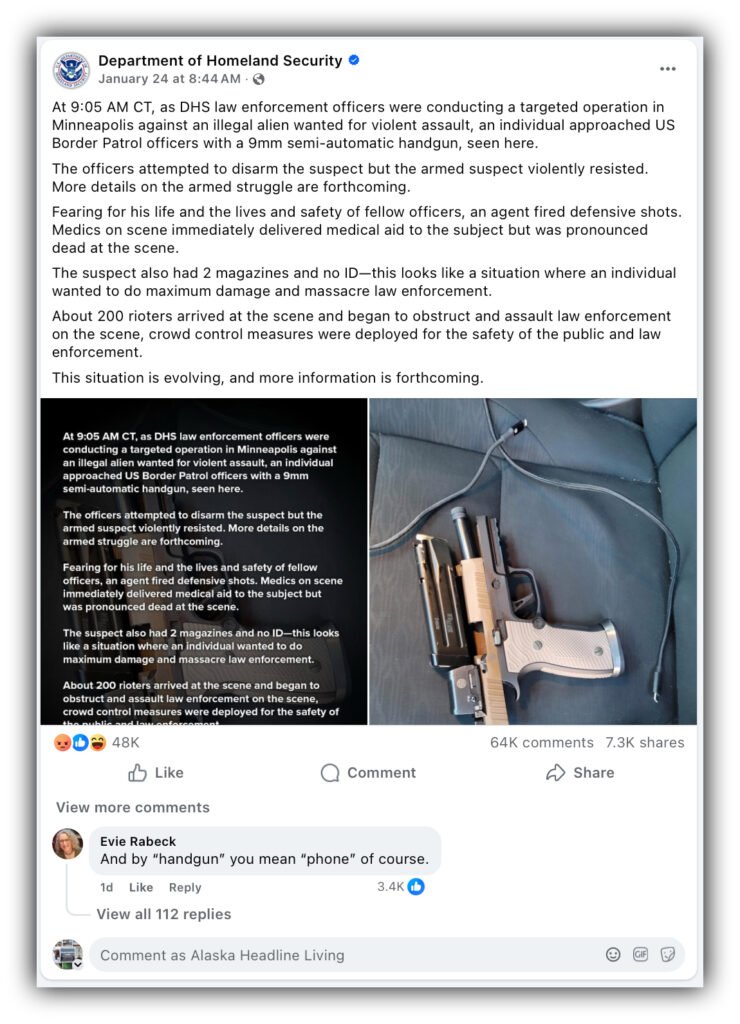
The Department of Homeland Security released a statement on January 24 asserting that Alex Pretti approached U.S. Border Patrol officers “with a 9mm semi-automatic handgun” during a “targeted operation” against a person wanted for violent assault. DHS claimed officers tried to disarm him after he “violently resisted,” prompting “defensive shots,” and noted he carried two magazines with no ID, suggesting intent for mass harm to law enforcement.
That account is strongly contested by witnesses, Pretti’s family, and bystander video reviewed by news organizations. Footage shows Pretti holding what appears to be a cell phone—not a handgun—as he approached to assist others before agents used pepper spray, forced him down, and shot him. No public video clearly shows him brandishing a firearm at officers beforehand, and Pretti held a valid Minnesota concealed carry permit, complicating DHS’s claims about lawful possession versus threatening use. Federal authorities say the incident is under review amid calls for full body-camera footage.
The Trump administration has argued that Pretti “should not have been armed” at all, but Minnesota gun‑rights advocates, and even some Republicans, are pushing back, noting state law allows permit holders to carry at protests. Police confirm Pretti had such a permit.
Alaska Fears Federal Overreach
For Alaskans, that argument, and the clashing narratives, is a flashing red light. If federal officials question a permitted gun owner’s presence at a protest in Minnesota, how far might similar scrutiny extend to Alaska’s gun culture amid expanding ICE operations? That concern now overlaps with rapid federal immigration enforcement growth in the state.
ICE Expands in Anchorage
Anchorage has become a quiet front line, though ICE runs no local detention center. The agency contracts Alaska jails for short-term holds before flying detainees south, often to Washington. From January 2025 to mid-January 2026, state facilities processed 99 ICE detainers—up sharply from 13 in all of 2024.
Courthouse Raids Hit Home
Enforcement extends to public spaces. In January, ICE agents detained a woman mid-divorce hearing at Anchorage Superior Court before releasing her after questioning. Policy permits this under federal authority, but critics say it strains guidelines on discretion.
Juneau Lawmakers Clash
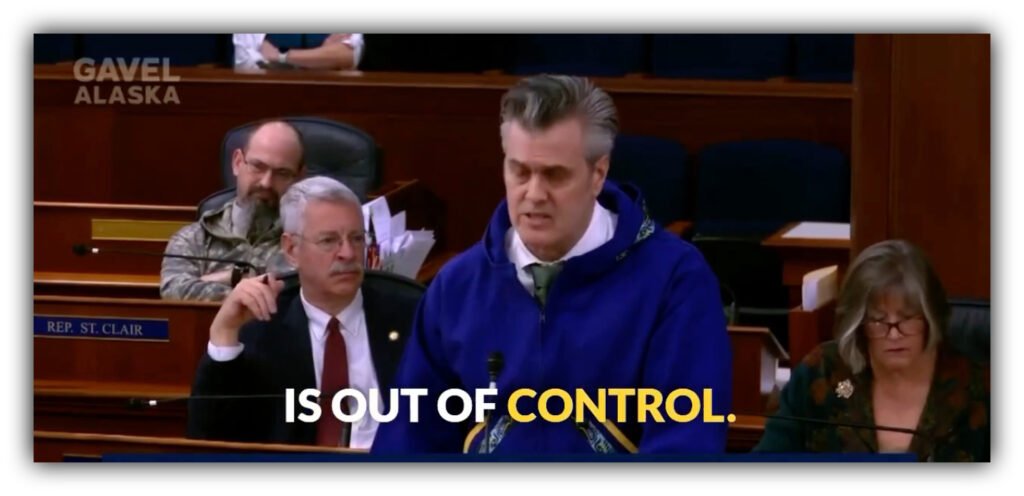
Juneau debate intensifies. Rep. Andrew Gray (D-Anchorage), Joint Armed Services co-chair, calls federal actions destabilizing, sowing fear in vital immigrant communities that bolster Alaska’s economy and workforce. He warns it erodes public safety as people avoid crime reporting. Gray questions reports of 1,500 Alaska-based active-duty soldiers on prepare-to-deploy for Lower 48 immigration missions, including Minnesota, seeking details on roles and legal bounds.
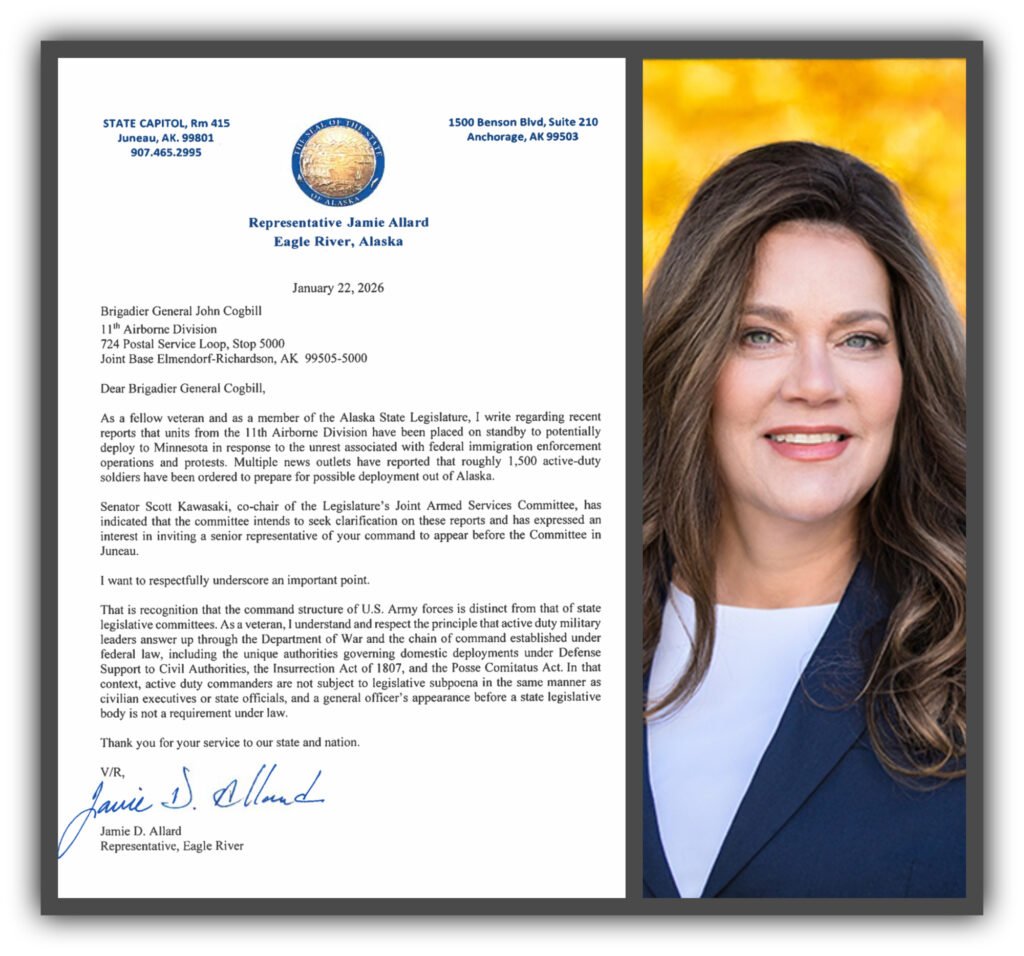
Rep. Jamie Allard (R‑Eagle River) wrote Brig. Gen. John Cogbill on Jan. 22, pushing back against efforts by Alaska lawmakers to compel testimony from the 11th Airborne Division commander. She emphasized that active‑duty Army units follow the federal chain of command, not state legislative subpoenas, citing federal law and statutes governing domestic military operations. Allard noted that while lawmakers may request briefings, they cannot legally compel testimony, underscoring that oversight of federal troops falls under Congress and the federal government, not the state. The letter comes as reports surfaced that about 1,500 Alaska-based soldiers were put on prepare-to-deploy orders for a possible mission to Minnesota.
Alaska National Guard provides Title 32 admin/logistics aid to Anchorage ICE, five members on office and fleet tasks, not arrests. Some see it normalizing federal presence. Pretti’s disputed shooting sharpens these trends for gun-proud Alaskans. As policy debates rage, Alaska weighs federal reach against its liberties.