Port MacKenzie Industrial District
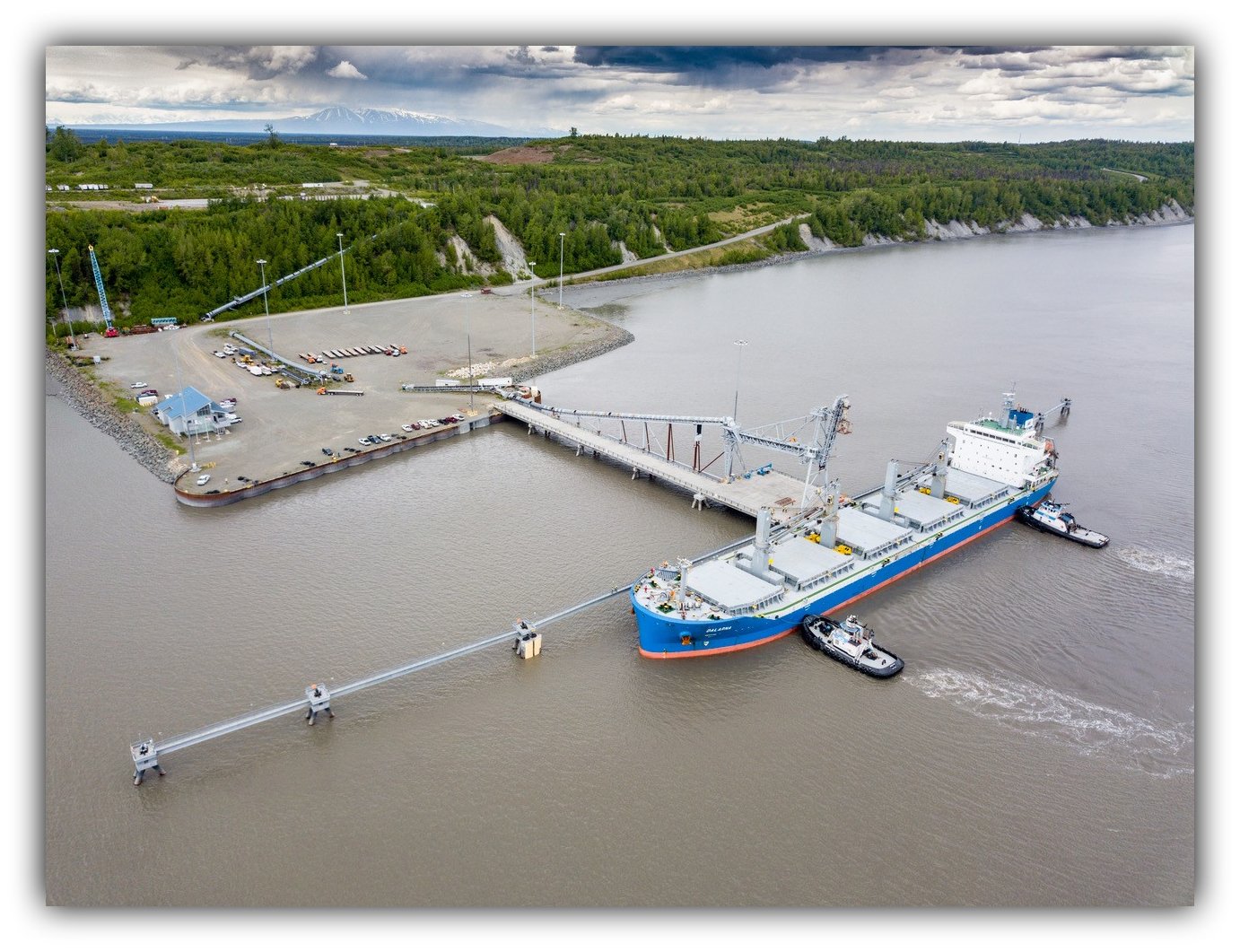
Aerial view of Port MacKenzie’s 9,000+ acres of commercial and heavy industrial land in the Matanuska-Susitna Borough, now open for data center pitches after the recent Assembly veto override. Courtesy of Matanuska-Susitna Borough.
Part 2 of 2: Bowles Flips, Veto Overridden, and Residents Weigh What’s Next.
By Gina Hill | Alaska Headline Living | March 24, 2026
🔥 $1 Billion Coal Gamble: Mat-Su Data Centers Pit Local Jobs Against Power Bills and Wildlife
WASILLA – Last week’s Mat-Su Borough Assembly veto override of Mayor Edna DeVries didn’t just unlock 9,000 acres at Port MacKenzie. It plunged the Valley into a national energy battle: local coal for data center wealth, or years of delay for North Slope natural gas shipped abroad first.
Assembly Member Michael Bowles (District 1) delivered the swing vote, flipping from no to yes after demanding “more clarity on community input and economic potential.” His change greenlit a two-year partnership with Terra Energy Center Corp. to pitch borough land near Port MacKenzie, Big Lake, and West Susitna Access Road to developers craving megawatts 24/7.
The Power Problem No One’s Solved
Data centers don’t run on hopes. They need steady juice. Right now, Mat-Su families already pay some of Alaska’s highest electric bills. A single facility could suck up power equivalent to 100,000 homes, jacking rates for everyone else.
Enter Terra Energy’s $1 BILLION coal bet. The company behind the land pitch just signed for a 1.25 GW plant. The first major U.S. coal boiler since 2006. Fueled by nearby Usibelli Mine reserves, it promises reliable power without draining North Slope gas needed for export profits.

Federal 45Q tax credits pay $85 per ton of captured CO2, but environmentalists call it greenwashing. Most plants capture far less than promised, and buried CO2 can leak over decades. Trump’s fast-track permitting cuts red tape but skips the full environmental scrutiny local groups demand.
The cleaner pitch? LNG. Glenfarne Group’s North Slope pipeline could feed Railbelt plants, cutting emissions 50% versus coal. But it’s years away, costs billions upfront, and prioritizes tanker ships over local sockets. Alaskans would compete with Japan and Korea for their own gas.

Data centers need constant power, something MEA says solar and wind can’t reliably deliver without expensive storage we don’t have, according to the utility’s large-load forecasts.
Jobs vs. Bills vs. Moose

Proponents see 500 construction jobs, then 200-300 permanent tech roles, a windfall in a valley heavy on seasonal work. But MEA says large loads could spike residential rates 20-30%. Water-guzzling cooling towers strain aquifers already stressed by wildfires and low snowpack.
Wildlife doesn’t vote, but moose crossing West Susitna Road remind everyone: This is still Alaska. Port MacKenzie’s industrial pad sits minutes from salmon streams and moose calving grounds.
Data Centers’ Hidden Water Crisis
Data centers like this Google facility with its colorful cooling pipes guzzle millions of gallons daily, up to 5 million for a medium site, matching a town of 50,000 people.
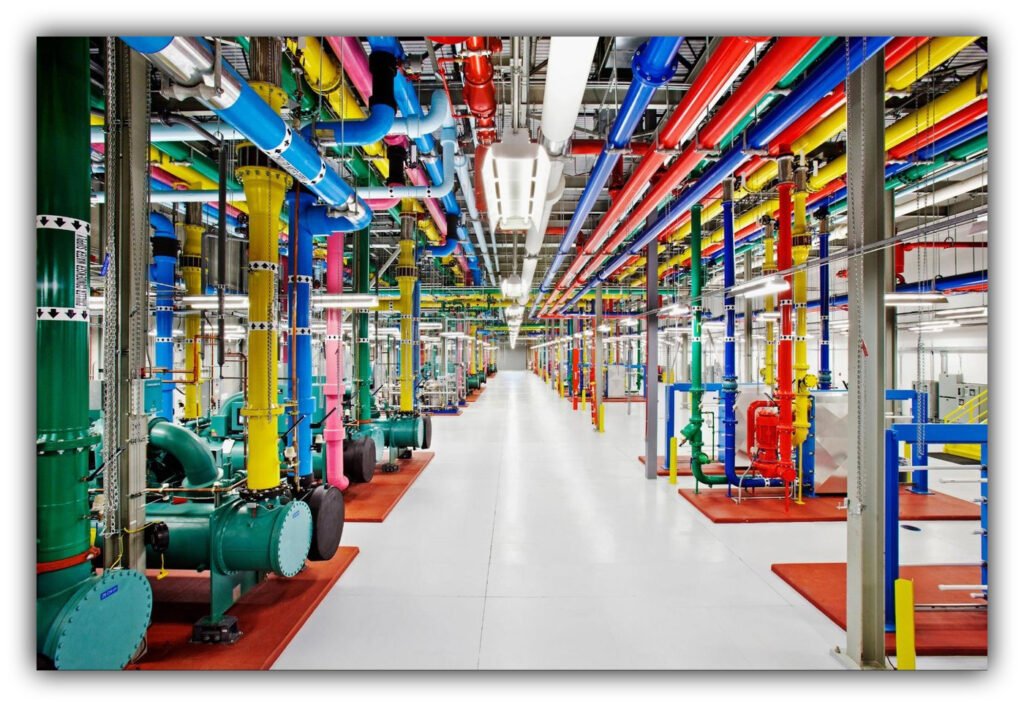
Vibrant overhead pipes and ducts manage heat from thousands of servers using water-based systems that can consume 110 million gallons annually per facility, equivalent to 1,000 households. Photo: Google Data Centers / “Our commitment to climate-conscious data center cooling.
Mat-Su implications: These water-hungry towers would pull from aquifers already strained by wildfires and low snowpack. A single facility equals 110 million gallons annually just for cooling freshwater that evaporates or overloads sewage systems.
What Happens Next
No shovels hit dirt yet. No leases signed. Utilities haven’t promised power. Every project faces zoning fights, environmental reviews, and public hearings. The borough’s RFI deadline looms June 1, 2027.
Terra Energy, fresh off their coal deal federal officials branded “Big Beautiful Coal” leads the charge. Their pitch: power the AI boom right here, using Alaska coal to bankroll Alaska jobs.
| Option | Pros | Cons | Timeline | Mat-Su Impact |
|---|---|---|---|---|
| Local Coal (Terra Energy) | – 500 construction jobs now – Uses nearby Usibelli reserves – Frees North Slope gas for export profits – Federal 45Q tax credits ($85/ton CO2 captured) | – Higher CO2 emissions than gas – Carbon capture reliability debated – Coal dust, truck traffic on local roads – Long-term fossil fuel commitment | 3-5 years | – Lower short-term power rates – Local employment gains – Additional emissions in warming climate |
| North Slope LNG (Glenfarne Group) | – Burns 50% less CO2 than coal – Uses Alaska’s abundant gas reserves – Scalable for future Railbelt needs | – $10B+ pipeline construction costs – Export priority over local supply – Construction and legal delays | 7-10 years | – Higher initial electricity rates – Limited immediate job creation – Gas delivery via truck from Nikiski |
Alaska warms at twice the global average amid wildfires and permafrost thaw. Mat-Su must weigh coal’s faster timeline and jobs against LNG’s lower emissions but longer wait and higher costs.
Who benefits most from each path?
Your Valley, Your Voice
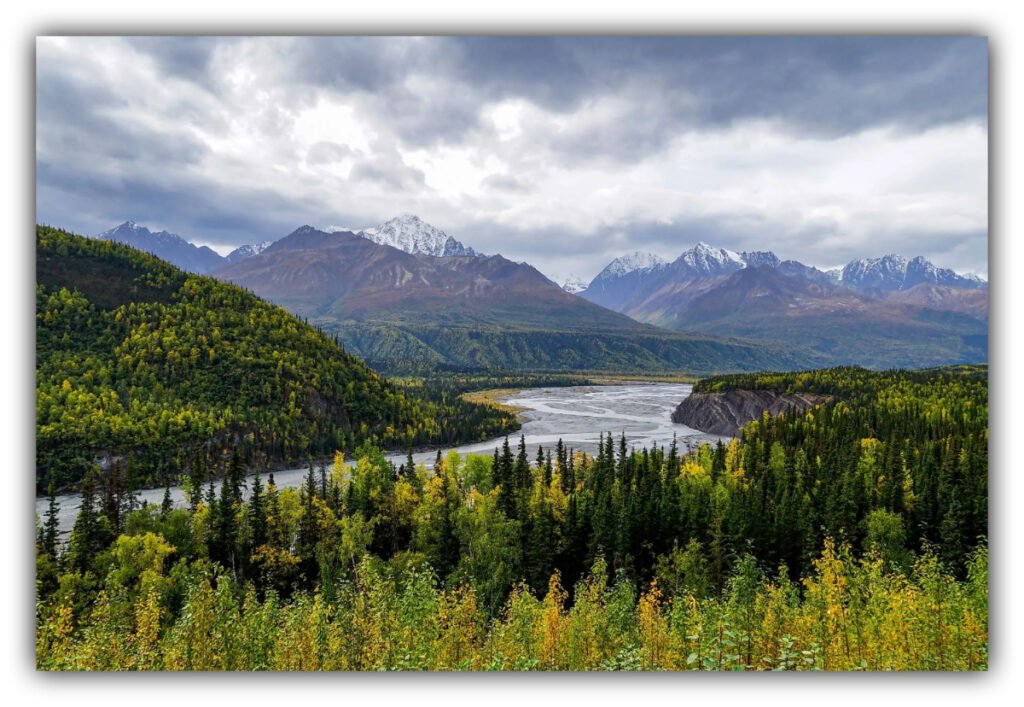
Sweeping view of the Mat-Su Valley’s pristine expanse—lush lowlands, braided rivers, and distant peaks that could soon host data center corridors near Port MacKenzie and Big Lake. Photo courtesy of World Atlas
The Mat-Su Borough’s RFI deadline looms 15 months away. June 1, 2027 gives residents a narrow window to shape what gets built on 9,000 acres of public land. This isn’t some distant zoning debate. Data centers could spike your MEA bill 20-30%, suck aquifers dry, and pave over moose calving grounds. All without a single public vote.
Right now, you can change that trajectory. The Assembly doesn’t work in secret. They hold public hearings on every major land use decision, from platting to zoning changes. Michael Bowles flipped his veto vote demanding community input. Hold him to it.
Three Actions Mat-Su Residents Control Right Now
1. Hit the Mat-Su Assembly Where It Hurts. Public Comment
Every Platting Board and Planning Commission meeting (typically bi-weekly) requires public testimony. Check matsugov.us/agendas for dates. Email your District rep tonight. They are listed at matsugov.us/assembly. Contact your assembly member and ask questions, such as, “Will data centers raise my power bill? What’s the water impact study?”

📞 (907) 355-1355 | ✉️ Michael.Bowles@matsugov.us | Term: Nov 2025 – Nov 2026
2. Grill MEA Before They Sign Power Deals
Matanuska Electric Association serves more than 43,000 Mat-Su meters. They haven’t committed to data center loads. But they will if pressured. Attend the next member meeting or email mea.coop/contact demanding: “Show us the rate study. How much will my bill jump?” MEA answers to ratepayers, not developers.
3. Force Environmental Scrutiny
Every permit triggers public comment periods. Partner with groups already fighting:
Alaska Center for the Environment (akcenter.org/take-action). Sues over water permits.
Cook Inletkeeper (inletkeeper.org). Port MacKenzie habitat specialists.
Alaska Dept. of Fish & Game habitat division. Public comment portal on wildlife impacts.
Track it all at matsugov.us/document and matsugov.us/news. RFI responses. Zoning changes. Permit applications. Nothing happens without public notice.
This isn’t activism. It’s owning your government. The Assembly answers to voters. MEA answers to members. Developers answer to permits. Your voice flips their next vote. Just like Bowles flipped this one.
15 months. Use them. The Valley you save might be yours.
Sources
Matanuska-Susitna Borough Assembly records
Borough RFI for high-energy projects
Matanuska Electric Association load forecasts
U.S. Dept. of Interior (Terra Energy $1B coal deal)
U.S. EPA industrial permitting
USGS Mat-Su water tables
Alaska Dept. of Fish & Game habitat data