
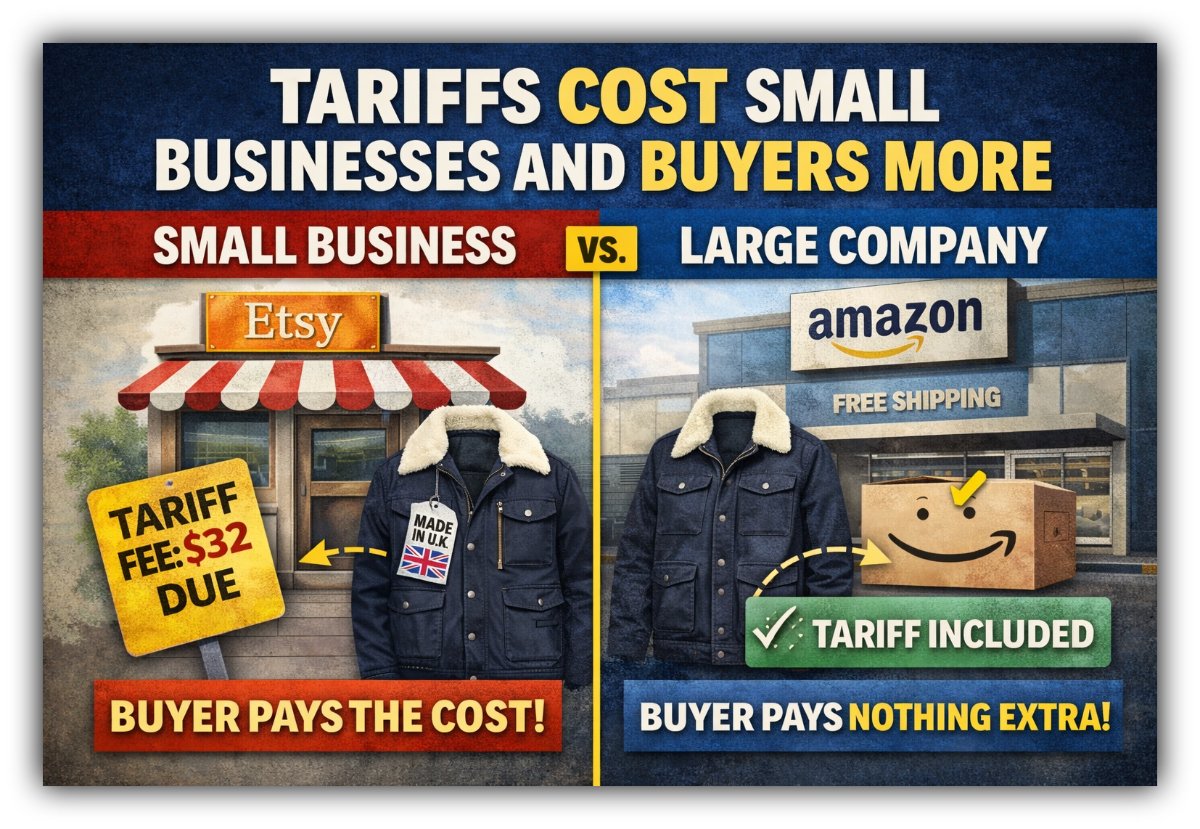
Tariffs can hit small businesses and their customers harder than large retailers. In this example, a jacket bought from a small Etsy shop requires the buyer to pay a $32 tariff, while a similar purchase from a large retailer like Amazon often includes the tariff, sparing the customer extra costs. | Alaska Headline Living ©️
By Gina Hill | Alaska Headline Living | January 2026
When Anchorage resident Ryan Thompson ordered a jacket from an Etsy seller in the United Kingdom, he expected a simple online shopping experience. Instead, the jacket was held at U.S. Customs, and he was told he needed to pay a $32 tariff to get it released. The U.K. seller did not pay anything, leaving Ryan, the American buyer, on the hook.

Ryan’s experience is a clear example of how recent tariff rules can hit ordinary consumers, especially when they buy from small overseas sellers. Under U.S. law, tariffs are collected by Customs and Border Protection from the importer of record, usually the person receiving the shipment. Small sellers often ship under the old Delivered Duty Unpaid method, which means the buyer pays the fee when the item arrives.
The timing of Ryan’s purchase made the impact worse. Earlier this year, the U.S. removed the de minimis exemption that had allowed many small, low-value packages to enter duty-free. That means even a $50 jacket from a U.K. Etsy seller now triggers a tariff.

Large online retailers like Amazon or major brands often handle tariffs differently. Many of these companies include tariff costs in the final price. They may absorb some costs themselves or adjust pricing across their vast sales volumes. That means a customer buying the same jacket from a large retailer might not have been asked to pay the $32 fee directly.

Small businesses, on the other hand, often operate with tight margins and limited cash flow. Tariffs on their products, and the resulting fees passed on to buyers, can make overseas purchases more expensive, slow shipments, and create customer frustration. Large companies are better equipped to manage these costs, adjust supply chains, or negotiate exemptions.
For Ryan, buying from a small U.K. seller meant the tariff landed squarely on his shoulders, a direct consequence of U.S. trade policy and the way many small businesses ship their goods. His experience highlights a growing challenge for small businesses and their customers: while tariffs are meant to protect domestic industries, they often end up costing Americans more, especially when shopping from independent sellers overseas.

Consumers looking to protect their wallets can take a few practical steps. Checking whether a seller ships using Delivered Duty Paid can help avoid surprise fees at customs. Buying from U.S.-based sellers or from larger retailers that build tariffs into their prices can also reduce unexpected costs. In some cases, comparing the final landed price, including potential duties, may make a domestic or larger retailer the cheaper option, even if the sticker price appears higher. As tariff rules continue to evolve, informed shopping is becoming one of the few tools consumers have to avoid paying more at the border.