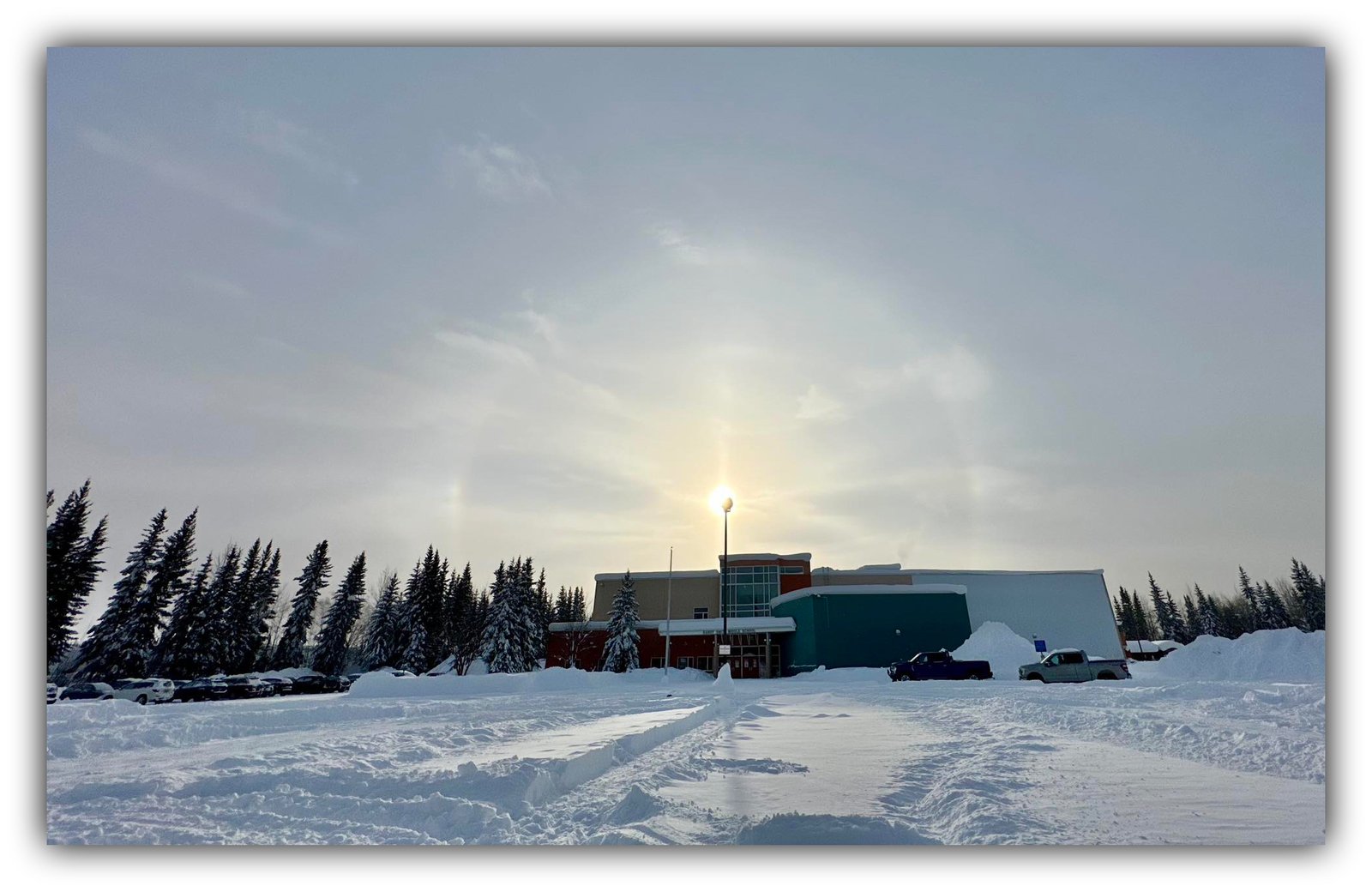
Randy Smith Middle School in Fairbanks, where a false emergency call prompted a lockdown and rapid law enforcement response. 📸 Randy Smith Middle School .
A False Emergency Call That Triggered a Rapid Law Enforcement Response at Randy Smith Middle School Left Parents Shaken, Officers Mobilized, and a Community Confronting the Impact of Swatting Incidents
False 911 Call Triggers School Lockdown, Heavy Police Response, and Community Outrage in Fairbanks
By Gina Hill | Alaska Headline Living | April 10, 2026
FAIRBANKS, Alaska – A 911 call reporting a possible threat at Randy Smith Middle School set off a rapid response, with law enforcement and partner agencies moving in immediately, Alaska State Troopers said.
School officials later clarified what triggered the response.
Randy Smith Middle School stated in a Facebook post that police received a 911 call from an individual claiming to be a student who said they heard gunshots inside the school. That report led to an immediate “sit tight” instruction followed by a full lockdown.
The school said investigators quickly determined the call was not credible. The names given did not match any student or staff member, and the call was traced to a location outside the country. After law enforcement cleared the building, students were released at the normal end of the school day.
“We understand that situations like this can be concerning,” the school wrote, thanking law enforcement, staff, and students for their response and cooperation.
Even after the all-clear, parents say the emotional impact lingered.
One parent described the moment as “absolutely terrifying,” saying it felt like a worst nightmare unfolding in real time. Another said they hugged their child tightly after pickup, grateful but shaken by the uncertainty.
Others echoed similar reactions, praising officers for responding without hesitation while admitting the fear was intense while waiting for information.
“Thank God it was not real,” one parent wrote, “but that uncertainty was tough to witness.”
Another parent said they were relieved but frustrated, asking whether children should have phones during emergencies so families are not left relying on social media for updates while situations unfold.
The comment section also reflected broader concerns about accountability.
One user asked whether the caller can be prosecuted for false reporting and held responsible for damages. Another commenter noted how quickly law enforcement responded and thanked officers for entering the situation as if it were real.
The comments also carried a clear warning: Even if the call was meant as a prank, the consequences are not.
In a school setting, every false report forces law enforcement to act as though lives may be at risk. That response is not optional, and it is not symbolic. It is immediate, armed, and total.
Swatting: A Crime That Triggers a Full Emergency Response

Swatting is the practice of making a false emergency report to trigger a large police response, often to schools or public buildings. Even when no one is injured, the intent and impact make it a serious crime.
In incidents like this, law enforcement typically responds at full urgency because there is no way to assume a threat is fake until it is proven otherwise.
That means:
- Armed officers are deployed
- Schools go into lockdown
- Students, staff, and parents experience real panic
- Emergency resources are pulled from across the region
Even when the call is confirmed as false, the disruption and financial costs are real.
How Investigators Trace Swatting Calls

Investigators often work backward through digital and communications evidence to identify the source. That process can include VoIP call routing data, IP addresses tied to logins, messaging platforms used for coordination, and account records from services used to mask identity.
Subpoenas can compel records from providers, and even when calls are routed through spoofing tools or appear to originate overseas, investigators can often trace accounts back to the device and user behind them.

In Alaska and other states, schools and law enforcement agencies are responding to repeated swatting-style incidents involving false emergency reports at schools. Nationally, officials have reported a rise in hoax active shooter calls and swatting events in recent years, adding pressure to already strained emergency systems.
Efforts now focus on faster joint response between schools and police, real-time verification of threats while officers are already en route, improved emergency communication to parents, and closer coordination with federal partners such as FBI cyber units when calls appear to originate out of state or internationally.
Officials emphasize that schools cannot ignore these calls. Every report must be treated as real until proven otherwise, which is what makes swatting so disruptive.
The goal is to shorten the time between panic and confirmation, while increasing the chances the source can be identified quickly.
Bottom Line
Randy Smith Middle School officials confirmed there was no threat and credited a coordinated response between staff and law enforcement for resolving the situation safely.
But for families who lived through the lockdown, the experience was real in every other sense.
To whoever made the call, if identified, this is the reality: you don’t get a laugh out of it. You get armed officers rushing a school, terrified children, and a felony case that will land you in prison.