
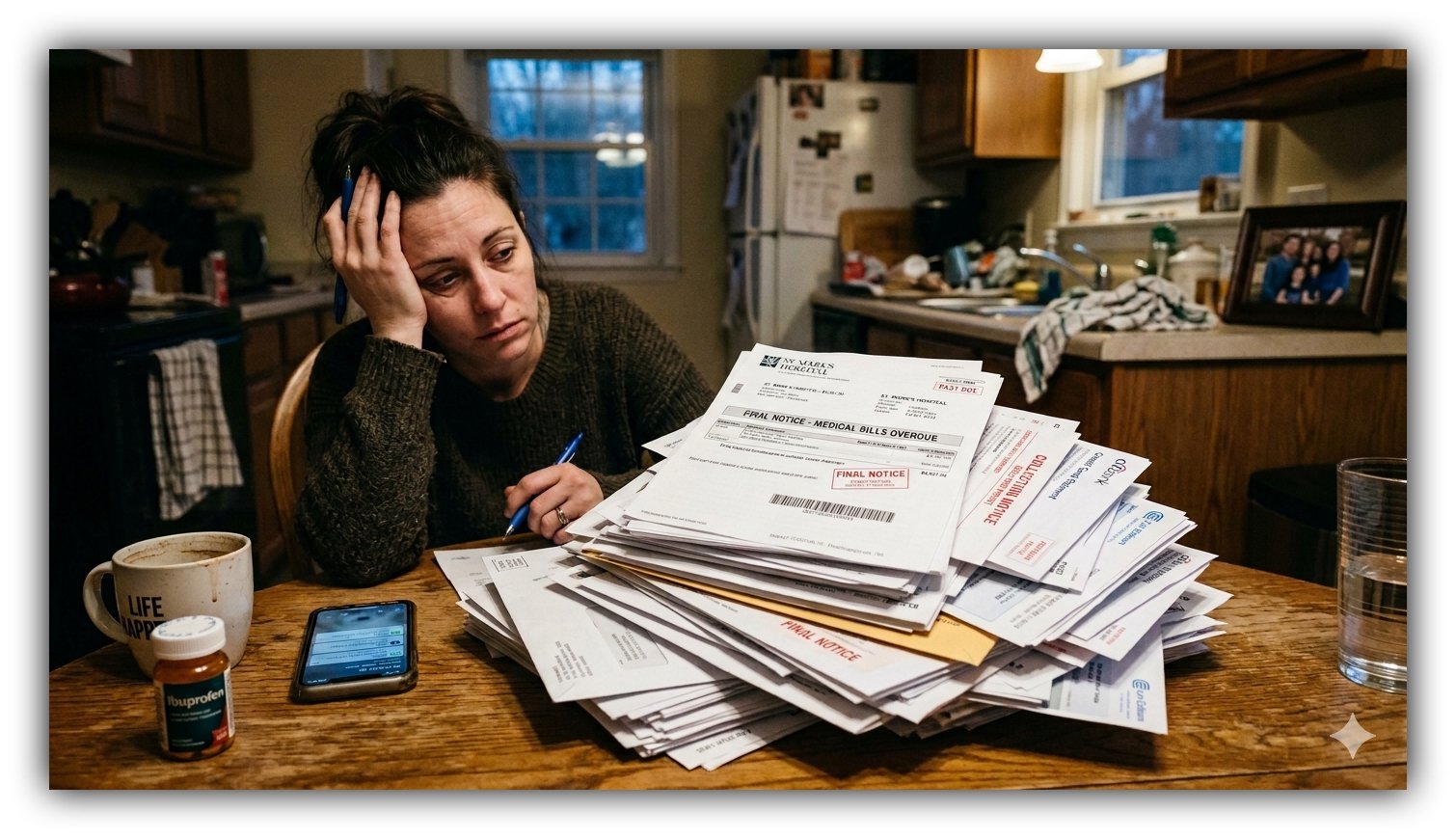
Americans with medical debt are far more likely to delay care, skip prescriptions, or cut spending on essentials, and research links that financial stress to higher rates of anxiety, depression, and sleep problems.| Alaska Headline Living ©
By Gina Hill | Alaska Headline Living | March 2026
This week spotlights seven underreported crises slipping past mainstream media. From immigrant school barriers to war fallout and policy shadows, primary sources expose one story daily through March 22. Day 5 of 7 starts now.
Picture a normal evening in America. You are sitting on your couch scrolling your phone. The television hums in the background. A grocery receipt sits on the coffee table. Maybe there is a prescription bottle nearby. And somewhere in the back of your mind is a quiet calculation: can we afford the doctor this month?

For a growing number of Americans, the question of whether they can afford medical care has become part of everyday life. Polling from the West Health-Gallup Center on Healthcare in America found that about one in three adults, roughly 82 million people, cut back on basic household expenses just to cover healthcare costs. Some skip meals or reduce grocery budgets, while others delay filling prescriptions or avoid routine care because one more bill could push the monthly budget over the edge.
Healthcare costs now compete with essentials like groceries, gas, electricity, and rent. Missing a weekend getaway or a simple break may not seem like much, but over time it adds to stress, wears on mental health, and chips away at the small moments that help people recharge. For many families, the total amount owed for care is larger than the annual grocery bill, making medical debt one of the heaviest and most persistent financial burdens they face.
About 41 percent of American adults, roughly 100 million people, carry some form of medical debt, and about 24 percent have past-due bills they cannot pay. Nearly half of those with debt owe at least $2,500, and about 12 percent owe $10,000 or more. Medical debt often comes with other financial stress, like having no savings, overdrafting accounts, or relying on costly loans to stay afloat. Adults with medical debt are far more likely to delay or forgo needed care, including mental health treatment. Research shows that financial strain from medical bills is strongly linked to higher rates of anxiety, depression, and sleep problems, demonstrating that the impact is emotional as well as financial.

For some families, bills grow so large that bankruptcy becomes a reality. Estimates suggest that about two-thirds of personal bankruptcies involve medical debt, even affecting people who have insurance. These bankruptcies are more than financial statistics; they can mean losing your home, depleting savings, damaging credit, and reducing opportunities for your family for years to come.

This fear of financial ruin is why a story like Breaking Bad resonated with so many. In the show, Walter White’s cancer diagnosis pushes him into the drug trade because he fears leaving his family buried in medical bills. While his story is extreme, the underlying fear that illness could financially devastate a family, is one millions of Americans quietly recognize because they live it every day.
A Lifeline If You Are Struggling With Medical Bills
Without systemic changes, this problem will likely worsen. Rising healthcare costs, higher insurance premiums, and inflation make medical debt a long-term threat, not just an isolated challenge. Families will continue to make painful trade-offs, sacrificing essentials and mental well-being to keep up with bills.
Don’t wait until bills pile up. Reach out to these resources today:
- Patient Advocates at Hospitals: Can help you understand bills, apply for financial assistance, and access records.
- Nonprofit Support: Organizations like the Patient Advocate Foundation assist people in navigating bills and insurance issues.
- Call 211: Connect with local programs that provide help with medical costs in your area.
- Legal Assistance: Groups such as the Health Consumer Alliance can sometimes help negotiate bills or secure reductions.
These resources can provide a lifeline and help families avoid the worst long-term consequences of medical debt.
Day 6 Tomorrow: Apocalyptic War Rhetoric. Share if this hits home ↗️
Sources
- Burden of medical debt in the U.S. and prevalence of medical bills among adults (kff.org)
- Survey findings on Americans with medical debt and financial distress (lendingtree.com)
- Analysis of medical debt as a leading cause of bankruptcy (americanhumanrightsinitiativefoundation.org)
- Mental health impacts of medical debt (publichealth.jhu.edu)
- Patient advocate resources and nonprofit support (cms.gov)
- Consumer rights and 211 assistance options for medical bills (consumerfinance.gov)
- Health Consumer Alliance legal support for understanding and reducing medical debt (healthconsumer.org)