
With Sexual Assault Rates Still Among the Highest in the Nation, Advocates Say Awareness, Survivor Support, Prevention, and Accountability Remain Critical Across the State
By Gina Hill | Alaska Headline Living | April 3, 2026
April marks Sexual Assault Awareness Month, a time set aside nationwide to recognize survivors, educate communities, and strengthen efforts to prevent sexual violence. In Alaska, where the rate of sexual assault remains among the highest in the United States, the month carries particular urgency.
This year’s national theme, “25 Years Stronger: Looking Back, Moving Forward,” reflects both progress and the continued work ahead. Advocates say it is about honoring survivors who have spoken out, communities that have pushed for change, and the support networks that help people heal.
The statistics show why the conversation matters so much here.

Alaska Still Ranks Among the Highest in the Nation
For decades, Alaska has reported some of the highest sexual assault rates in the country.
Recent FBI crime data shows Alaska recorded about 122.5 reported rapes per 100,000 residents, compared to about 37 per 100,000 nationwide, placing the state at more than three times the national rate.
State surveys paint a stark picture:
- Nearly 58 percent of Alaska women have experienced intimate partner violence, sexual violence, or both in their lifetime.
- About 13 percent of Alaska high school students report experiencing sexual violence.
- In most cases, victims know the person who assaulted them. Friends, partners, relatives, or acquaintances are often involved.
Indigenous women are disproportionately affected. Alaska Native women face some of the highest victimization rates in the country, a problem advocates say is tied to historical trauma, jurisdictional challenges, and limited resources in rural communities.
Why Alaska Faces Unique Challenges
Large geographic distances and remote communities can make law enforcement response difficult and limit access to medical care, counseling, and victim advocacy services. Economic pressures, substance abuse, and housing instability also contribute to cycles of violence. Advocates emphasize that sexual violence can happen anywhere and affects people of every age and background.
Anchorage Police Reaffirm Commitment to Survivors
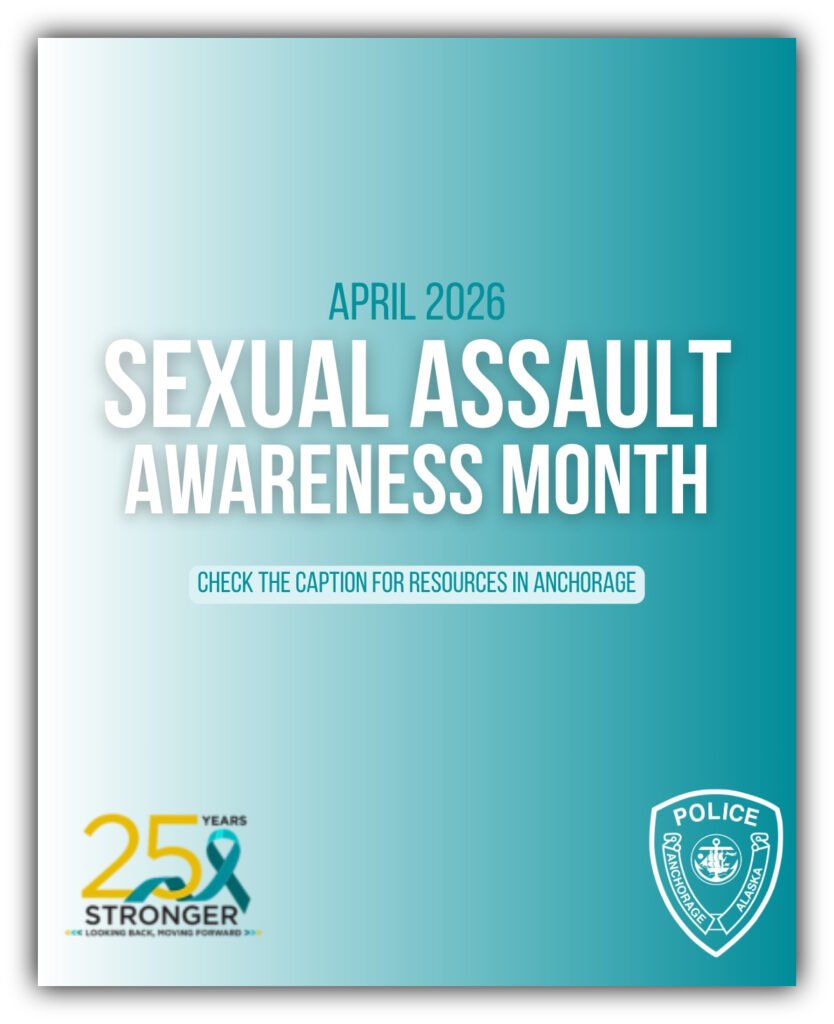
The Anchorage Police Department acknowledged Sexual Assault Awareness Month in a message to the community this week.
In a statement, police said the department stands with survivors and works to ensure every investigation is handled with care and urgency.
“Our investigators work tirelessly to pursue justice for victims of sexual assault, ensuring every case is treated with the care, urgency, and dignity it deserves,” the department said.
Police also highlighted local support resources available to survivors.
Help Is Available
Anyone experiencing sexual assault or supporting someone who has can reach out for confidential help.
In Anchorage:
- Standing Together Against Rape (STAR Alaska) operates a 24-hour crisis line: 907-276-7273
National support is also available:
- National Sexual Assault Hotline: 800-656-HOPE (4673)
- Online chat: online.rainn.org
Advocates stress that survivors do not have to report to police to receive support. Crisis centers can provide confidential advocacy, medical accompaniment, counseling referrals, and help navigating next steps.
There Is Light at the End of the Tunnel
While Alaska still struggles with some of the highest rates of sexual assault in the country, there are signs of positive progress. Expanded prevention programs, youth and community engagement, improved data collection, and recognized excellence in targeted initiatives, like the Alaska National Guard’s Sexual Assault Prevention and Response program, all signal that change is in the wind. Experts emphasize that sustained prevention and support programs can gradually shift community norms, reduce violence, and strengthen survivor outcomes over time.
Accountability and Justice Are Essential
Prevention and support alone are not enough. Advocates say sexual assault must come with consequences. Perpetrators should not be allowed to hide behind their victims or the silence of the community. Holding offenders accountable through thorough investigations, fair prosecution, and transparency, reinforces that sexual violence is unacceptable. Public awareness, law enforcement diligence, and survivor-centered justice send a clear message: Abuse will not be tolerated, and survivors will be supported.
Moving Forward
Sexual Assault Awareness Month is meant to start conversations that continue long after April ends. Preventing sexual violence requires community involvement, education, support for survivors, and accountability for offenders. For Alaska, recognizing survivors, speaking openly about sexual violence, and demanding justice are essential steps toward safer communities across the state.