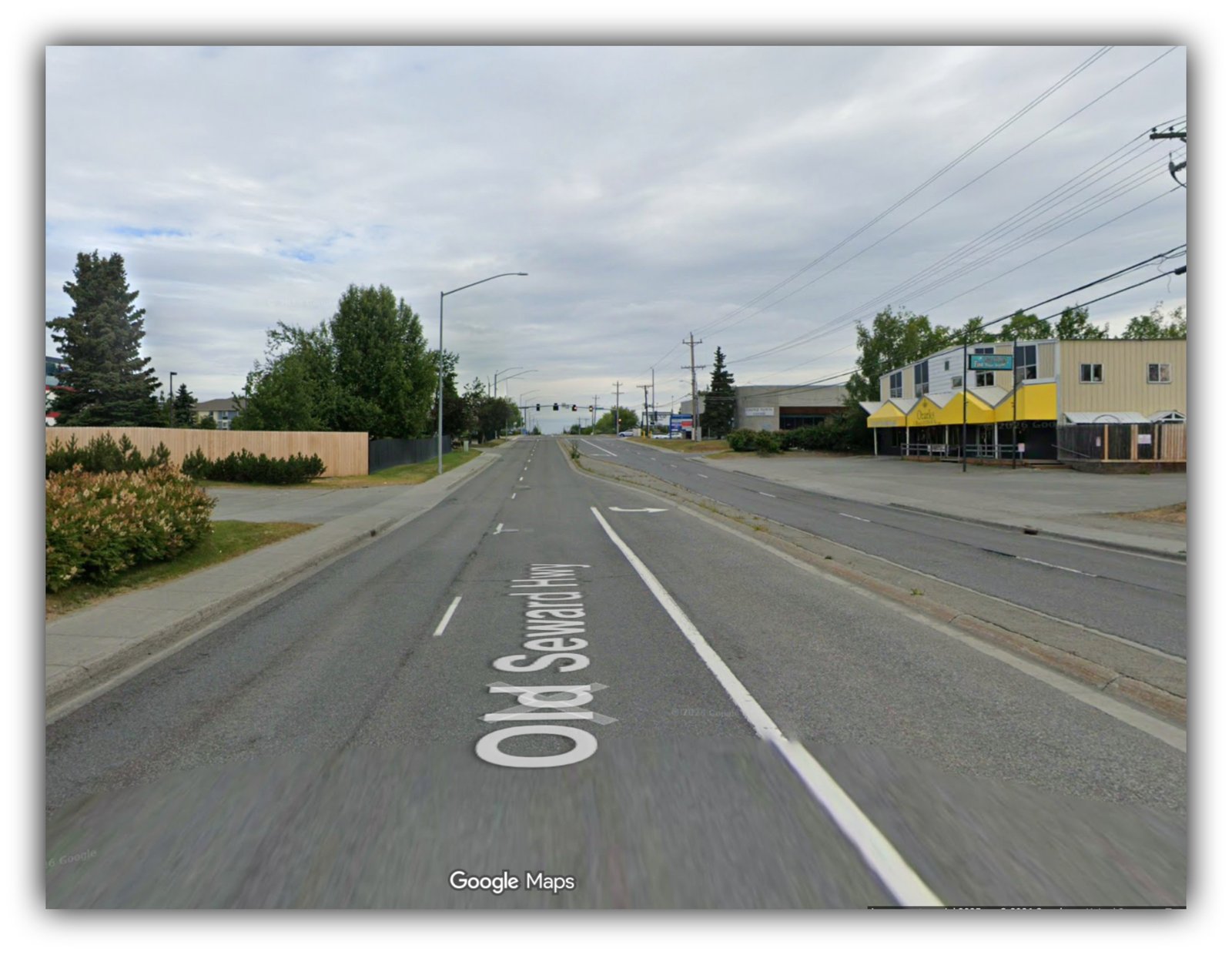
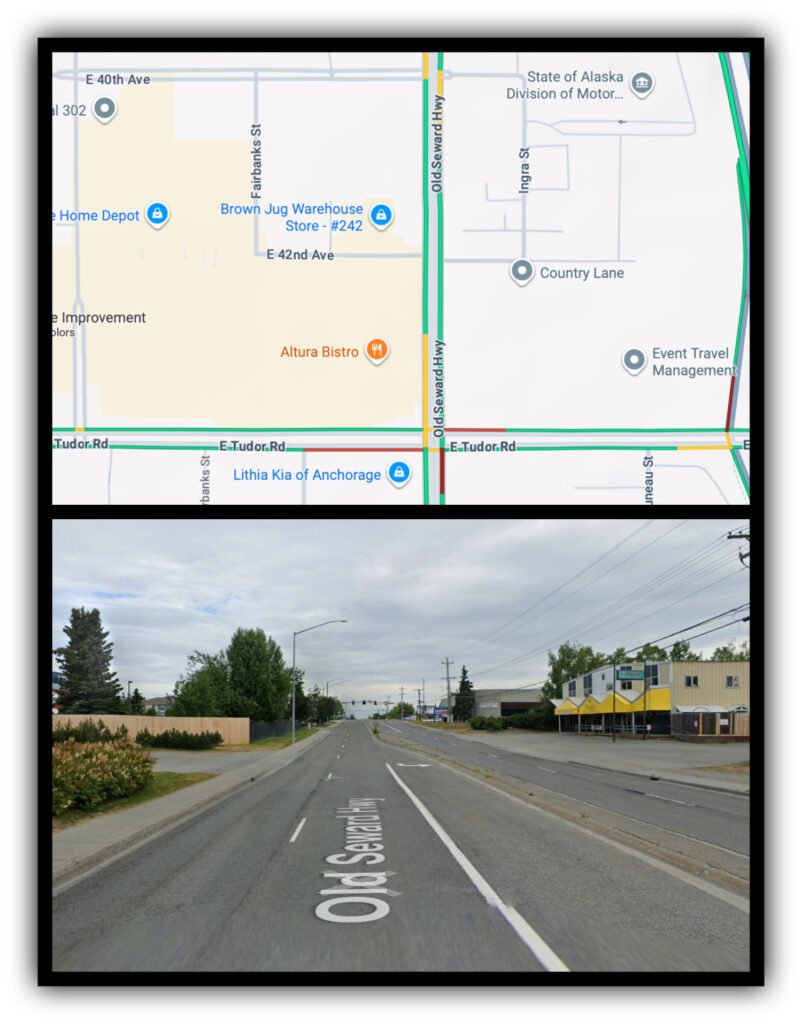
Old Seward Highway between Tudor Road and East 40th Avenue is shown in this Google Maps Street View. The roadway appears calm and empty here, but it carries fast-moving traffic and long distances between crossings. Nicholas Smith was struck along this corridor on March 28, highlighting how roads built for traffic flow can become dangerous places for pedestrians.
Your walk shouldn’t be a gamble.
By Gina Hill | Alaska Headline Living | April 8, 2026
Pedestrian traffic fatalities are on the rise in Anchorage, and recent events have brought that reality home. The tragic death of 42‑year‑old Nicholas Smith on March 28, 2026, when he was struck while walking on Tudor Road near E. 40th Avenue, is a stark reminder that a simple walk can turn into a tragedy in an instant. In this case, police say Smith was walking in the road when he was hit by a van and later died from his injuries. The driver stayed on scene and cooperated with investigators, and no charges have been filed at this time.
So why are pedestrian fatalities so prevalent in Anchorage? A mix of road design, human behavior, weather conditions, and perception gaps all play a role.
Roadways Built for Cars, Not Feet
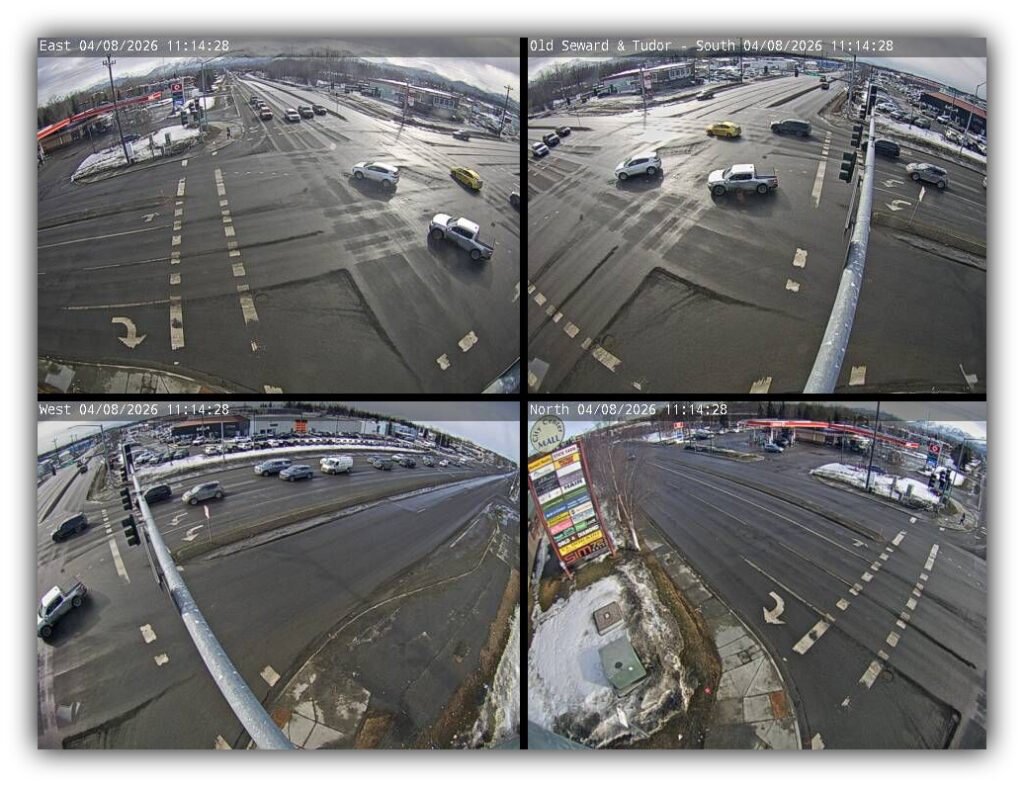
Many of Anchorage’s major streets prioritize vehicle traffic over pedestrians. Roads like Tudor Road, Old Seward Highway, and the Seward Highway carry high‑speed traffic with few crosswalks, long distances between intersections, and limited lighting. When sidewalks aren’t cleared or don’t exist at all, people are left no choice but to walk in the roadway, putting them directly in harm’s way.
Speed and Distraction: A Dangerous Combo
Driver behavior is another key factor. Speeding, distracted driving, and impairment contribute heavily to collisions. Even when a driver is alert and following the speed limit, the forces involved in a collision work against the pedestrian. A collision at 40 mph is far more likely to be fatal than one at 20 mph. Slower speeds and full attention make it much more likely that a driver will see and stop for someone on foot.
Pedestrian Behavior Matters Too
People walking also make mistakes, such as crossing mid‑block, looking at phones, or walking in low‑visibility conditions. But these behaviors are often born of necessity. When crossings are poorly marked and sidewalks feel unsafe or inconvenient, people will make their own choices to keep moving. Better infrastructure would make the safer choice the easier choice.
Social Media Speculation vs. Reality

After incidents like the March 28 collision, social media often fills up with assumptions that the pedestrian was intoxicated, reckless, or acted intentionally. While it’s natural to try to make sense of tragedy, these conclusions are often wrong and unfair. Official police reports show no evidence that Nicholas Smith acted with intent to cause harm, and toxicology or behavioral factors are not automatically known or confirmed. Jumping to conclusions spreads misinformation, hurts families, and distracts from real safety solutions.
What Can We Do About It?
Pedestrian safety isn’t just a city problem, it’s a community responsibility. Here’s how you can protect yourself and others:
- Plan Your Route: Use crosswalks and well-lit sidewalks whenever possible.
- Be Visible: Wear reflective clothing, especially during dark winter months.
- Stay Alert: Avoid phones and headphones while walking near traffic.
- Drive Responsibly: Slow down, stay focused, and watch for pedestrians, especially in areas with poor sidewalk access.
- Report Hazards: Contact city departments to report uncleared sidewalks, missing crosswalks, or dangerous intersections.
Who to Contact to Make Anchorage More Pedestrian-Friendly
Advocacy works. Anchorage residents have successfully pushed for new crosswalks, improved lighting, and safer sidewalk maintenance when they’ve spoken up and reported hazards. Your voice, combined with practical action, can directly influence city planning and make our streets safer for everyone. Residents who want to advocate for safer streets can reach out to:
- Municipality of Anchorage Public Works Department : Handles street maintenance, sidewalks, crosswalks, and hazard reporting. Phone: 907‑343‑8100
- Anchorage Police Department (APD) Traffic Division : Reports unsafe intersections, reckless driving, or pedestrian hazards. Non‑emergency line: 907‑786‑8900
- Anchorage Traffic Safety Hotline : Report dangerous conditions and request traffic studies: 907‑343‑7800
- Anchorage Assembly Members : Local elected officials can advocate for funding and pedestrian infrastructure improvements. Phone: 907-343-4311 or visit Muni.org.
- Community Groups & Advocacy Organizations : Groups like Bike Anchorage, neighborhood associations, and city programs such as Vision Zero often partner to improve pedestrian safety in Anchorage.
Walking is fundamental to daily life, and it should never be a gamble. Stay alert, report hazards, advocate for better infrastructure, and hold yourself and others accountable. That way, Anchorage can become a city where everyone gets home safely.
Sources
• Anchorage Police Department Traffic Fatality: Vehicle vs. Pedestrian; Tudor Road and E. 40th Avenue, APD official report on the March 28, 2026 collision involving Nicholas Smith. (anchoragepolice.com)
• APD Traffic Incident listings, Anchorage Police Department official news archive showing multiple pedestrian-involved collisions. (anchoragepolice.com)
• Analysis of Anchorage’s pedestrian environment and fatality patterns from Alaska Public Media reporting on local traffic safety conditions. (kyuk.org)