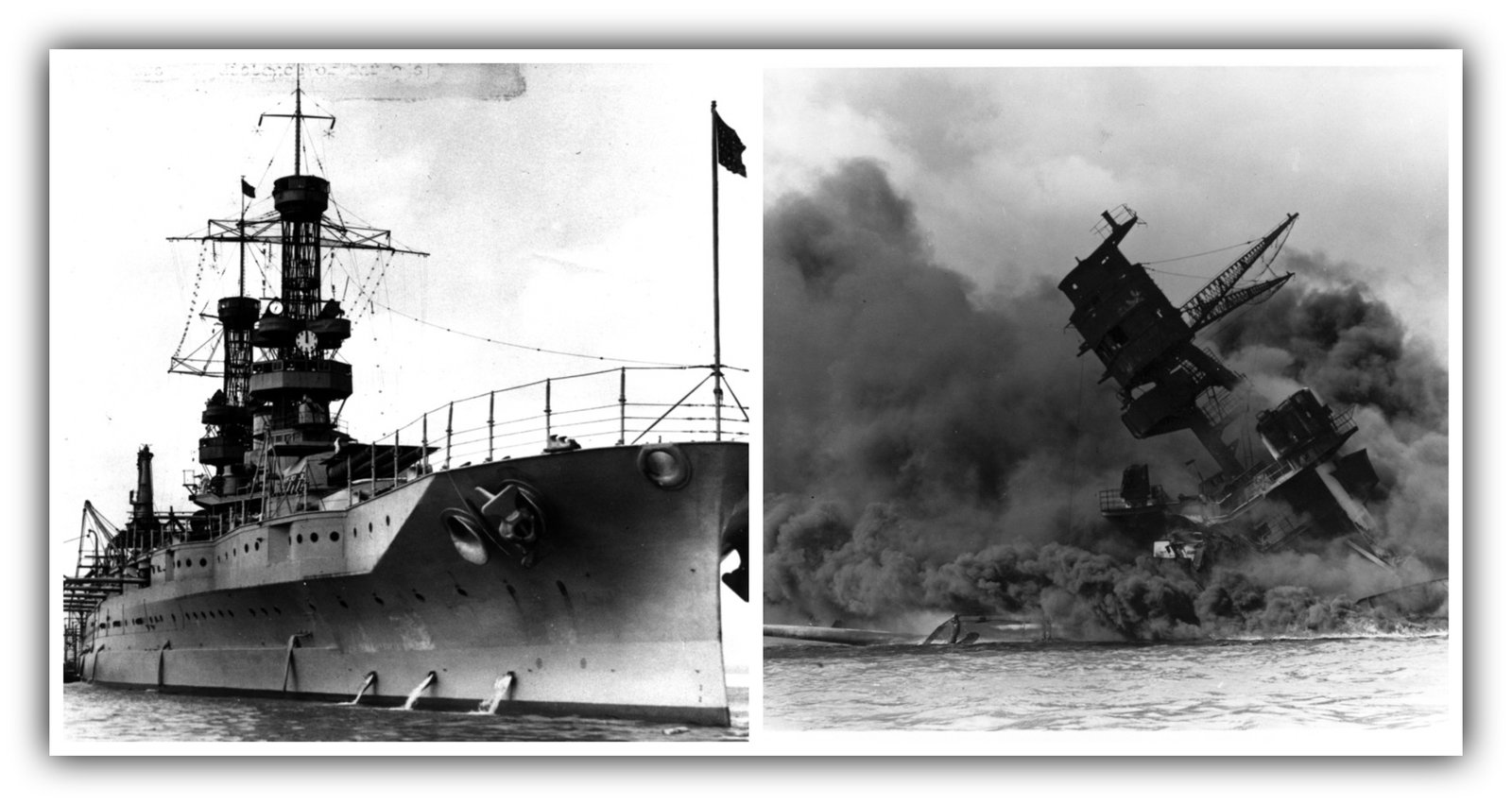
The left image shows the USS Arizona in the 1920s, years before the attack on Pearl Harbor. The right captures the ship under assault on December 7, 1941, with smoke billowing and wreckage visible amid the chaos. Photos courtesy of the National Park Service, nps.gov.
Remembering December 7, 1941
On December 7 each year, Americans observe National Pearl Harbor Remembrance Day to honor the 2,403 service members who died when the attack on Pearl Harbor struck Naval Station Pearl Harbor in Hawaii. The surprise Japanese assault destroyed or damaged nearly 20 U.S. naval vessels, sank two battleships, destroyed hundreds of aircraft, and wounded over a thousand people.
On December 8, 1941, the day after the attack on Pearl Harbor, President Franklin D. Roosevelt addressed a joint session of Congress, declaring war on Japan and calling December 7 “a date which will live in infamy.” Video courtesy of President Franklin D. Roosevelt Declares War on Japan (Full Speech) | War Archives, British Pathé, YouTube.
The following day, the United States declared war on Japan, officially entering World War II. This event transformed the global order and marked the beginning of a long and costly fight against tyranny. Congress formally designated December 7 as a day of remembrance in 1994. While not a federal holiday, the American flag is flown at half-staff until sunset and communities and veterans’ organizations observe the occasion.
Why Pearl Harbor Day Matters
Pearl Harbor Day is more than a memory of tragedy. It is a tribute to what was lost and a recognition of what was preserved: freedom, unity, and resolve. The courage of those who served and sacrificed that day laid the groundwork for the United States and its allies in defending democracy worldwide. The day also serves as a reminder that peace requires vigilance and commitment. Decades later, the legacy of Pearl Harbor endures through historic memorials, educational efforts, and annual ceremonies that ensure future generations remember the price of freedom.
Alaska and World War II
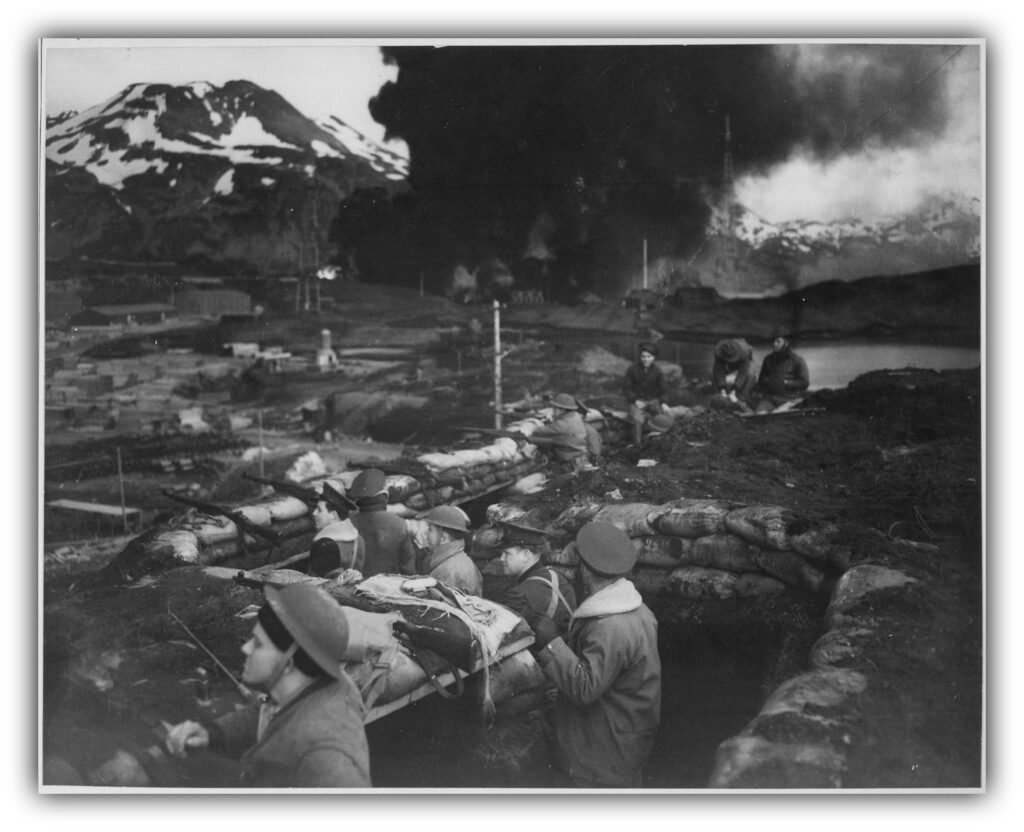
U.S. Marines observe the battle from trench positions during the Aleutian Campaign in World War II. Photo by unknown author, U.S. National Archives and Records Administration, Public Domain. Source
While Pearl Harbor is best known for the attack in Hawaii, Alaska also has a direct connection to World War II. In June 1942, Japanese forces bombed Dutch Harbor in the Aleutian Islands, part of a broader campaign that included the occupation of Attu and Kiska. The Aleutian Campaign demonstrated that the war reached far beyond the continental United States and highlighted Alaska’s strategic importance in defending North America. The campaign involved harsh conditions, including freezing temperatures, fierce winds, and rugged terrain, testing the resilience of U.S. forces.
Pearl Harbor Day unites Americans in remembrance of sacrifice and courage, from Hawaii to Alaska. It underscores the enduring lessons of World War II and the continued importance of honoring those who gave their lives in defense of freedom.