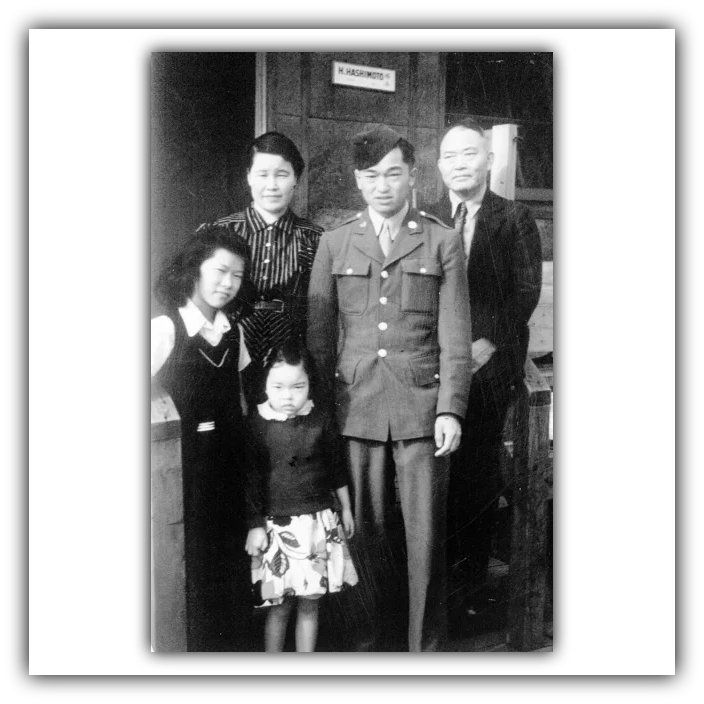
Tanaka family at Minidoka, 1945
Photo courtesy: The Empty Chair Project
Members of the Tanaka family stand together at the Minidoka Japanese internment camp in Jerome, Idaho. From left to right: Alice Tanaka Hikido, Mary Tanaka Abo in the foreground and behind her, Nobu Tanaka, John Tanaka in uniform, and Shonosuke Tanaka. William Tanaka is not pictured. The family was forcibly removed from Juneau during World War II, along with other Japanese Americans from the community.
Uprooted and Separated: The Tanaka Family’s Journey Through World War II Internment and Survival
By Gina Hill | Alaska Headline Living | March 18, 2026
Today is March 18. On this day in 1942, the United States established the War Relocation Authority to remove Japanese Americans from their homes and place them in internment camps. Families were uprooted, communities disrupted, and lives changed forever.
The context for this drastic action was the outbreak of World War II in the Pacific. On December 7, 1941, Japan attacked Pearl Harbor, bringing the United States into the war. Widespread fear of espionage and sabotage led military and political leaders to view Japanese Americans with suspicion, even though no evidence suggested that American citizens of Japanese descent posed a real threat. Executive Order 9066, signed by President Franklin D. Roosevelt on February 19, 1942, gave the military authority to exclude any person from designated areas. In practice, this applied almost entirely to Japanese Americans living on the West Coast, including Alaska.
The War Relocation Authority, established the following month, oversaw the evacuation of approximately 120,000 Japanese Americans, two-thirds of whom were U.S. citizens. Families lost homes, farms, and businesses, often with little or no compensation. Communities were torn apart. Children’s education was disrupted, and daily life in the camps was strictly controlled. The physical and emotional hardships were severe, and the effects lasted for generations. The Civil Liberties Act of 1988 formally apologized for the injustice and provided reparations to surviving detainees.
Faces Behind the History
Nobu Tanaka
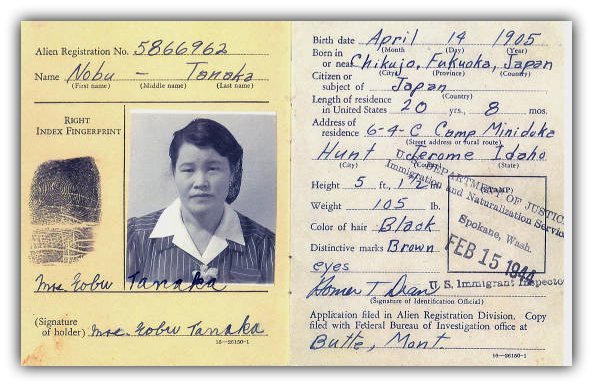
“We had to leave our home, our neighbors, our life. We held on to each other because that was all we had.”
Shonosuke Tanaka
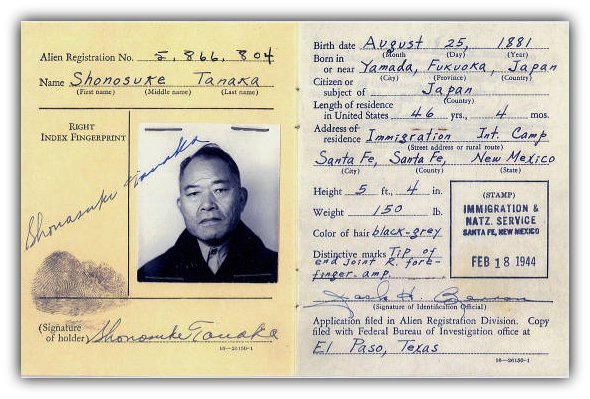
“Being separated from my family for two years was the hardest part. But I never lost hope that we would reunite.” – Shonosuke Tanaka
These IDs and photos connect us to the real people affected by the policies of 1942.
The Tanaka Family Story
Shonosuke Tanaka owned the City Café in Juneau, Alaska. On December 8, 1941, one day after the Pearl Harbor attack, FBI agents arrested him and sent him to Department of Justice internment camps in New Mexico. Nobu and the children were removed from Alaska with other Japanese Americans and sent first to an assembly center near Seattle, then to the Minidoka War Relocation Center in Idaho. The family was separated for nearly two years.
Life at Minidoka was difficult. Families lived in small barracks with communal bathrooms and minimal privacy. Children adapted to schooling and daily routines behind barbed wire.
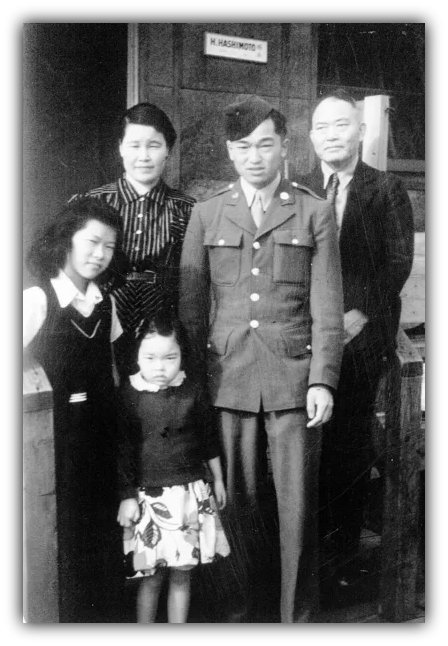
Photo courtesy: The Empty Chair Project
In this 1945 photo, members of the Tanaka family stand together at the Minidoka Japanese internment camp in Jerome, Idaho, where they were held during World War II. From left to right: Alice Tanaka Hikido, Mary Tanaka Abo in the foreground and behind her, Nobu Tanaka, John Tanaka in uniform, and Shonosuke Tanaka. William Tanaka is not pictured. (Source)
Despite these hardships, the Tanakas stayed together and supported one another. After the war, they returned to Juneau and reopened the City Café, rebuilding both home and livelihood.
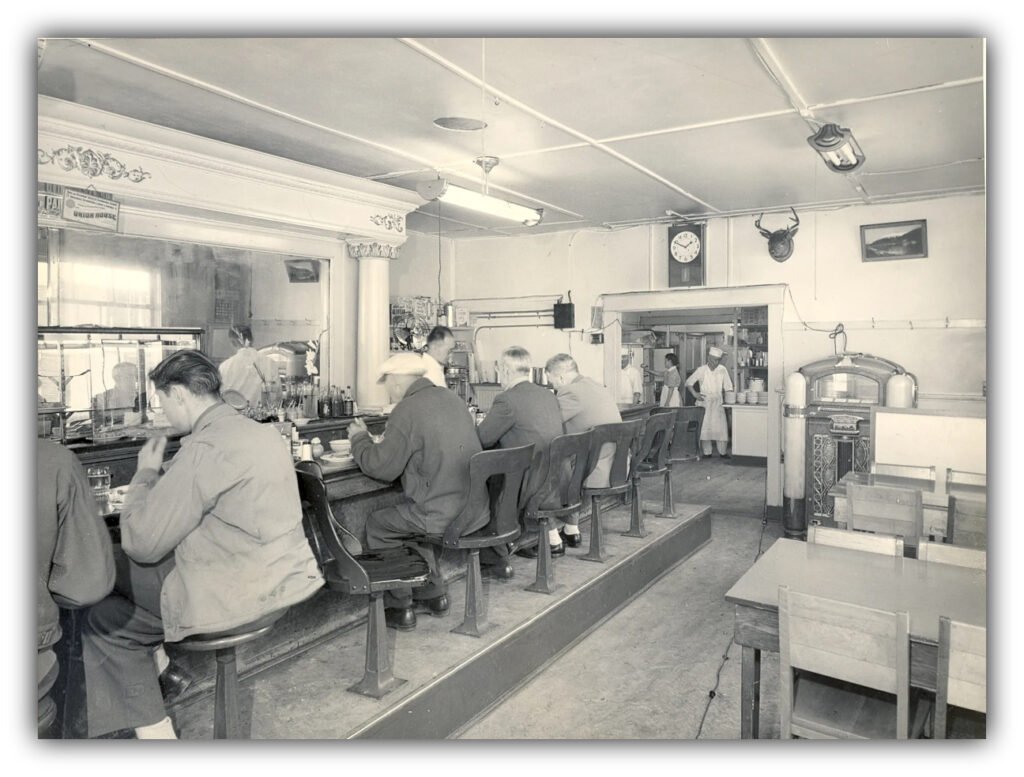
Photo courtesy: The Empty Chair Project: The History of the City Cafe
On Christmas Day 2012, the Juneau Empire published an article chronicling the history of the City Cafe and its first owners, Shonosuke and Nobu Tanaka. The article highlights both the difficult and rewarding times of their lives, the support of the Juneau community during their internment, and their return to reopen the café. It also details the later partnership of Shonosuke Tanaka with Sam Taguchi and K. Komatsubara in the 1950s. Read more: Juneau Empire | Empty Chair Project
John Minoru Tanaka, the eldest son, had been valedictorian of Juneau High School’s class of 1942. Taken before graduation, his empty chair became a symbol of absence and the broader injustice faced by Japanese Americans. John later volunteered for the U.S. Army, serving in the 442nd Infantry Regiment, one of the most decorated units in U.S. history. After the war, he pursued a medical career, becoming an anesthesiologist, and raised a family in Washington State.
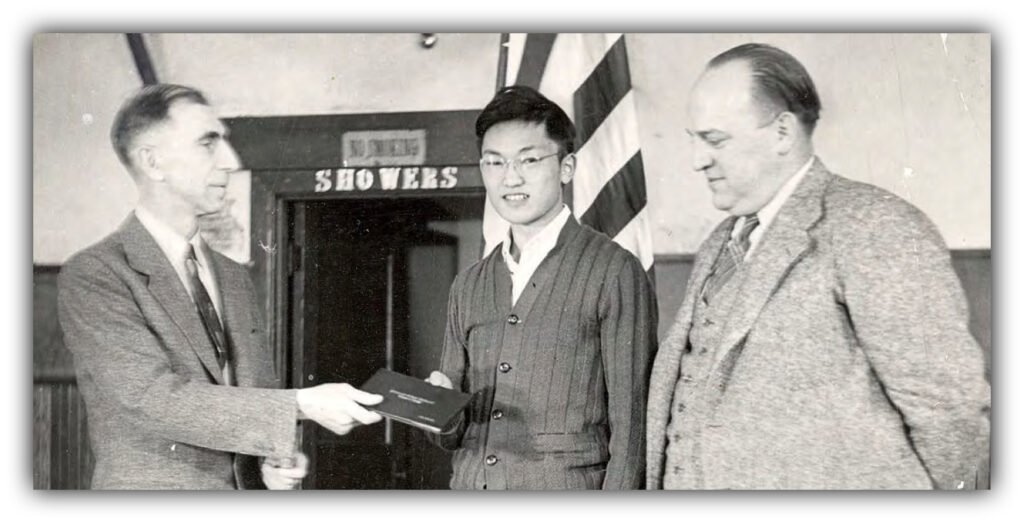
Photo courtesy: The Tanaka family via The Empty Chair Project, Juneau.org
John Minoru Tanaka, valedictorian of Juneau High School’s class of 1942, receives his diploma from Russell Hermann and A.B. Phillips at a special assembly in April 1942, shortly before being sent with his family to the Minidoka internment camp in Idaho. (Source)
After leaving internment, John Minoru Tanaka volunteered for the U.S. Army and joined the 442nd Regimental Combat Team, a unit made up mostly of second-generation Japanese Americans, known as Nisei. The 442nd became the most decorated unit in U.S. military history for its size and length of service. John and his fellow soldiers fought bravely in Europe, including Italy and France, earning thousands of awards, more than 4,000 Purple Hearts, and 21 Medals of Honor. Their courage was especially remarkable given that many of their families, including John’s own, were still held in internment camps while they served.
William Tanaka
William “Bill” Tanaka was John Tanaka’s younger brother. Born and raised in Juneau, he was interned with his family during World War II at Minidoka. William later left the camp to work in Chicago before returning to Juneau after the war to help rebuild the family business. He passed away on September 22, 2013, leaving behind memories of both hardship and the supportive community that welcomed the Tanakas home.
Alice Tanaka Hikido was about nine years old during internment. She returned to Juneau after the war and participated in community efforts like the Empty Chair Project to preserve the family and community history.
Mary Tanaka Abo was a toddler during internment. She grew up in Juneau, returned to school, and later joined community remembrance projects to honor the experiences of Japanese Americans.
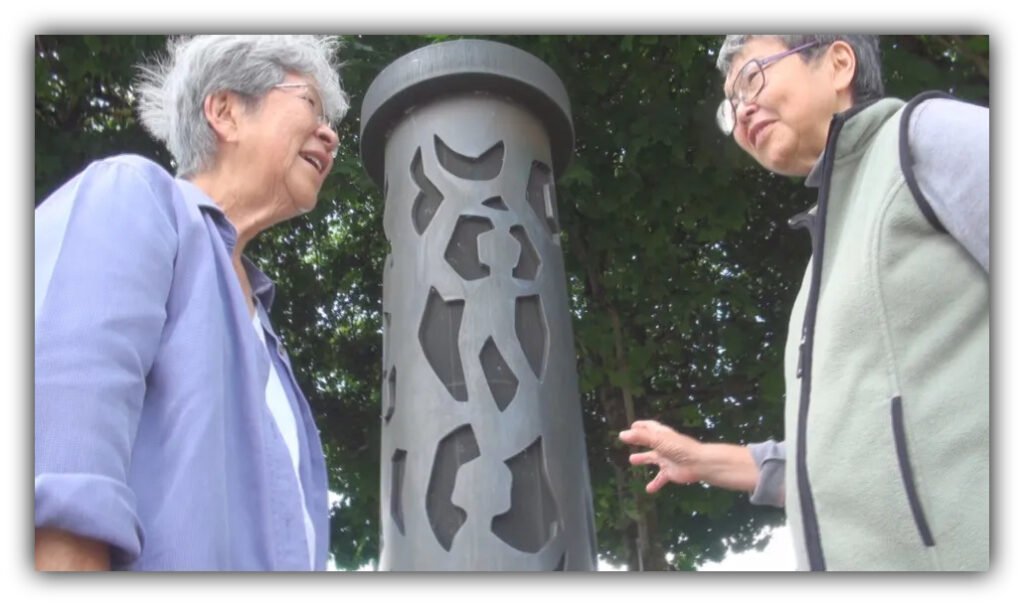
Photo courtesy: The Empty Chair Project
Committee members of the Empty Chair Project, Alice Tanaka Hikido and Mary Tanaka Abo, viewing George Tsutakawa’s memorial sculpture entitled “Harmony,” located near the entrance of Puyallup’s Western Washington Fairgrounds. Alice and Mary were evacuated to the Puyallup Assembly Center, temporarily called Camp Harmony, in 1942 before being transported to Minidoka Internment Camp in Idaho, where they were held for three years.
Shonosuke and Nobu Tanaka both lived in Juneau after the war, helping rebuild the family business. Shonosuke passed away in 1957, and Nobu in 1967.
Commemoration and Legacy
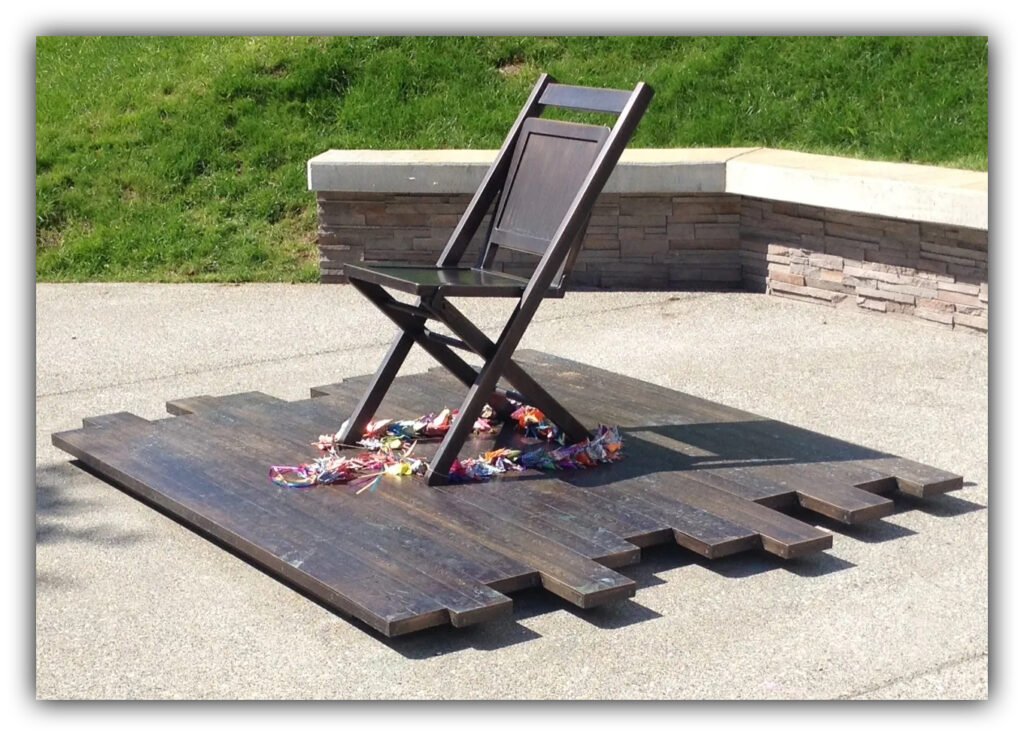
Photo courtesy: The Empty Chair Project, Juneau Community Foundation
This bronze folding‑chair sculpture by Seattle artist Peter Reiquam symbolizes the empty seat left for valedictorian John Tanaka at his Juneau High School graduation, when he and other local Japanese Americans were sent to internment camps during World War II. The names of 53 Juneau residents forced from their homes are etched into the floor planks. The memorial stands in Capital School Park in downtown Juneau to honor those interned and the community that welcomed them home. Collective fundraising and community support brought the project to life in 2014.
The Empty Chair Memorial in Juneau honors 53 Japanese Americans from the city who were forcibly removed during the war. Its name comes from John Tanaka’s empty high school graduation chair, symbolizing absence and remembrance.
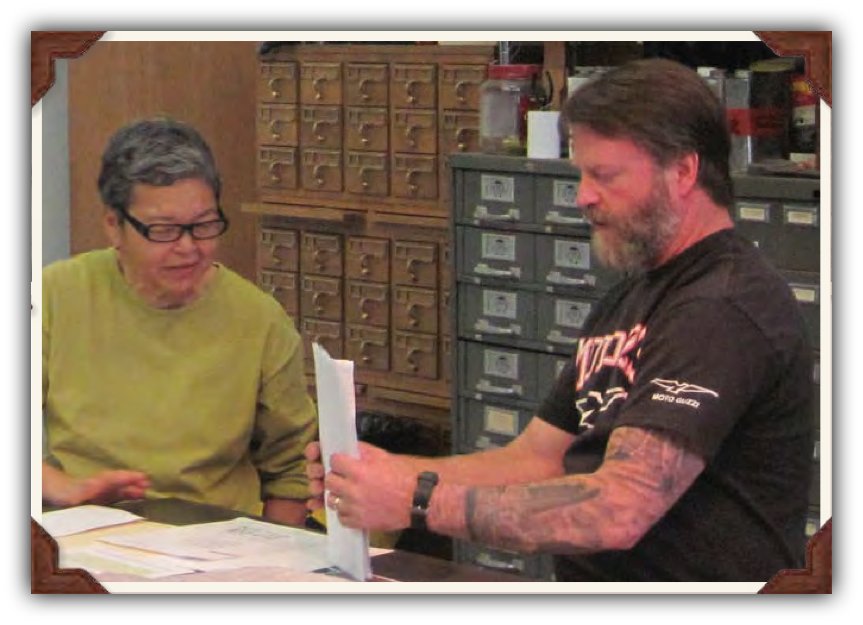
Photo courtesy: The Empty Chair Project
Mary Tanaka Abo meeting with artist Peter Reiquam in July 2012. Image provided by the Empty Chair Committee via Juneau.org.
The legacy of the War Relocation Authority continues today. Descendants report ongoing intergenerational trauma. Many families speak publicly about civil liberties and the dangers of racial profiling. Educational programs, oral histories, and memorials keep the stories alive and inform conversations about immigration, human rights, and government power during crises.
Contributions to Alaska and America
Despite the hardships of incarceration, Japanese Americans have made lasting contributions to Alaska and the United States. In Alaska, families like the Tanakas helped rebuild communities, reopened businesses, and served in civic and cultural roles. Across the country, Japanese Americans have been innovators, educators, artists, entrepreneurs, and leaders in science, politics, and the military.
Many served with distinction in the 442nd Infantry Regiment and other units, demonstrating extraordinary patriotism despite facing discrimination. Japanese American communities have enriched American culture with food, arts, and business, from local family restaurants to international corporations. Civic engagement and advocacy have advanced civil rights, ensuring that the lessons of internment inform policy and public awareness today.
Lessons for Today: Civil Liberties, National Security, and Immigration
The rationale behind the War Relocation Authority was framed as a matter of national security. Military leaders argued that Japanese Americans could be spies or saboteurs during World War II. In reality, no evidence supported these claims. The internment highlights the tension between national security and civil liberties, showing how fear can lead to sweeping government actions that target minority communities.
Today, similar debates arise around immigration, border security, and surveillance. The internment experience of Japanese Americans is a powerful reminder of the need to protect civil liberties, ensure due process, and resist policies based on ethnicity, religion, or national origin. The Tanaka family story illustrates the human cost when fear overrides justice and highlights the importance of remembering history to guide present-day decisions.
The story of the Tanaka family exemplifies both the injustice of incarceration and the contributions that have shaped Alaska and the nation. Their journey reminds us that history is about real people, real families, and the lasting impact they leave on society.
🕯️ Forget-Me-Not: Remembering Juneau’s Japanese-American Community
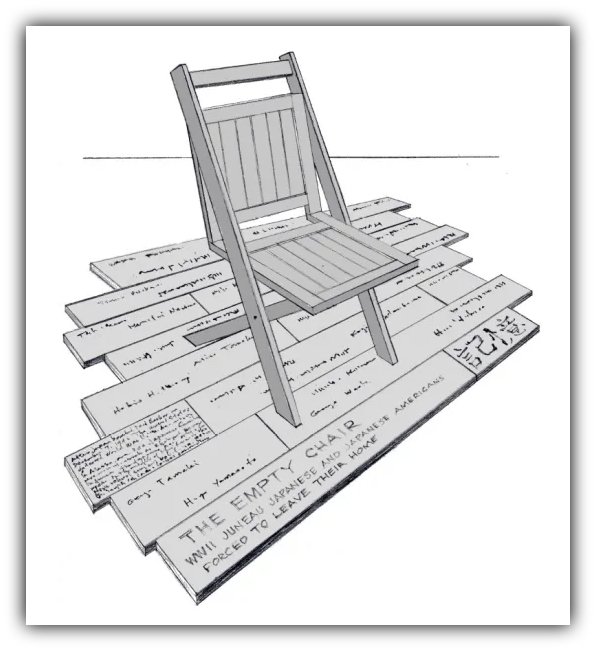
Photo courtesy: The Empty Chair Project
Artist Peter Reiquam’s concept for the memorial is illustrated above. As he expressed it, “The story is a moving one, both for the families who were affected and for the community whose citizens were taken from their midst. Equally moving is the story of these same exiled families’ return and the way that the community welcomed them home and supported their efforts to pick up where their lives had left off.”
The Empty Chair Memorial in Juneau honors the Japanese Americans from the community who were taken from their homes and sent to internment camps during World War II. The empty seat left for valedictorian John Tanaka symbolizes both his absence and the absence of all those who were uprooted. This memorial preserves the memory of their lives, the hardships they endured, and the enduring strength of a community that welcomed them home. It stands as a reminder to future generations of the lessons learned from this chapter in history.
Below are the names of the 53 Juneau residents who were unjustly incarcerated at Minidoka. Each name etched in bronze honors their lives, experiences, and the community they left behind:
Names of the 53 individuals:
Kiichi “Henry” Akagi
William Akagi
Hikohachi Fukuyama
Mume Fukuyama
Ethel Fukuyama
Walter Fukuyama
Thomas Fukuyama
Usuke Hamada
Hakuio Inouye
Thomas Itabashi
Shikanosuke Ito
Torao “Bob” Kanazawa
T. Kato
Utaka Kazama
Saburo “Sam” Kito, Sr.
Amelia Kito
Barbara Kito
Harry Kito
John Kito
Sam Kito
Katsutaro Komatsubara
Tsuyo Komatsubara
Rose Komatsubara
Nancy Komatsubara
Patricia Komatsubara
Gary Komabsura
Takashi Kono
Haruo “Ham” Kumasaka
Torihei Kuwamoto
Kojiro Matsubayashi
Henry Mayeda
Takao “Mack” Mori
Toyojiro Moriuchi
Thomas Mukai
Mac Nakamura
Masaki Nakamura
Paul Shimizu
Yakei Shiota
Takeshi “Gim” Taguchi
Isamu “Sam” Taguchi
George Tamaki
Shonosuke Tanaka
Nobu Tanaka
John Tanaka
William “Bill” Tanaka
Alice Tanaka
Mary Tanaka
Saburo Tanaka
Toraichi Toyokawa
George Wada
Hiyo Yamamoto
Ikuichi Yoshida
Makato Yoshida
🕯️