
Housing, health, and food policy changes announced within hours. Here’s what matters and what doesn’t.
By Gina Hill | Alaska Headline Living | January 2026
January 7, 2026
President Donald Trump set the tone for a busy policy morning Wednesday with a trio of announcements touching housing affordability, food policy, and childhood immunizations, all rolled out within hours through official White House channels.
The headline grabber came first.
Homes Are for Living, Not Leveraging
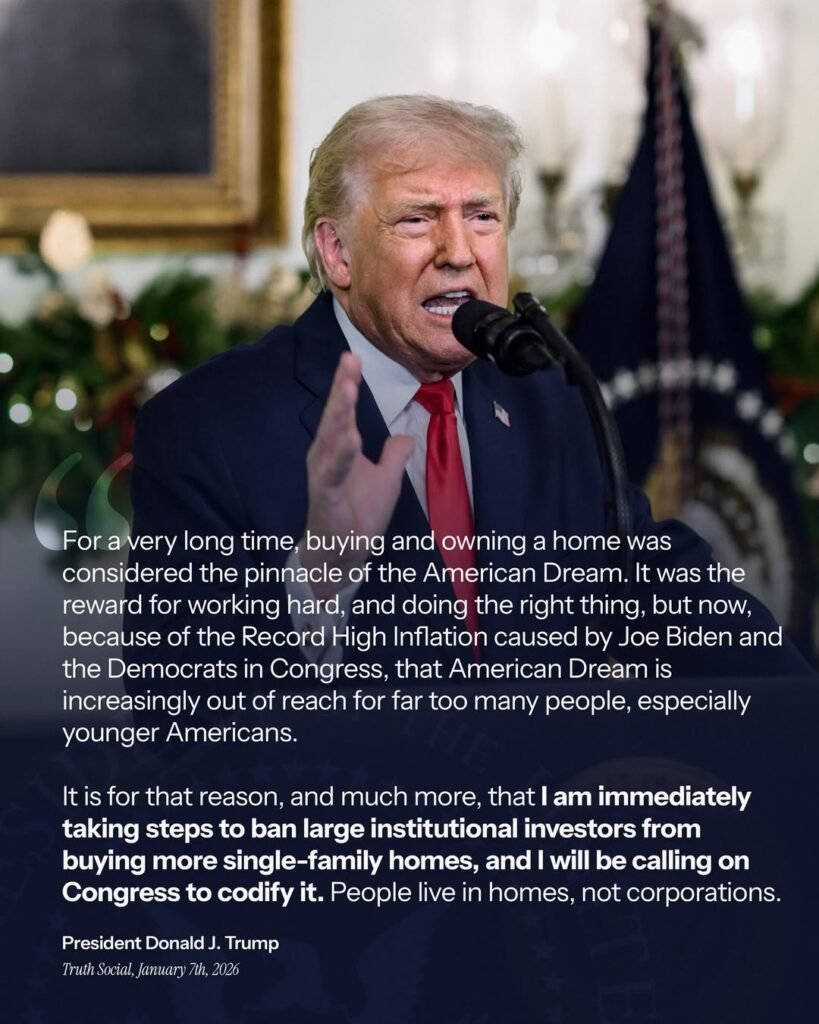
In a Truth Social post shortly before 9 a.m., President Trump announced his administration is moving to block large institutional investors from buying additional single family homes, calling corporate ownership a direct threat to the American Dream.
“For a very long time, buying and owning a home was considered the pinnacle of the American Dream,” Trump wrote, blaming inflation and Wall Street consolidation for pushing homeownership out of reach, particularly for younger Americans.
The White House quickly amplified the message on Facebook with a blunt line that is already making the rounds nationwide. People live in homes, not corporations.
Trump said he will ask Congress to codify the restriction into law and previewed additional housing and affordability proposals that he plans to outline during a speech at the World Economic Forum in Davos later this month.
Putting Real Food Back on the Table
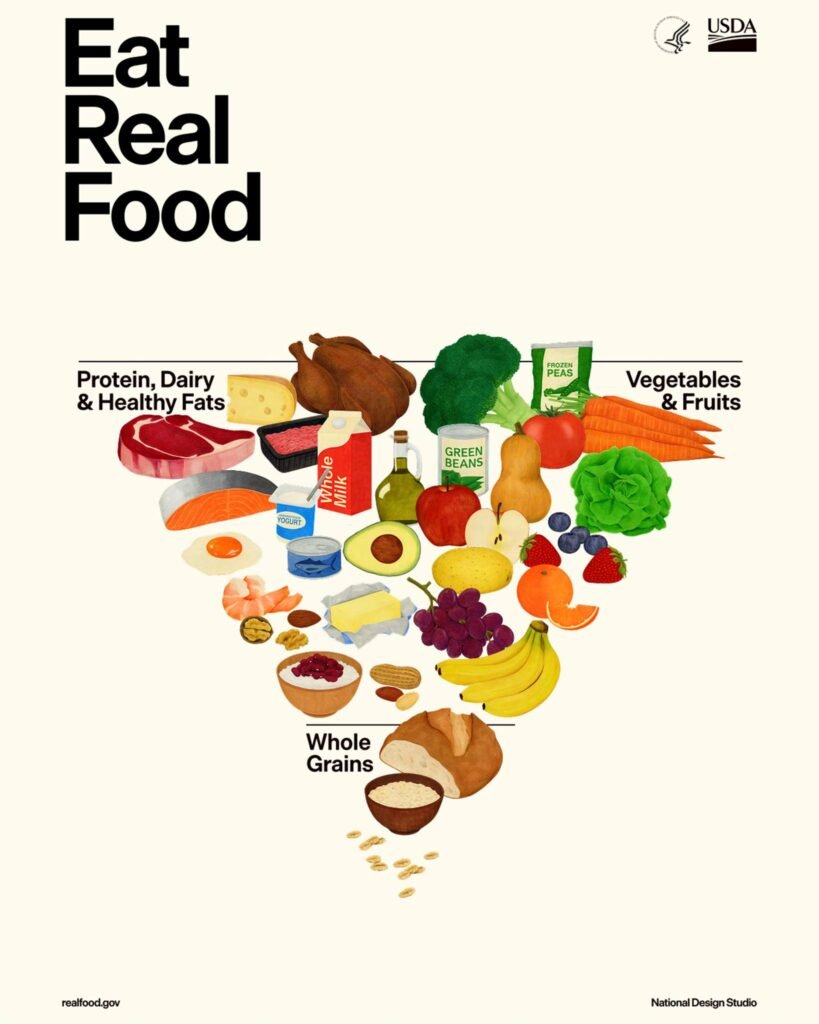
Within hours, the White House also announced the release of the 2025 to 2030 Dietary Guidelines for Americans, framing the update as a return to whole foods and basic nutrition principles.
According to the administration, the revised guidelines move away from ultra processed food reliance and place an emphasis on what officials described as real food at the center of health. The update was released through RealFood.gov and promoted as part of a broader effort to address chronic disease through diet.
Major Shift in Childhood Immunization Policy
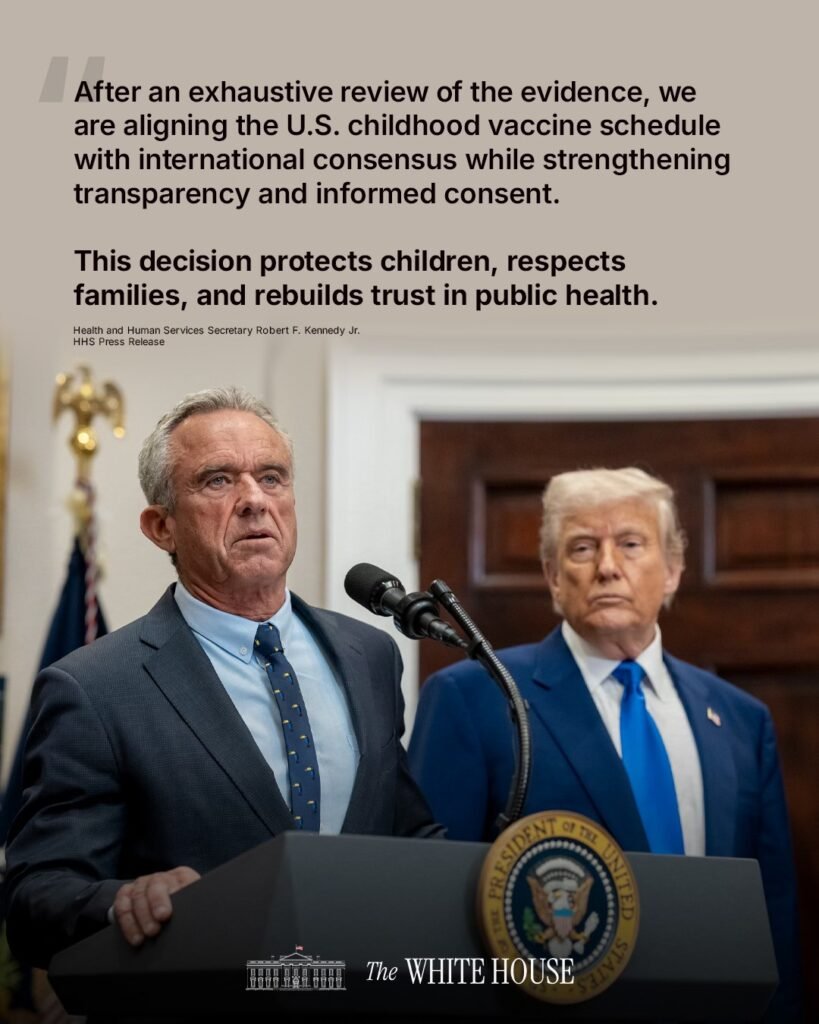
The third announcement of the morning came from the Department of Health and Human Services and the Centers for Disease Control and Prevention, confirming a significant update to the U.S. childhood immunization schedule.
Following a presidential memorandum issued in December, federal health agencies conducted a comprehensive review of vaccination practices in 20 peer developed nations. The result is a revised framework that now recommends routine vaccination for all children against 10 diseases with international consensus, plus varicella or chickenpox.
Other vaccines have been reassigned to categories for high risk groups or shared clinical decision making between parents and physicians.
Health officials emphasized that no vaccines are being removed from availability. All vaccines previously covered under Affordable Care Act insurance plans, Medicaid, CHIP, and the Vaccines for Children program will remain fully covered with no out of pocket costs.
Federal officials said the changes are designed to rebuild public trust, improve transparency, and strengthen scientific standards, including expanded commitments to placebo controlled trials and long term observational studies.
What Does This Mean for Real?
Here’s the bottom line, without the policy fog.
💰 Will this lower home prices right away?
No. Even if enacted, blocking large institutional investors would not cause immediate price drops. Housing costs are still driven by supply, interest rates, land availability, and construction costs. In Alaska, limited inventory and high building expenses remain the biggest factors. This could ease competition over time, but it is not a quick fix.
🏡 Is the housing ban a done deal?

Not yet. It depends on how “large institutional investor” is defined and whether Congress turns the announcement into law. Until then, the impact is limited.
🥗 Do the new dietary guidelines change what people can eat or buy?
No. These guidelines mostly affect school lunches, federal food programs, and public health advice. Grocery prices and personal food choices are unchanged.
💉Are childhood vaccines being removed?
No. All vaccines remain available and fully covered by insurance. Some are now recommended based on risk or shared decision making rather than automatically for all children.
🚌 Do school vaccine rules change?
No. School requirements are set by states. This federal update does not automatically alter them.
🤔 What matters most long term?
The administration is signaling a shift toward limiting corporate consolidation, reducing top down mandates, and emphasizing transparency and personal choice. Whether that becomes lasting policy depends on Congress and implementation.
⏭️ What Comes Next
The CDC is expected to release updated provider guidance and age based immunization schedules in the coming weeks. Meanwhile, the housing announcement is already drawing national attention as lawmakers prepare for what could become one of the most consequential housing policy debates in years.
From homeownership to health care to what ends up on America’s dinner plates, the Trump administration made it clear Wednesday that 2026 is starting with big moves and even bigger messages.
Learn More
• CDC and HHS: Updated Childhood Immunization Schedule and Fact Sheet
https://www.hhs.gov/press-room/cdc-acts-presidential-memorandum-update-childhood-immunization-schedule.html
• CDC: Childhood Immunization Recommendations Overview
https://www.cdc.gov/vaccines/schedules/index.html
• President Trump’s Housing and Affordability Statement (Truth Social)
https://truthsocial.com/@realDonaldTrump
• White House Official Announcements
https://www.facebook.com/WhiteHouse
• Alaska Housing Resources
https://www.muni.org/Departments/OCPD/Planning/Pages/HousingResources.aspx