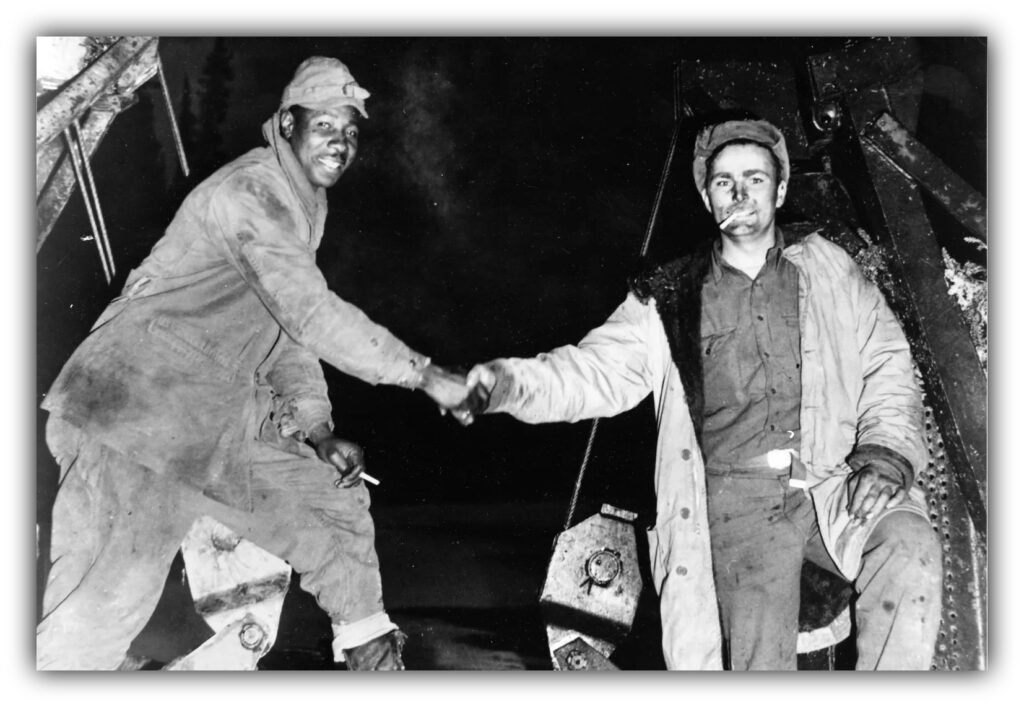
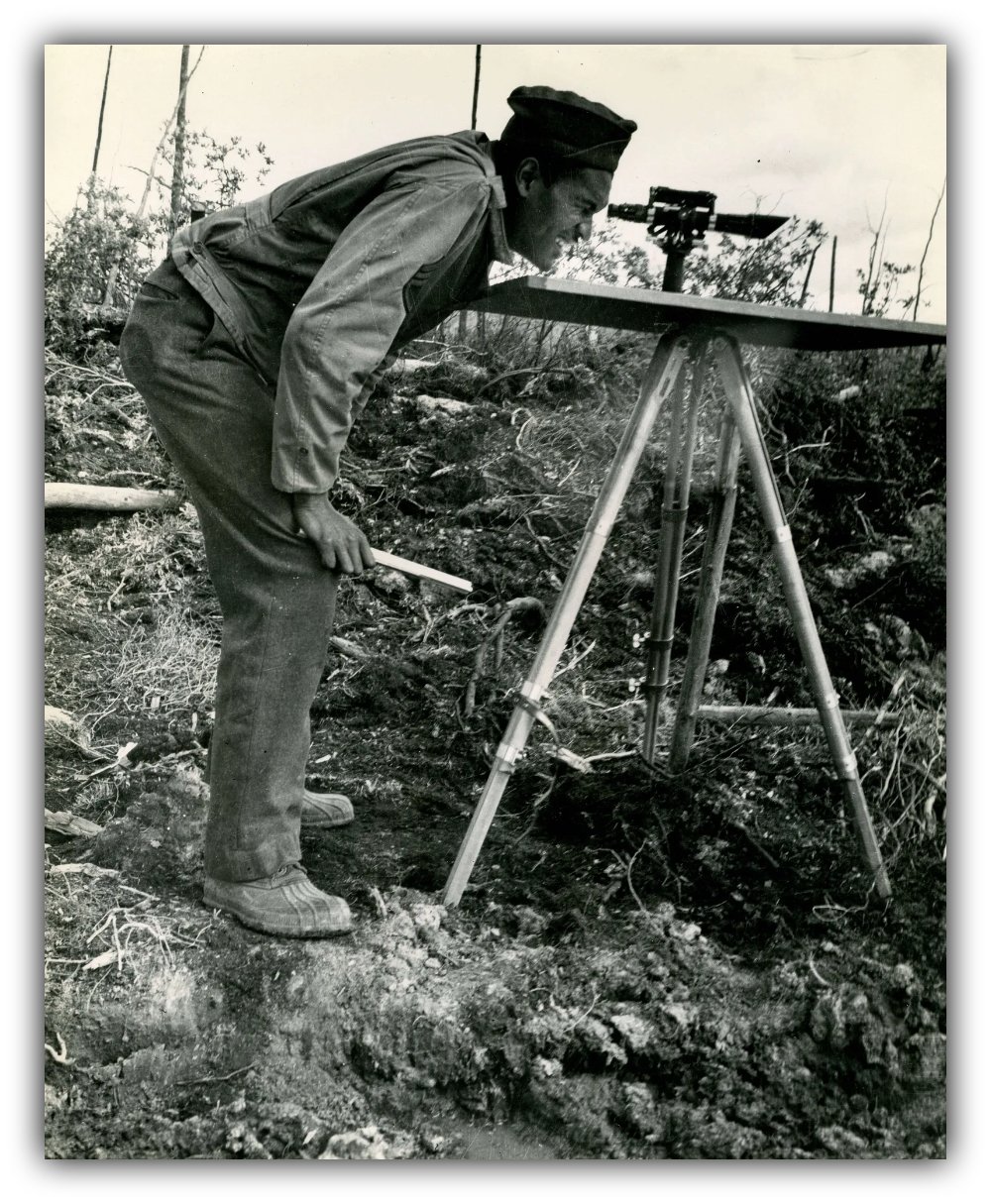
In this 1942 photograph from the U.S. Army Corps of Engineers Office of History, a Black soldier peers through a surveyor’s transit during construction of the Alaska Highway in Alaska’s northern sector. The image captures the wartime engineering effort that helped carve a strategic overland route through the Interior, where African American service members labored in segregated units under harsh frontier conditions. (U.S. Army Corps of Engineers Office of History)
Cold steel rests above frozen soil where the work of soldiers helped carve a northern lifeline during World War II.
By Gina Hill | Alaska Headline Living | February 2026
Along the quiet stretch of the Alaska Highway, winter air seems to slow the movement of time.
Near Delta Junction, river ice drifts beneath the steel of the Black Veterans Memorial Bridge.
Most travelers pass without stopping.
But history does.
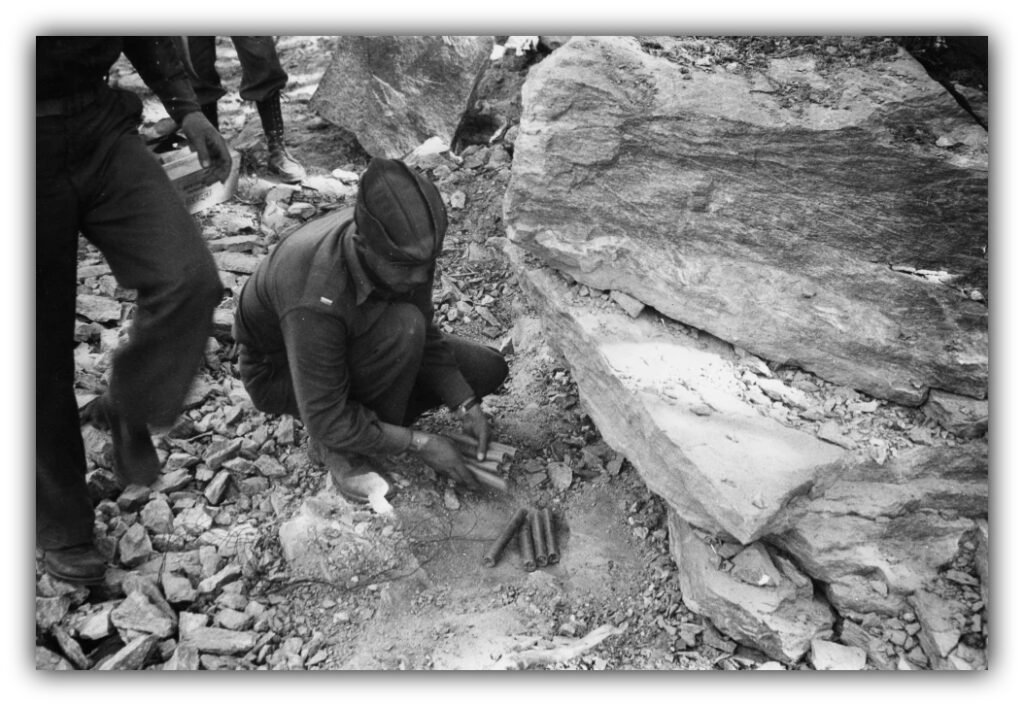
Originally known as the Gerstle River Bridge, the structure was renamed in 1993 by the Alaska Legislature to honor African American soldiers and engineering troops who helped build the Alaska Highway during World War II.
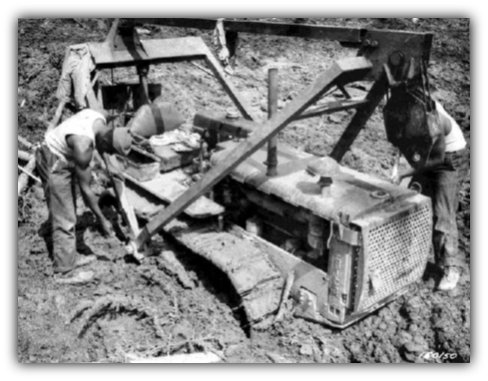
Thousands of U.S. Army Corps of Engineers service members, including Black soldiers serving in segregated units, worked across subarctic winter, muskeg wetlands, frozen soil, and mountain terrain to complete the highway in roughly eight months.
The bridge, constructed in 1944, is now approaching the end of its design lifespan under modern freight traffic, seismic considerations, and the mechanical stresses produced by Alaska’s freeze-thaw climate.
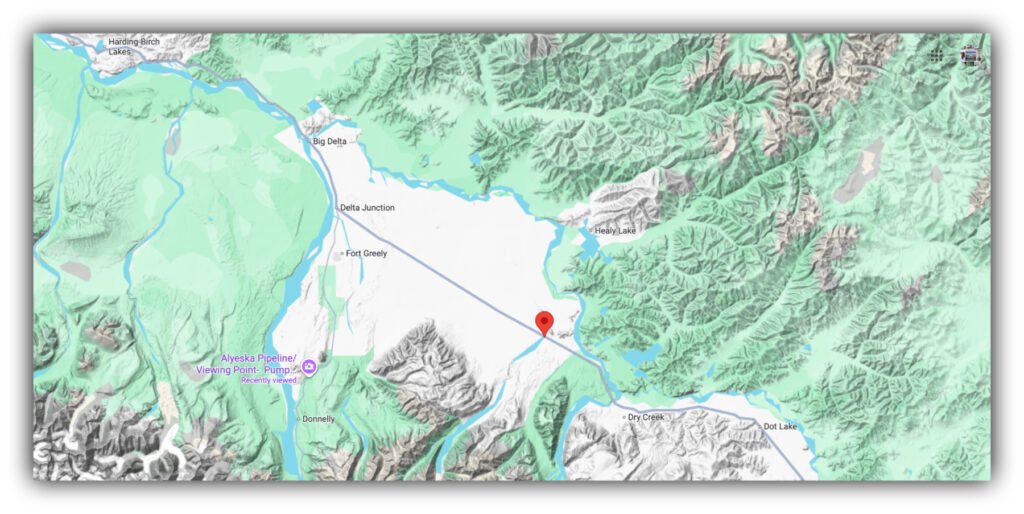
Planning documents from the Alaska Department of Transportation and Public Facilities emphasize balancing public safety with historical recognition.
Officials have stated that portions of the original steel span may be offered for relocation or memorial preservation if communities, museums, or organizations wish to maintain them as public heritage artifacts.
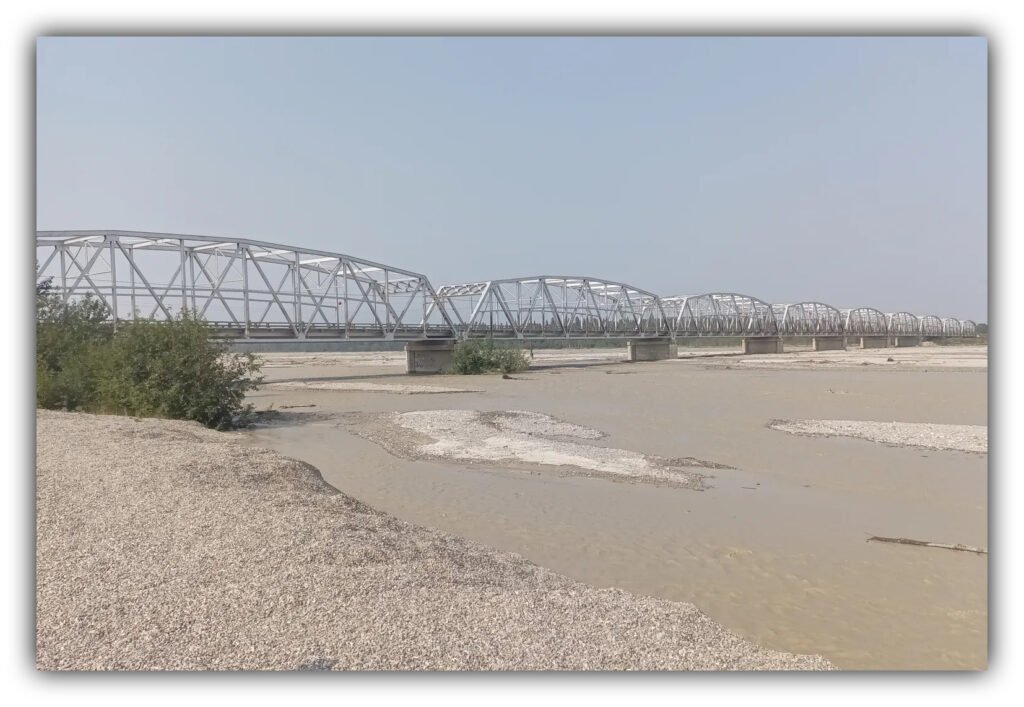
The replacement crossing is expected to be completed in the early 2030s as part of long-range highway modernization.
The project is designed to strengthen a vital northern transportation corridor while engineering the new structure to endure Alaska’s environmental pressures, including permafrost movement, seasonal temperature extremes, and seismic activity common to the region.
Preservation efforts aim to keep the story of the wartime bridge visible along the Alaska Highway so that historical memory and modern movement continue side by side.
In Alaska, infrastructure is more than engineering.
It is memory carried forward.
Highways are not shaped by steel alone, but by the people whose labor, endurance, and lives helped open the Last Frontier.