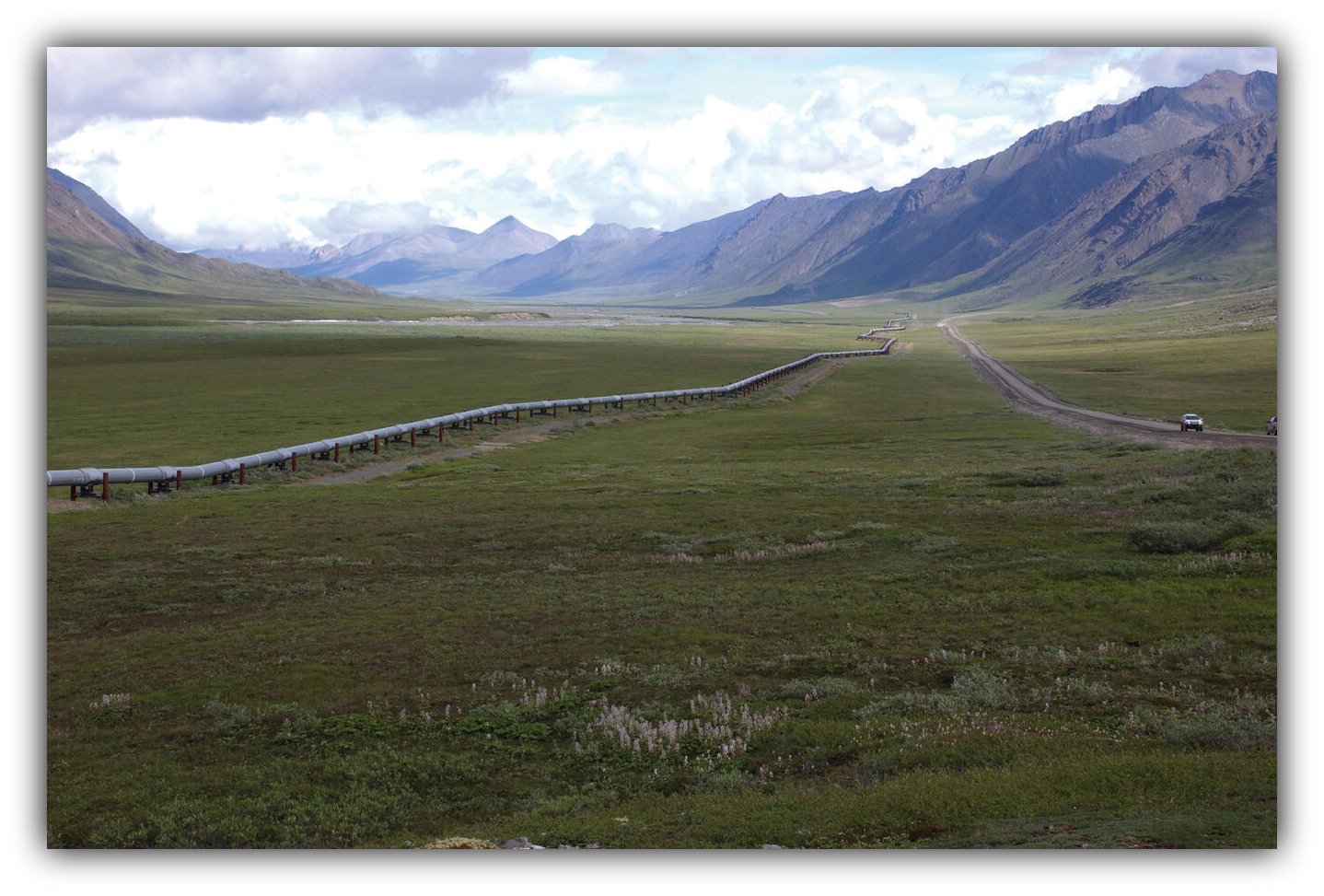
The Trans‑Alaska Pipeline System stretches across northern Alaska, symbolizing how energy production, distance, and supply networks shape the way national policy and economic activity reach the state.
Energy, distance, and supply chains shape how national policy reaches the state.
By Gina Hill | Alaska Headline Living | February 2026
The 2026 State of the Union address delivered by President Donald Trump projected national economic confidence and security strength. For Alaska, the speech signaled policy intent more than practical certainty.
In a state where federal decisions shape everything from runway repairs to salmon seasons, national policy is not abstract.
Alaska does not live on national rhetoric. It lives on movement, distance, and delivery.
Watch the full 2026 State of the Union Address below, courtesy of The White House.
Inflation and Everyday Costs
The address highlighted cooling inflation trends tracked by the Federal Reserve System.
Slower inflation does not mean falling prices.
In Alaska, costs follow long supply routes. Food, fuel, and building materials move first through water or air before reaching communities such as Anchorage.

Nearly all food sold in the state is imported. Rural regions face greater price pressure because many villages are not connected to highway systems. In remote communities, air freight and last-mile transport can push basic grocery prices well above national averages.
National economic improvement may ease pressure at the margins. Structural shipping distance continues to keep Alaska prices above the national average.
Energy Development and Resource Economy
Energy production remains a central economic conversation.
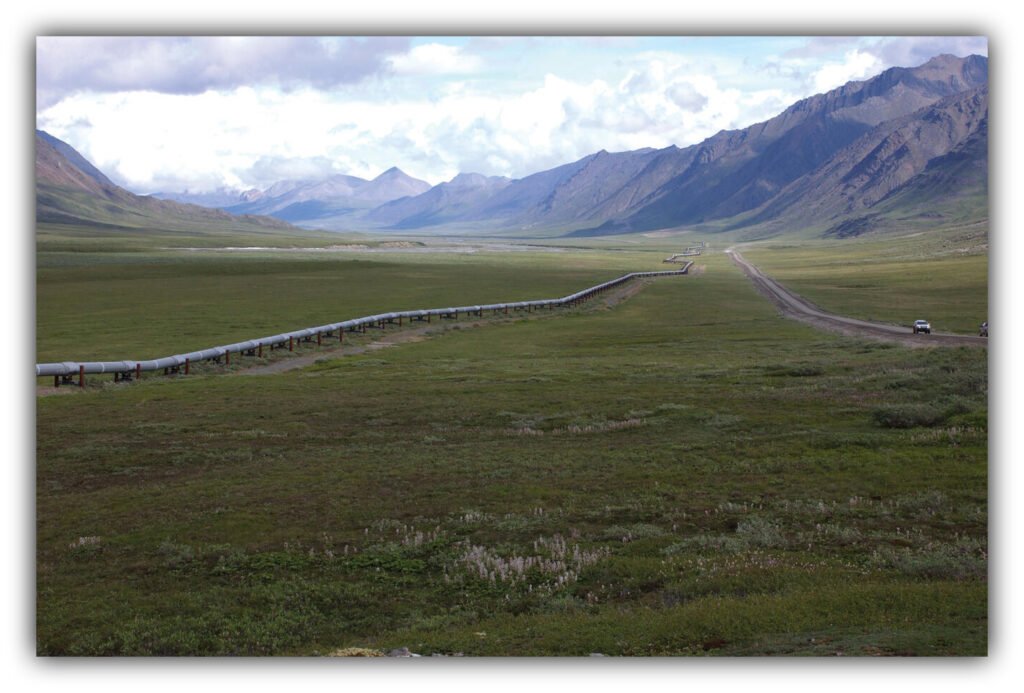
Alaska’s resource economy depends on regulatory certainty as much as market demand.
Oversight by the U.S. Department of the Interior will influence leasing approvals, environmental review timelines, and development activity on federal land.
The speech did not announce new Arctic exploration zones or major North Slope expansion programs.
For communities and workers tied to petroleum production, stability in permitting processes matters more than optimistic policy framing.
Defense, Arctic Security, and Federal Presence
Alaska’s geographic position keeps it central to national defense strategy.
Military infrastructure supported by the U.S. Department of Defense continues to influence regional employment and contractor activity.
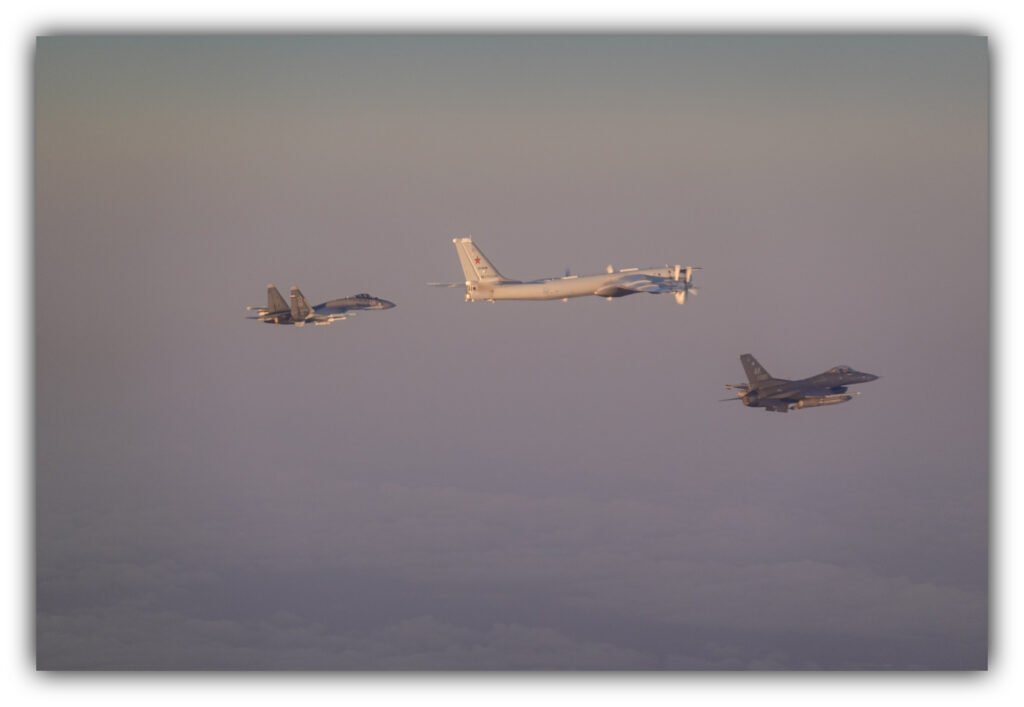
The North American Aerospace Defense Command monitors the Alaskan Air Defense Identification Zone. Fighter aircraft are periodically deployed to track foreign military flights operating near Alaska’s western coast. These encounters typically occur in international airspace and are treated as routine defense surveillance.
The address reaffirmed readiness but did not propose new installations, missile defense expansion, or Arctic force deployment.
Alaska’s strategic importance was implied rather than operationally detailed.
Immigration Enforcement in Alaska Communities
Immigration enforcement was a major policy theme.
Federal immigration enforcement now extends beyond traditional border zones. While the primary mission of U.S. Customs and Border Protection focuses on ports of entry and maritime approaches, interior enforcement by U.S. Immigration and Customs Enforcement can occur inside U.S. communities.

Earlier this month, federal agents located and detained a Mexican mother and her children in Soldotna under a final removal order after a missed immigration court hearing. The case prompted discussion in the Alaska Legislature about how federal enforcement operates within the state.
Alaska’s geographic relevance includes maritime and air surveillance across northern routes, but immigration policy is no longer limited to coastal interception.
The address did not propose new Arctic enforcement installations.
Transportation, Freight, and Remote Community Stability
Infrastructure was framed as a national economic pillar.
In Alaska, transportation policy is community policy.
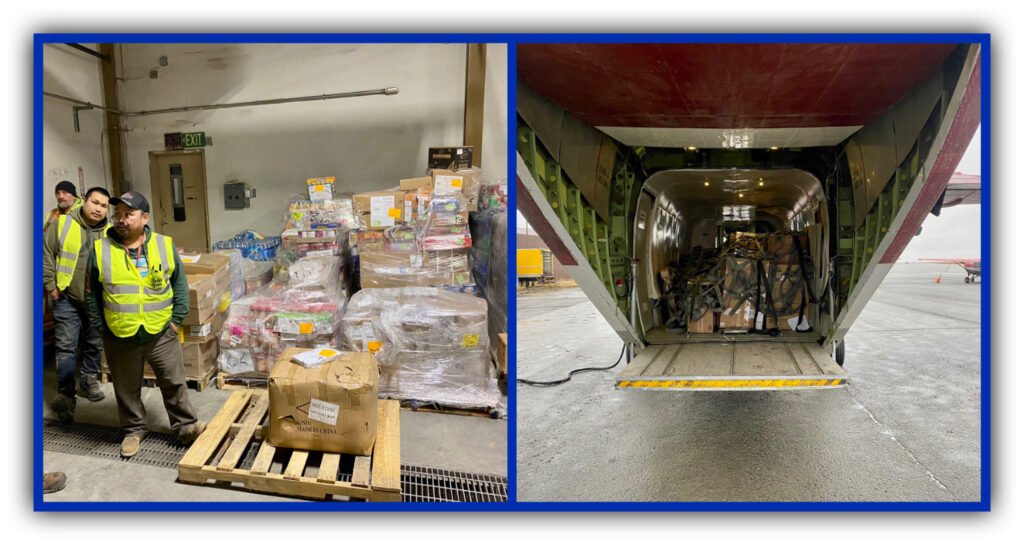
The state’s vast geography means movement is survival economics.
Many villages are not connected to highway systems. Supplies often travel hundreds of miles by air or coastal barge routes before reaching local stores, clinics, and fuel depots.
Programs administered by the U.S. Department of Transportation support air cargo networks, airport maintenance, and maritime shipping corridors that keep rural communities supplied with fuel, food, medical materials, and construction goods.
Weather volatility, terrain complexity, and seasonal daylight patterns continue to shape reliability.
The address did not outline infrastructure projects specifically targeting Alaska.
Science, Oceans, and Fisheries
Marine science and climate adaptation received limited attention.
This matters in a state where commercial and subsistence fishing depend on monitoring and research conducted by the National Oceanic and Atmospheric Administration.
Alaska is experiencing measurable environmental change.
Adaptation Science Center
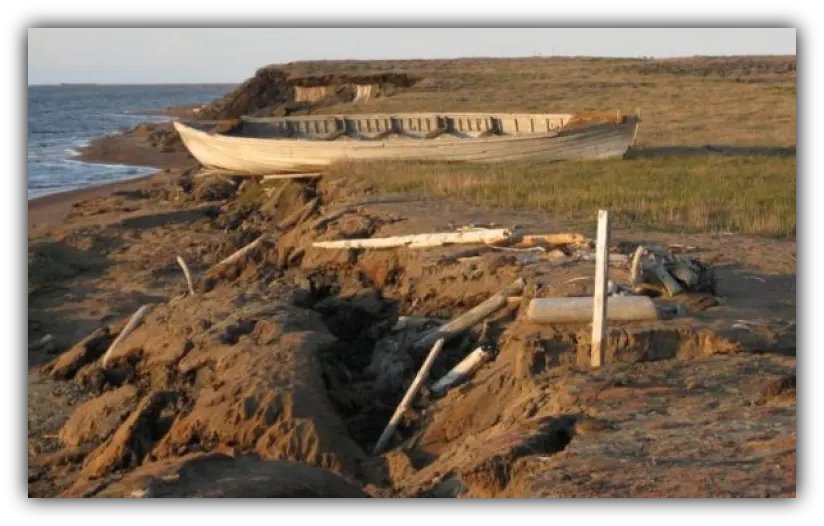
Western and northern coastal communities face stronger storm systems and accelerating shoreline erosion. Reduced seasonal sea ice leaves coastlines more exposed to wind and wave action.
Rising temperatures are contributing to permafrost thaw across interior and northern regions, including areas near Utqiagvik. Infrastructure built on frozen ground can shift as soil stability changes.
Some coastal communities are evaluating long-term relocation or infrastructure adaptation as land loss increases.
Salmon populations remain tied to ocean temperature patterns, migration timing, and habitat conditions tracked through federal and state research.
Future regulatory decisions affecting fisheries, Arctic shipping routes, and ecosystem management will likely emerge through scientific agency review rather than national speeches.
Alaska’s Measure of National Policy
National momentum is measured differently in Alaska than in larger population centers.
For Alaska, the difference between rhetoric and reality is often measured not in applause lines but in whether federal agencies actually sign off on projects that keep fuel, food, and economic activity moving.
In Alaska, impact is measured in shipments, flights, energy flow, and federal signatures on the right documents. Everything else is simply conversation.