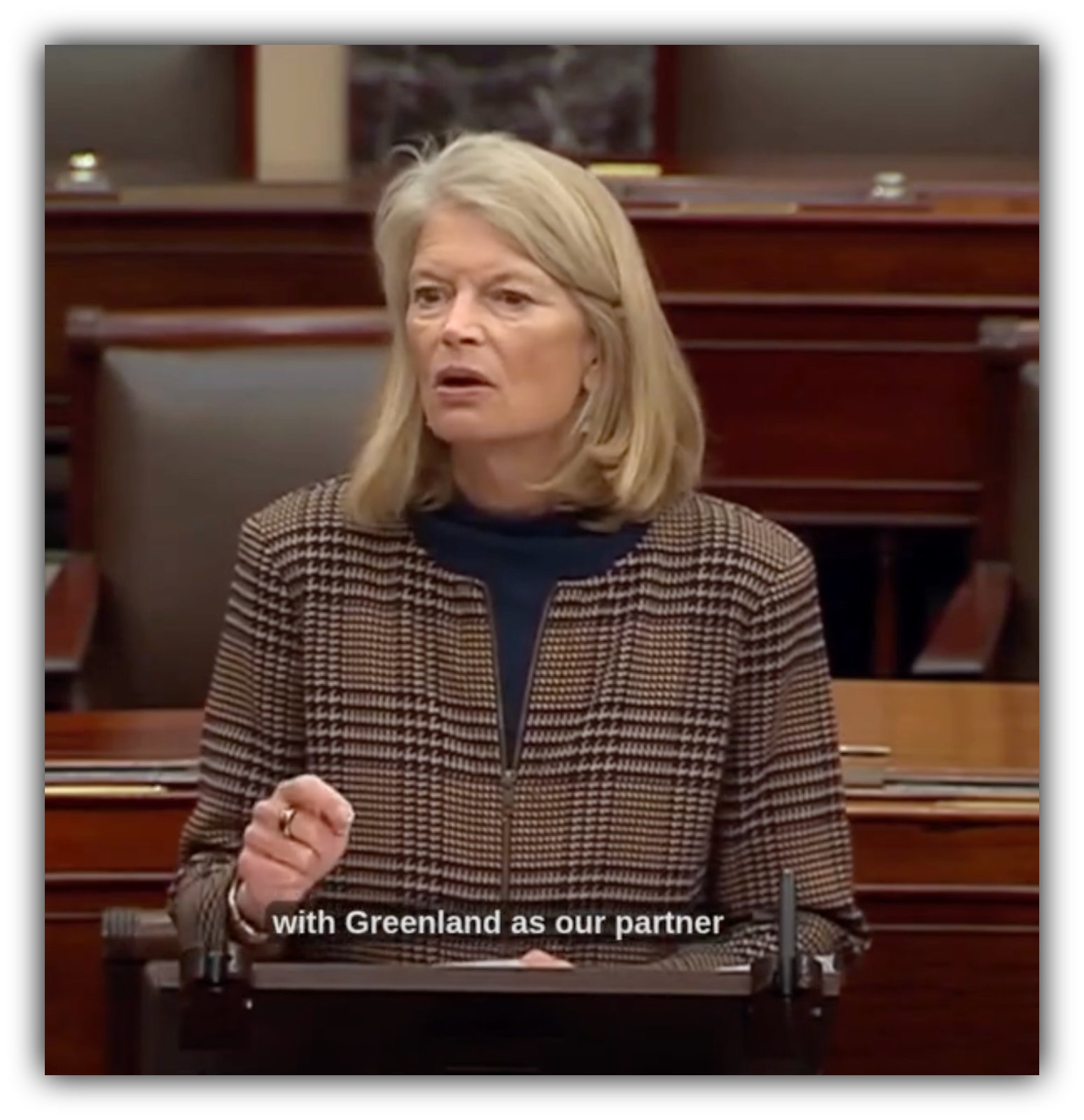
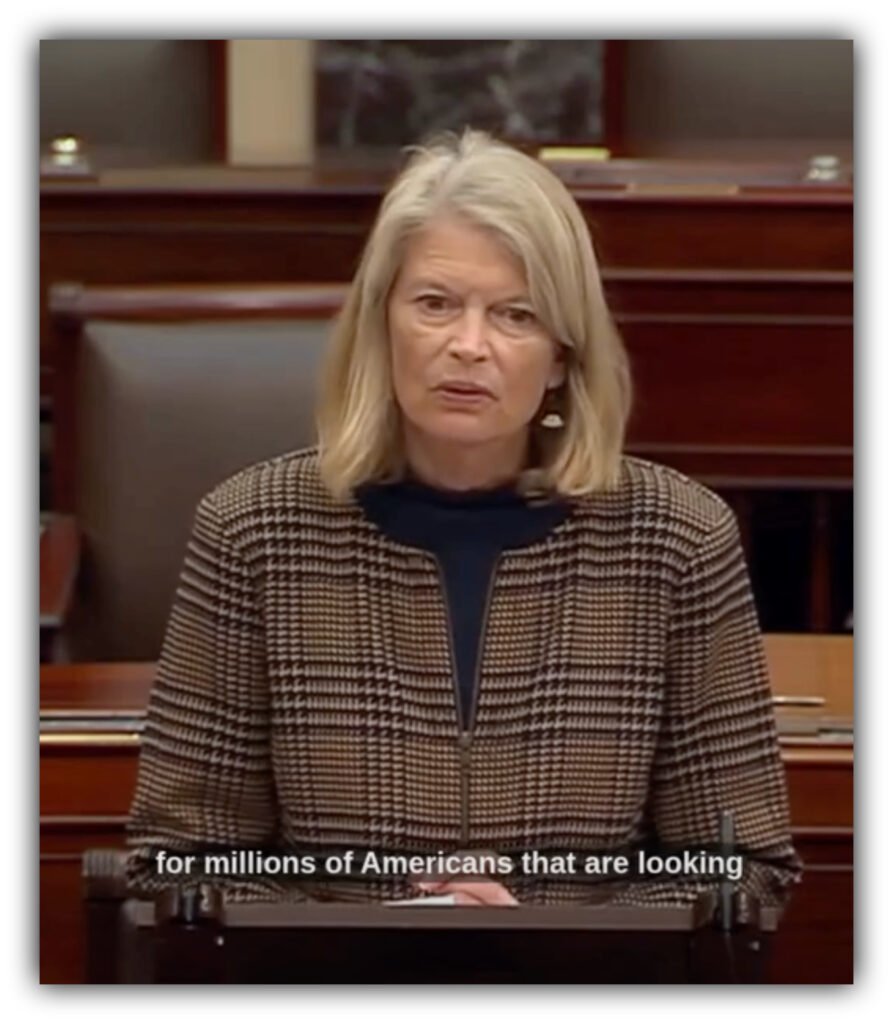
Senator Lisa Murkowski speaks at the microphone on the U.S. Senate floor, addressing colleagues on U.S. foreign policy, congressional authority, and America’s relationships with long-standing allies in the Arctic.
By Gina Hill | Alaska Headline Living | January 2026
Alaska is in the national spotlight, this time over diplomacy, military authority, and party divisions. On the Senate floor this morning, Senator Lisa Murkowski spoke directly to the nation about maintaining alliances and respecting international partners. She strongly rejected the idea of annexing Greenland, emphasizing partnership over coercion and warning that aggressive rhetoric from Washington could undermine NATO, damage U.S. credibility, and alienate key allies.
Historical Context:
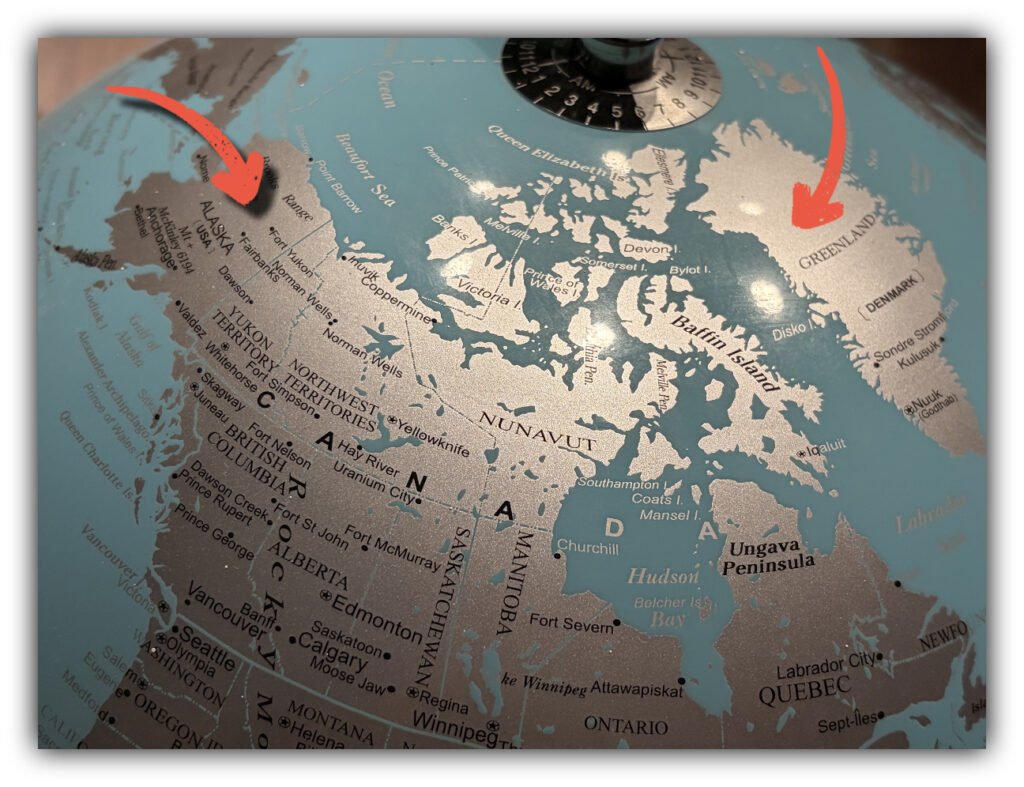
Murkowski highlighted Greenland’s autonomous population of 57,000 and underscored that its future must be decided by its own people. She traced the history of U.S.-Greenland relations, including inquiries and rejected offers dating back to the 19th and early 20th centuries. Murkowski also emphasized her long-term engagement with Arctic leaders, including multiple visits to Greenland, and her role as co-chair of the Arctic Parliamentarian Conference.
Venezuela and War Powers:
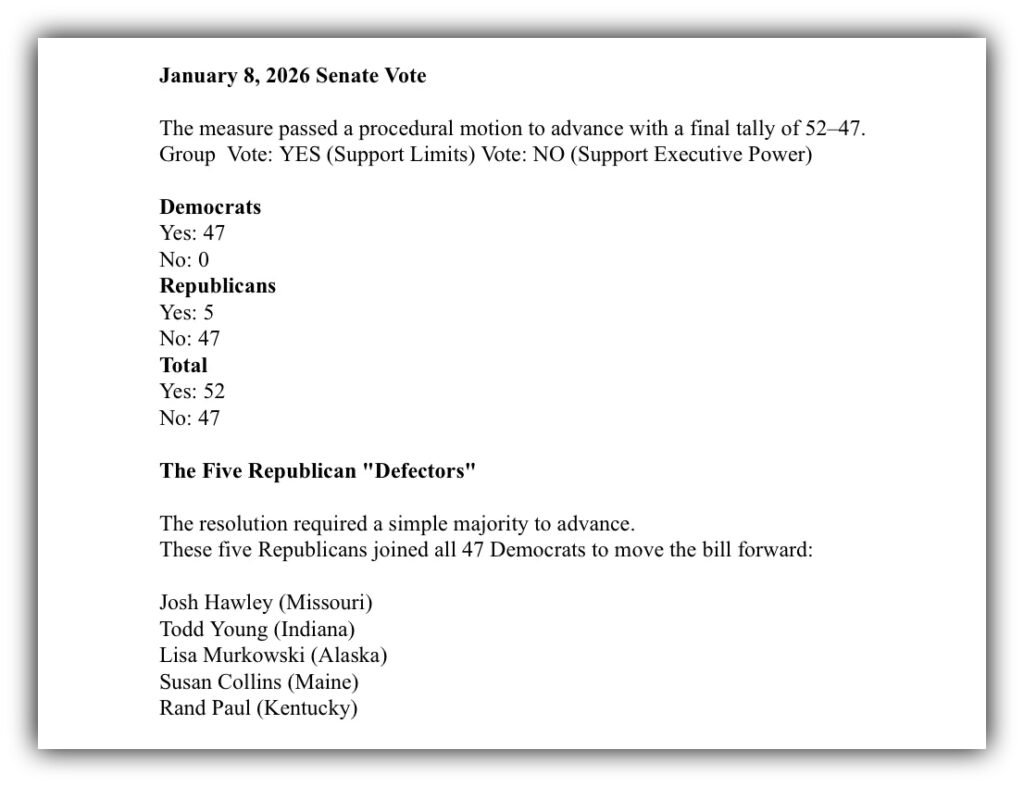
Murkowski also participated in the January 8 vote to advance a war powers resolution requiring congressional approval for further military operations in Venezuela. She praised the operation capturing Nicolás Maduro but stressed that any extended military engagement requires clear objectives and congressional oversight.
In contrast, Senator Dan Sullivan voted against advancing the resolution, aligning with most Republicans and the White House. He emphasized presidential flexibility in national defense and provided minimal public explanation for his vote, demonstrating a more traditional GOP approach to executive authority.
Nick Begich’s Perspective:
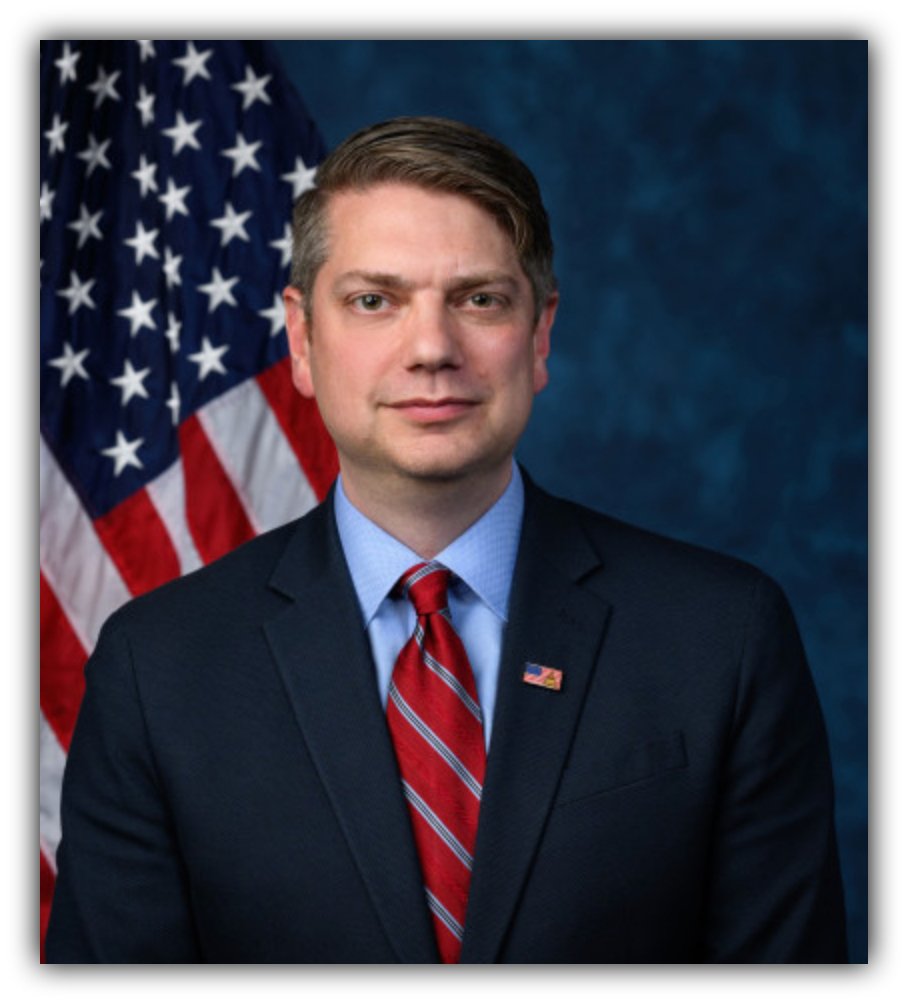
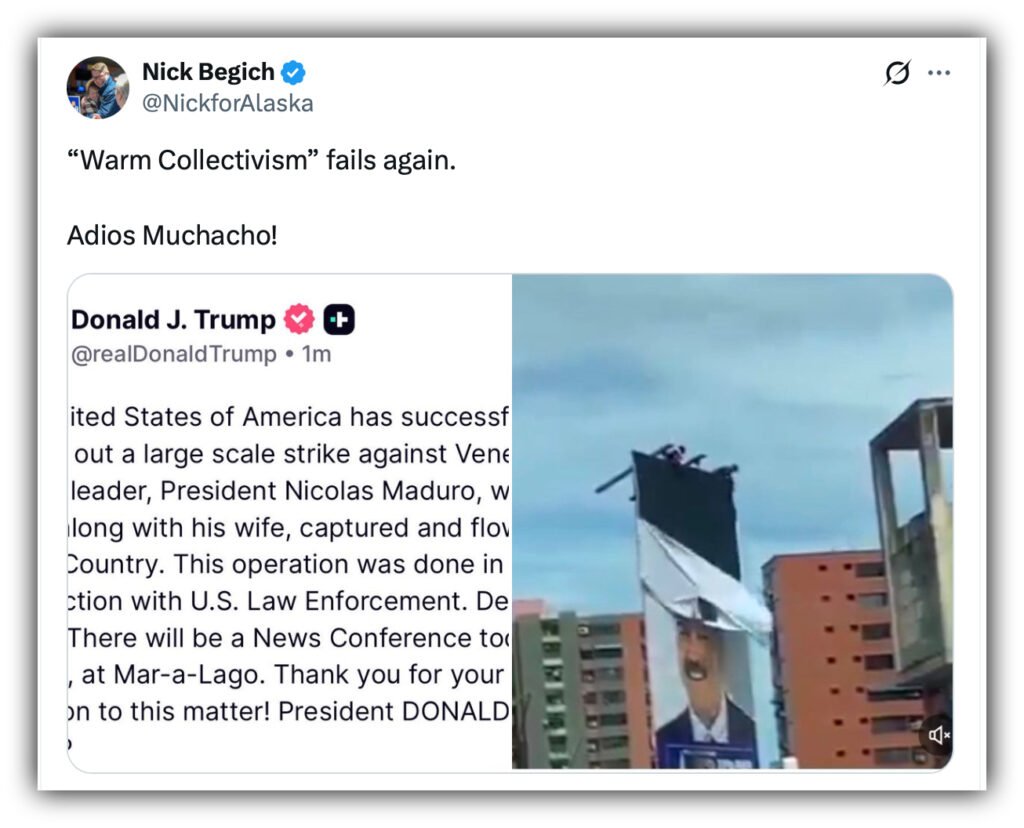
On January 3, Congressman Nick Begich posted on X: “Warm Collectivism fails again. Adios Muchacho!” This rhetorical jab criticizes Venezuela’s socialist policies under Nicolás Maduro, using “warm collectivism” as a conservative shorthand for statist or collectivist governance. Begich’s post highlights the role of partisan critique and social media in shaping public opinion.
Timeline of Key 2026 Alaska Congressional Actions
- Jan 3: Begich posts on X criticizing Venezuela
- Jan 8: Murkowski votes to advance war powers resolution
- Jan 8: Sullivan votes against advancing war powers resolution
- Jan 9: Murkowski addresses Greenland issue on Senate floor
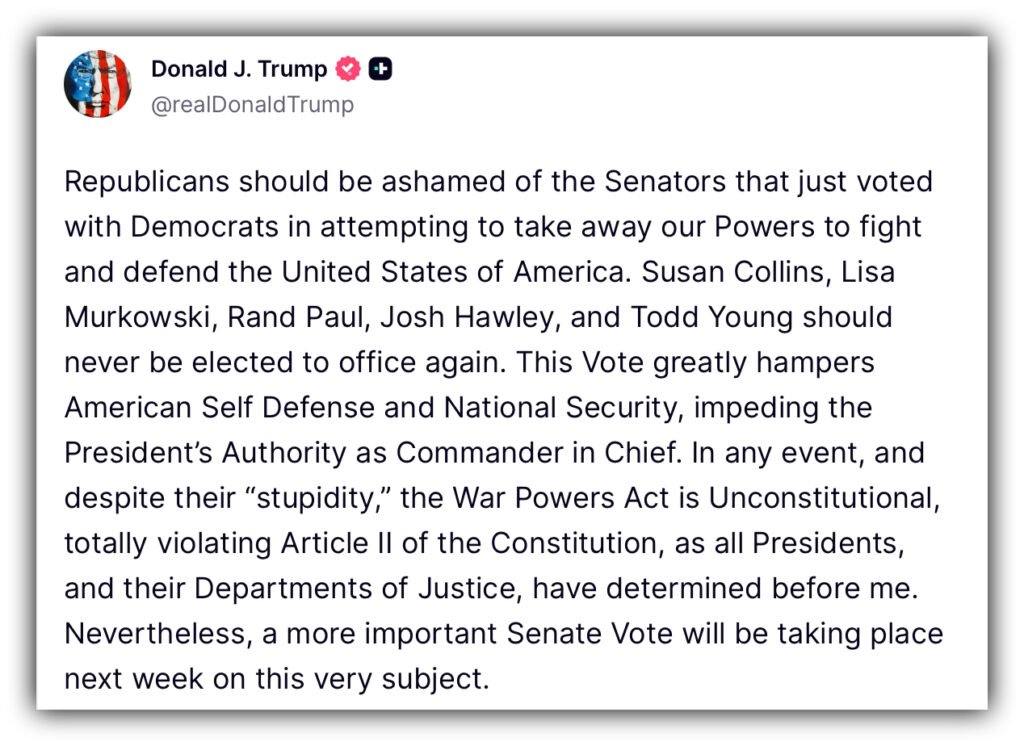
President Donald Trump responded sharply on Truth Social, condemning the five Republican senators who voted with Democrats to advance the resolution. Trump accused them of weakening U.S. self-defense and undermining the president’s authority as commander in chief, naming Murkowski alongside Susan Collins, Rand Paul, Josh Hawley, and Todd Young. He argued the War Powers Act itself is unconstitutional and warned that a more consequential Senate vote on the issue would follow. The post underscored the growing rift within the Republican Party over executive power and foreign military engagement.
Conclusion:
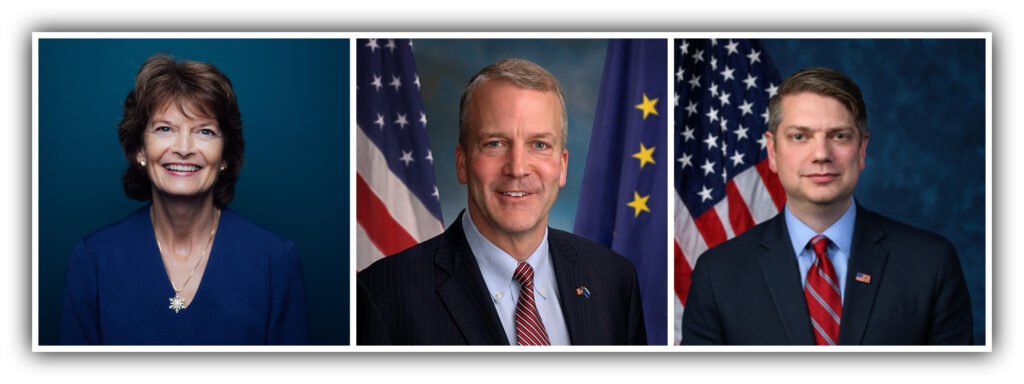
Taken together, Alaska’s delegation reflects three distinct approaches to national power and accountability at a moment of growing international tension. Senator Lisa Murkowski has emerged as a public advocate for diplomacy, constitutional oversight, and transparency, positions that have now placed her directly in the president’s crosshairs. President Donald Trump responded forcefully to the five Republicans who voted to advance the Venezuela war powers resolution, singling out Murkowski by name and accusing them of undermining national security and presidential authority
Senator Dan Sullivan has emphasized executive flexibility and party alignment, offering limited public explanation as the debate over war powers intensifies. Congressman Nick Begich has taken a different path, leaning into ideological messaging and sharp social media commentary to frame global events.
As Alaska’s strategic importance continues to grow, so does the national impact of how its leaders choose to speak, vote, or remain silent, and how those choices are received from the White House on down.**Full Text of Sen. Murkowski’s Address to the Senate:
“Mr. President, as we’re starting this new year, there’s certainly no shortage of issues to be talking about. You and I have been engaged in fruitful discussions, I believe, about how we address health coverage for millions of Americans that are looking at dramatically higher costs in many cases and recognizing that there’s a pretty short window here in front of us.
In fact, for many it feels like that window is already closed. But we’ve got work to do in that account. We certainly have work to do on the appropriations bills for fiscal year 2026.
We’ve got a looming deadline of January 30 that is fast approaching. And I think it’s good news that we’ll be able to begin that process to advance this next minibus, these three bills, my interior subcommittee appropriations as well as CJS and energy and water, be able to advance those. But then we’ve got to get moving on the FY27 cycle.
We’re already technically behind on that. So we’ve got efforts there. We obviously need to do more when it comes to the situation around the world.
We just had a vote on a motion to discharge a war powers resolution as it relates to Venezuela. We need to strengthen sanctions on Russia, which continues to persecute its awful war against Ukraine. We need to do more.
We need to work together to reach a bipartisan agreement on permitting reform. We seem to make good forward progress and then take a few steps back. But we need that to build out the infrastructure that this country needs.
And we know we all need to tackle the affordability issues that impact all of us, whether it relates to cost of goods or housing. There’s a lot that we’ve got to do here. But there is one thing that we should not be doing, one thing that we should not be spending our time doing, and that is an effort, any effort that would seek to annex Greenland, whether it is taking it by force, taking it by coercion, taking it by pressure or threat, or really, in fairness, any related method.
It is not an issue that I would have ever expected to raise here on the floor of the Senate. In my time here in the Senate over the past two decades, I have immersed myself in all things Arctic. I have strong relationships with friends across the Arctic and in Greenland specifically.
I’ve been the co-chair of the Arctic Parliamentarian Conference for years now, and my co-chair is a strong Greenlandic woman who I just spoke with this morning about the situation and the rhetoric that is coming out of Washington, D.C., directed towards her country. It is an issue that is not necessarily new to Congress, the United States’ interest in Greenland. In fairness, there have been discussions prior to the first Trump administration.
It was actually back in 1867, this was when the United States bought Alaska from Russia, and apparently at that time Seward had made some inquiries, Seward was the Secretary of the Interior at the time, made some inquiries about Greenland, but the Congress wasn’t interested in doing anything about it. Then in the Taft administration, there was a land swap that was proposed. This was back in 1910.
It was rejected by Denmark. Then apparently there was actually a formal offer made back in 1946 at the outset of the Cold War in the Truman administration where there was actually an outright offer, $100 million, as I understand it, in gold to buy Denmark. That was what it was reported as, but that was again rejected by Denmark.
It was at this time where we moved from the discussion about how do we take or how do we buy or how do we trade into one that was based on relationship and shared mutual interest in national security and working with Greenland and the Kingdom of Denmark to ensure that military assets could be based at Thule at the time, now called Piddevik Air Base Station. Again, these are discussions that have been had in the past, but in the very, very distant past until just recently when, again, we have seen comments coming out of the administration and really stepped up in this past week or so. It’s one thing to have a discussion.
It’s one thing to have a conversation, but instead what we’re hearing is some pretty aggressive rhetoric from the Trump administration and some members of Congress. It is statements that we’re seeing that are suggesting that not only is a taking by force or coercion or other related methods not only an option but perhaps a priority and that as a priority for the U.S. to take Greenland, that military action is an option. That, to me, Mr. President, is profoundly, profoundly troubling.
And so I think most of us want to be able to just not only quiet that, but just make clear that that is not only not going to happen. It’s an option that has been taken off the table. And I wish that I could say that we had received that kind of a reassurance, but to date we haven’t had that assurance.
Now, to be fair, the Secretary of State has recently stated that we’re not talking about military intervention so much as seeking to purchase. But again, Mr. President, in order to purchase something, you have to have a willing buyer and a willing seller. And Greenland has made very, very clear, and Denmark has made very clear, that Greenland is not not for sale.
And so as I speak with those who I have established relationships in across the Arctic and more specifically in Greenland, they are sharing with me their concern, their deep anxiety about what is going on, what is it that the United States is asking for. And so think about the 57,000 people who reside in Greenland. That’s the total population of this massive, massive island, 57,000 people.
But those 57,000 people, they are their own autonomous country. They have been striving for independence and control of their own future for years. And Greenland’s Prime Minister made a point very clearly recently.
He said that threats, pressures, and talk of annexation have no place between friends and that Greenland’s future must be decided by its own people. We need to take that message seriously. We need to respect the will and the wishes of the people of Greenland.
Greenland’s future must be decided by its own people. It’s also deeply unsettling if you live in Denmark, which administers defense and foreign policy for Greenland as a mostly autonomous territory. So those who are not Greenlanders but who live in Denmark are justifiably disturbed and unsettled.
And it’s deeply unsettling if you understand the immense value of NATO, of the North America Treaty Organization, and how one co-founding member taking land, taking land from another, that shatters this crucial alliance forever. And we have seen that in statements coming from our NATO allies. Frankly, this should be unsettling for all of us, because bluntly there is no need to treat longstanding allies with such a brutal lack of respect.
And that’s what I believe it is, is a lack of respect. We are not talking to the people of Greenland. We are talking over them.
We are talking about them. But we are not talking to them. And that’s what you do with your friends.
That’s what you do with your allies. The people of Greenland are watching us, and the U.S. is not exactly winning them over by treating them like serfs in a feudal estate. The administration’s approach is not improving relations.
It’s alienating Greenland. It’s alienating Denmark. It’s alienating many of our friends and allies in Europe.
And it sets the worst possible example for Russia and China and others. And this has come into focus in the wake of the arrest and the extradition of Nicolas Maduro. We get that.
We get that. But Greenland is not Venezuela. It is not Venezuela.
It is not a narco state that is run by an illegitimate dictator. It’s not an area where we have seen the economy wrecked by a dictator. Greenland’s prime minister has rejected any comparison to Venezuela and has emphasized that Greenland is a peaceful democracy.
It’s not a territory to be pressured, to be threatened. There is no case, legally or otherwise, for U.S. military intervention in Greenland. Greenland has been not only a partner but a faithful partner.
They’ve been an ally. They’ve been a friend in the United States dating back to World War II. At that time, it played a pivotal role in the Allied victory.
And to this day, they continue to be that staunch ally. As I mentioned, they have been hosting the Pidivik space base and allowing the United States to have not only an important presence there but an invaluable presence. Any colleagues who have had the opportunity to visit the United States assets that we have there at Pidivik understand that strategic geography and the level of cooperation that we have seen now for decades.
I was in Greenland just a couple months ago. I had an opportunity to meet with the new Greenlandic prime minister and president. And he wanted to know, what is it that the United States wants? What are they seeking? There’s this talk about the U.S. wanting Greenland.
What does it mean? What do they want? Is it critical minerals? Is it more from a national security perspective? Because if that’s what you’re seeking, we’re not only willing to talk, we’re anxious to talk. We want to have that discussion with our friend and our ally. We don’t want to cut that off.
We encourage it. And we’ve seen how Greenland has encouraged that. The way that they have provided the access, again, to our military for decades, we should be thankful for that.
We should appreciate it. We should recognize what we have there. And, again, that Greenland and Denmark are willing to give more.
They have said as such. Denmark’s prime minister has suggested that a larger U.S. military presence in Greenland, if that’s what we’re looking for, let’s talk about it. And we could pursue that as we pursue other areas of cooperation, whether it has to do with trade or tourism or the other economic ties that bind.
That’s what we should be doing. But we’re not doing it. Instead, at least publicly, the Trump administration is focused on acquisition, on ownership, even though every one of our strategic goals can be accomplished with Greenland as our partner rather than a possession.
And I would hope that the Trump administration realizes that the U.S. taking control of Greenland, especially by military force, which, again, I just can’t even wrap my head around that one, what harm that would bring to our national security and our international relationships. This is the 21st century. This is where the U.S. is supposed to set the example for the rules-based global order, not be the exception to it.
And that includes respecting the sovereignty of others. If we do the wrong thing in Greenland, we will not end up with a more secure Arctic. And for those of us who have been focused on the Arctic for decades, that’s what we’ve been pushing, was this area of peace.
We used to call it a zone of peace, and then Russia fouled that all up. But it still is an area where, again, we have prioritized the security, and we have done so in a way that is collaborative and cooperative. If we lose the people of Greenland, we will lose partners in Denmark and across Europe.
We will destroy our strongest international alliance, and that is NATO. And that gives Russia and China exactly what they’re looking for. Now, there may be some new forms of partnership.
I’m talking about dialogue and trade relationships, but there may be other forms of partnerships that might make sense in 2026. There’s been some suggestion of a joint compact of free association that accounts for both Greenland and Denmark’s interests. That’s one proposal, and I think it’s worthy of consideration if folks are interested in that, but we can’t force it on them.
We need to have both Greenland and Denmark at the table. We would need to treat them both with the respect that they deserve, and it would have to be their choice, their choice, to enter freely into any such accord. And that type of an accord, I might add, would require congressional ratification, so we would have involvement and engagement with that as well.
It should go without saying, but how we talk to our friends and allies matters a great deal, and our approach to Greenland, and then by extension to Denmark, is severely lacking right now. In early 2024, Greenland released their Arctic Strategy to guide its foreign security and defense policy for the next decade. And the title of that document, the title of their Arctic Strategy is Greenland in the World, Nothing About Us Without Us.
And I hear that phrase, nothing about us without us, all the time, from my fellow parliamentarian in Greenland. We would do well to remember that, Mr. President, to remember that real people live in Greenland. Real people are watching the United States’ actions and deciding whether or not they want to have much of anything to do with us going forward.
We need to be making sure that that’s a firm yes instead of a no. Mr. President, Greenland is an amazing place. It’s a beautiful place.
Again, I’ve had an opportunity to visit it multiple times. It reminds me of Alaska, my home state. It’s extraordinarily beautiful in so many ways.
It is also, like Alaska, very geostrategic. It is a resource-rich area, just like my state of Alaska. We have cultural connections, thanks to the Inuit people who migrated from Alaska to Greenland centuries ago.
And we see that in the art. We hear that in the language where there’s shared and common words. But unlike Alaska, Greenland is not part of America, and we can’t simply take it because we want to.
To do so would be a colossal mistake. It would end NATO. It would be a gift to Russia and China and all autocratic nations who lust after new territory and want it to justify their own provocations.
And again, it’s not necessary. It’s not necessary given the decades-long, still strong partnership that we have with Greenland. Again, a country who is willing to work with us diplomatically, militarily, and otherwise.
I’m proud of the Alaskans who have really worked to enhance the relationship between my state, the state that causes the United States to be called an Arctic nation, and the country of Greenland. We have been working to forge relationships with the people focused on shared economic interests, whether it be tourism, whether it be trade, whether it be sharing best practices regarding indigenous governance structures, the collaboration that we’re seeing going on with arts and cultures. It’s just exactly what we should be doing is building these relationships.
Building these relationships instead of sending out provocative messages that unsettle and disarm everything. Again, Mr. President, we’ve got a lot ahead of us in 2026. Greenland or taking Greenland or buying Greenland should not be on that list.
It should not be an obsession at the highest levels of this administration. And I urge a reset in how we’re conducting these discussions. Let’s be respectful of one another.
Let’s have dialogue. Let’s have cooperation. Let’s have partnership.
Let’s take a different tack to secure this relationship with Greenland, recognizing that they are an ally and not an asset and not appropriate for any sort of forced annexation or action. And with that, Mr. President, I yield the floor.”