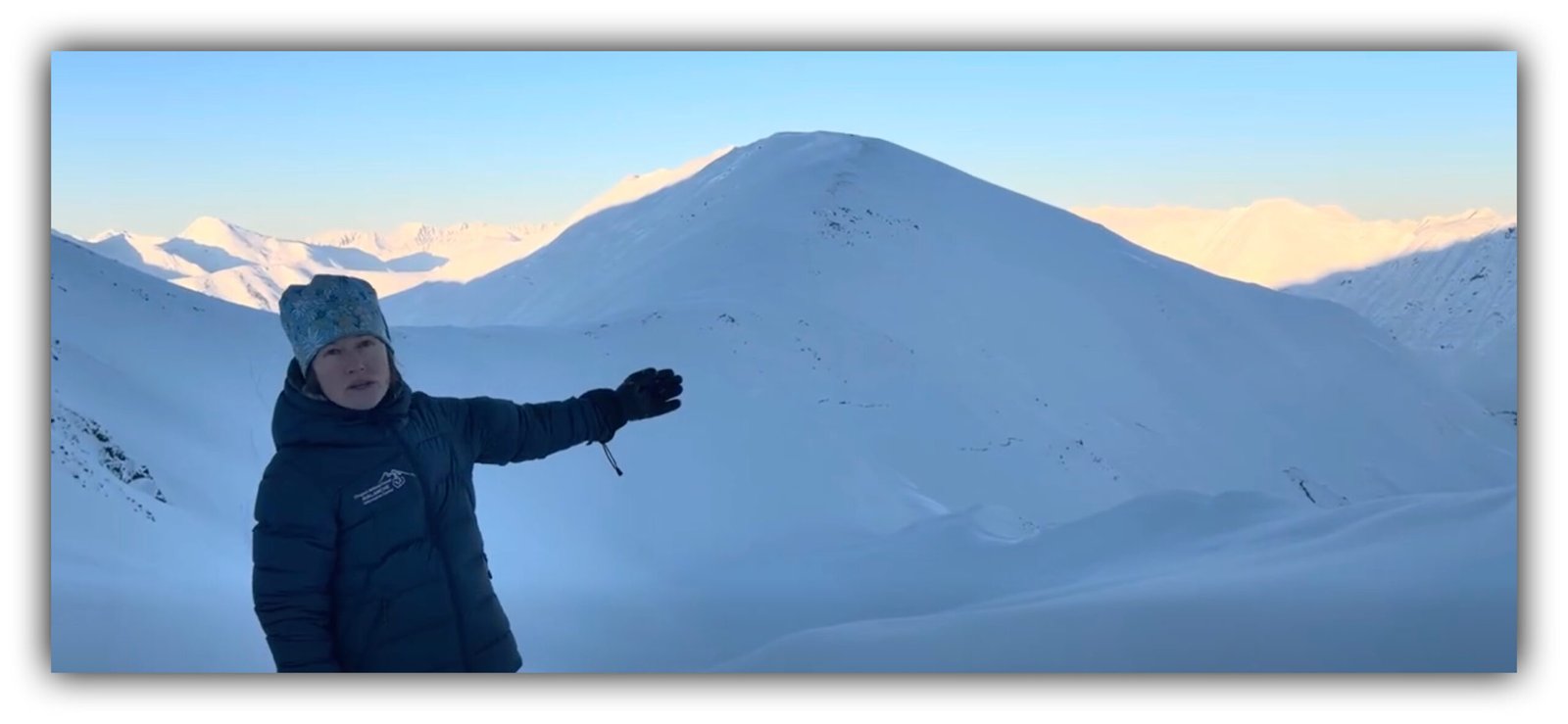
Meg from the Chugach National Forest Avalanche Center explains the snow conditions at Pastoral Valley at 3,400 feet on a northeast-facing slope, with Taylor Pass visible behind her, on December 7, 2025. Credit: Chugach National Forest Avalanche Center
By Gina Hill | Alaska Headline Living | December 2025
Avalanche forecasters in Southcentral Alaska are urging backcountry travelers to exercise extreme caution today. Multiple regional avalanche centers report unstable snowpacks, fresh wind loading, and ongoing glide avalanches, a dangerous combination for skiers, snowmobilers, and anyone venturing into the mountains.
🔺 Current Avalanche Conditions
Chugach National Forest Avalanche Information Center (CNFAIC): “Considerable” to “Complex” Danger
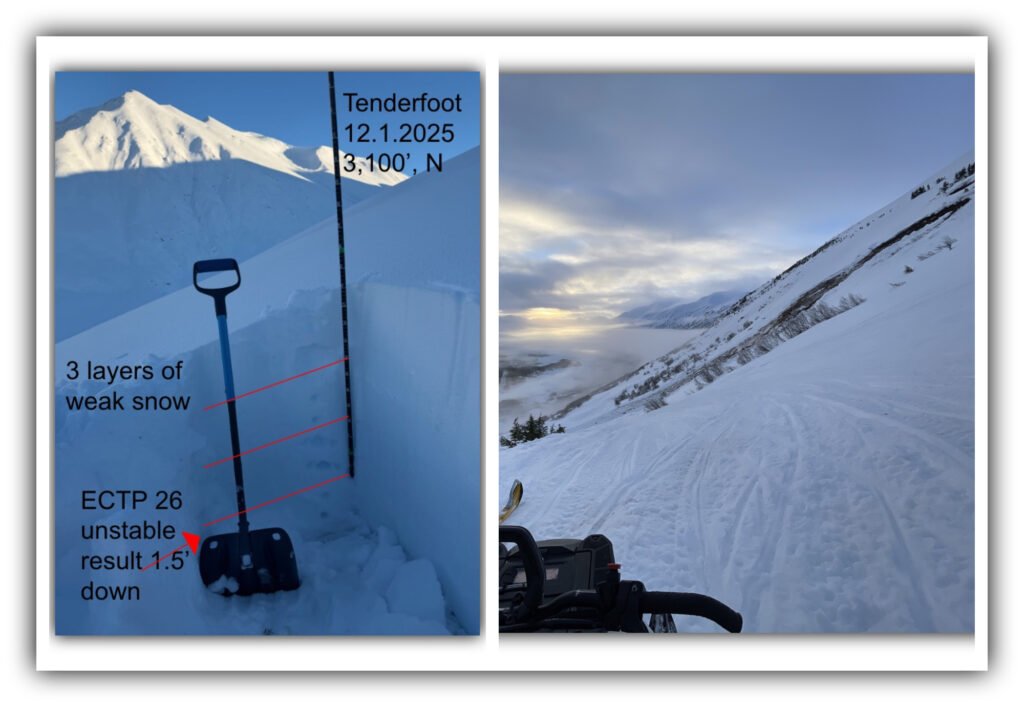
Recent glide avalanche above the Seattle Ridge uptrack on December 4, 2025. A portion of the slope has not yet released, and fresh cracks pose a threat to some of the upper areas of the uptrack.Credit: Chugach National Forest Avalanche Center
The latest public posts from Friends of the Chugach Avalanche Center highlight that avalanche danger is “CONSIDERABLE” in the alpine backcountry of both Turnagain Pass and Summit Lake. Human-triggered avalanches remain the primary risk due to deeply buried weak snow layers, as deep as three feet. Snow freshly transported by wind has created reactive wind slabs, particularly above treeline, compounding the danger. Meanwhile, glide avalanches continue to release across terrain where snow is shearing off beneath the surface. (facebook.com)
These conditions follow a December 7 advisory that described the snowpack as “complex,” with multiple weak layers in the upper three feet and recent winds forming wind slabs about a foot deep above treeline. These factors could trigger large, unpredictable avalanches. Full-depth glide slides are ongoing in several zones. (facebook.com)
Statewide Avalanche Risk in Other Regions
The Alaska Avalanche Information Center (AAIC), which coordinates regional forecasts across the state, continues to list “Considerable” avalanche danger at mid and upper elevations for parts of southcentral Alaska’s winter zones, including regions near Valdez, Alaska. Strong winds are forecast to transport dry snow and create fresh wind-slabs in those zones. (alaskasnow.org)
At lower elevations, warmer temperatures and icing events have reduced some snow stability. Forecasters caution that freeze-thaw cycles and rain-on-snow events may still degrade the snowpack further. Backcountry travelers in lower-elevation zones are urged to check local forecasts and exercise caution. (alaskasnow.org)
Weather Conditions Do Not Offer Relief
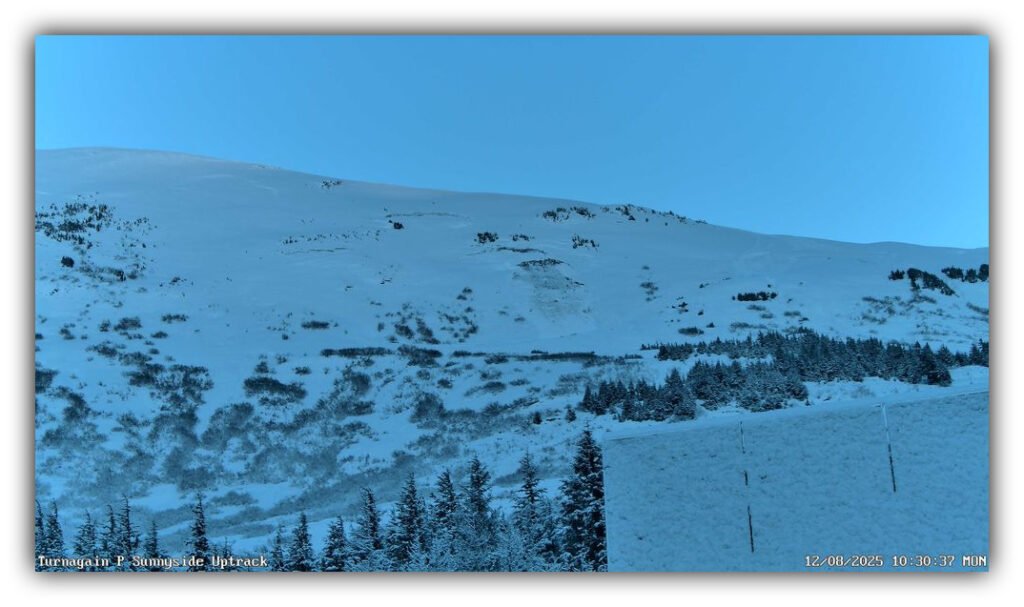
According to the latest forecast from the National Weather Service (Anchorage), Turnagain Pass and surrounding zones will see cold but stable weather today. Sunny skies, highs near 10 °F, light west winds around 5 mph, and calm overnight are expected. While this may sound good on the surface, it does not mitigate the structural weaknesses already present in the snowpack. Avalanche danger remains high even under clear skies. (cnfaic.org)
⚠️ What Backcountry Travelers Should Know
- Avoid steep terrain, wind-loaded slopes, and runout zones. The weak layers buried deep beneath the snow are unstable. Wind slabs add another layer of uncertainty.
- Glide avalanches are still occurring. Even slopes that look “stable” could release snow, sometimes without warning.
- Stick to low-angle, simple terrain. If you are heading into the mountains, choose gentle slopes where avalanches are unlikely to propagate.
- Check the latest forecasts before heading out. Conditions can vary sharply over short distances. Always consult CNFAIC, AAIC, or NWS before making plans.
📰 Why This Matters
Alaska has a long history of avalanches causing serious injuries or death. Recent years have brought tragic reminders, from heli-skiing accidents near Girdwood, Alaska, to snowmachine-triggered slides in popular backcountry zones.
As winter settles in and snow accumulates, unstable snowpacks and heavy winds continue to create dangerous conditions across large swaths of Alaska’s mountain terrain. For skiers, snowmachiners, snowshoers, and anyone playing in the mountains, vigilance, preparation, and conservative decision-making could save lives.