


Alaska Underreported: The Stories That Don’t Make Headlines, But Shape Daily Life
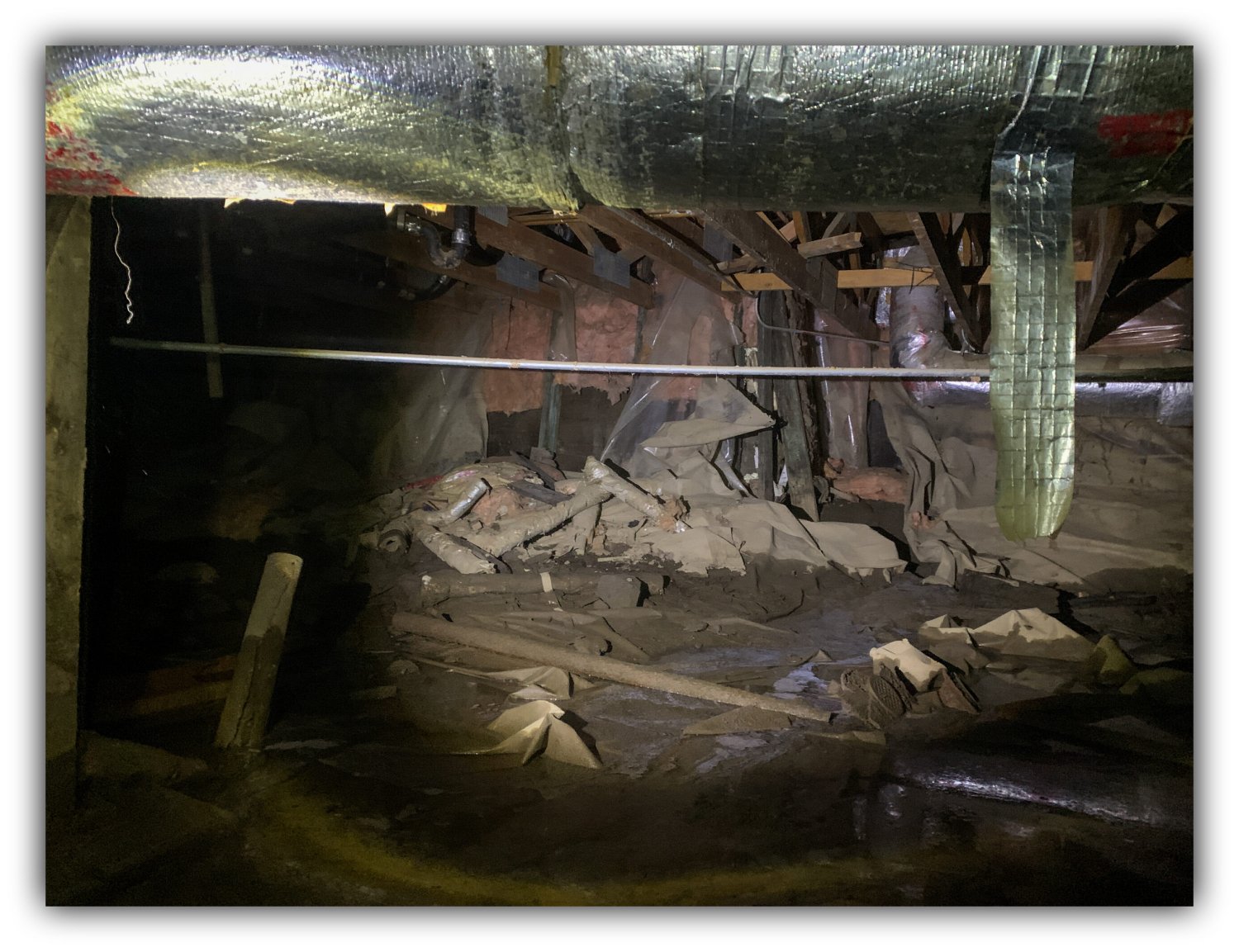
Beneath the Sleetmute school, a deteriorating foundation shows the strain behind Alaska’s rural school infrastructure, where aging buildings continue to serve as both classrooms and community lifelines even as major repair needs grow. It represents just one of today’s underreported stories. Courtesy: Emily Schwing/KYUK
Most of what actually shapes life in Alaska does not show up as breaking news. It shows up in buildings that are a little colder than they should be, roads that get patched instead of rebuilt, storms that feel less predictable than they used to be, and systems that work until they suddenly don’t.
People notice it long before it becomes a headline. They just learn to live around it.
The School Buildings That Are Falling Behind
In rural Alaska, the school is not just a school. It is the gym, the shelter, the meeting place, and often the only reliably warm building in the community. When weather turns dangerous and people need to evacuate, it is often the first place they go.
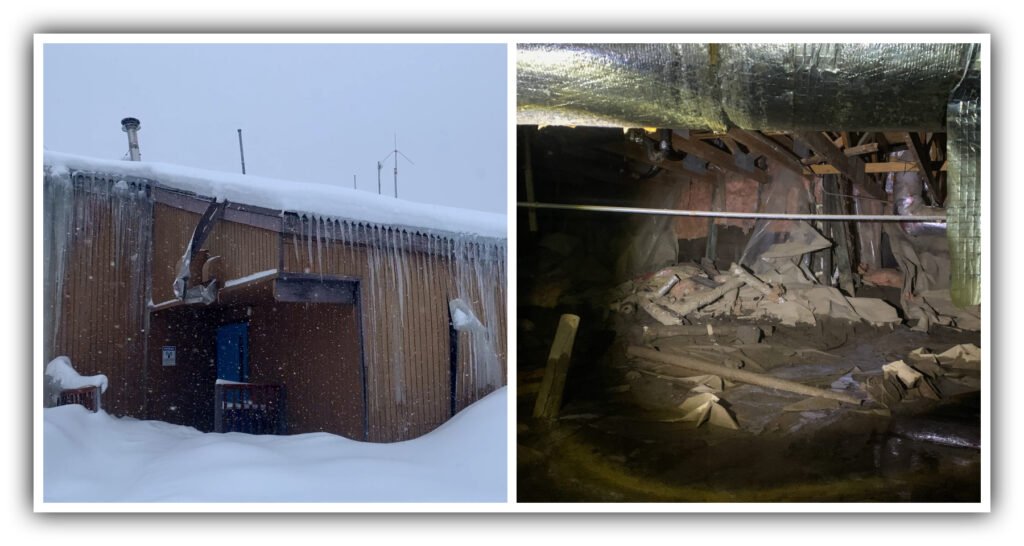
That is what makes it harder when the buildings themselves start to fail.
Across the state, there are more than 103 identified school repair projects totaling over $400 million in needed maintenance as of April 2026. That includes roofs that leak through freeze and thaw cycles, heating systems that struggle in deep winter, and sanitation systems pushed beyond what they were designed to handle.
In some communities, extreme cold can freeze or damage water and sewer lines. When that happens, schools can lose normal bathroom access or running water. Sometimes that forces closures. Sometimes it means operating in conditions that are clearly not what the building was designed for.
But most of the time, the school stays open.
Classes continue. Kids show up. Life adjusts. Buckets get placed under leaks. Rooms are used because others remain in disrepair.
That is the pattern. Not collapse. Not repair. Just continuation.
And people see it. Because nothing disappears. It just stops being fully fixed.
The cost builds slowly, not in one bill, but in years of patchwork repairs, emergency workarounds, and systems that never quite catch up.
A Climate That No Longer Behaves Like It Used To
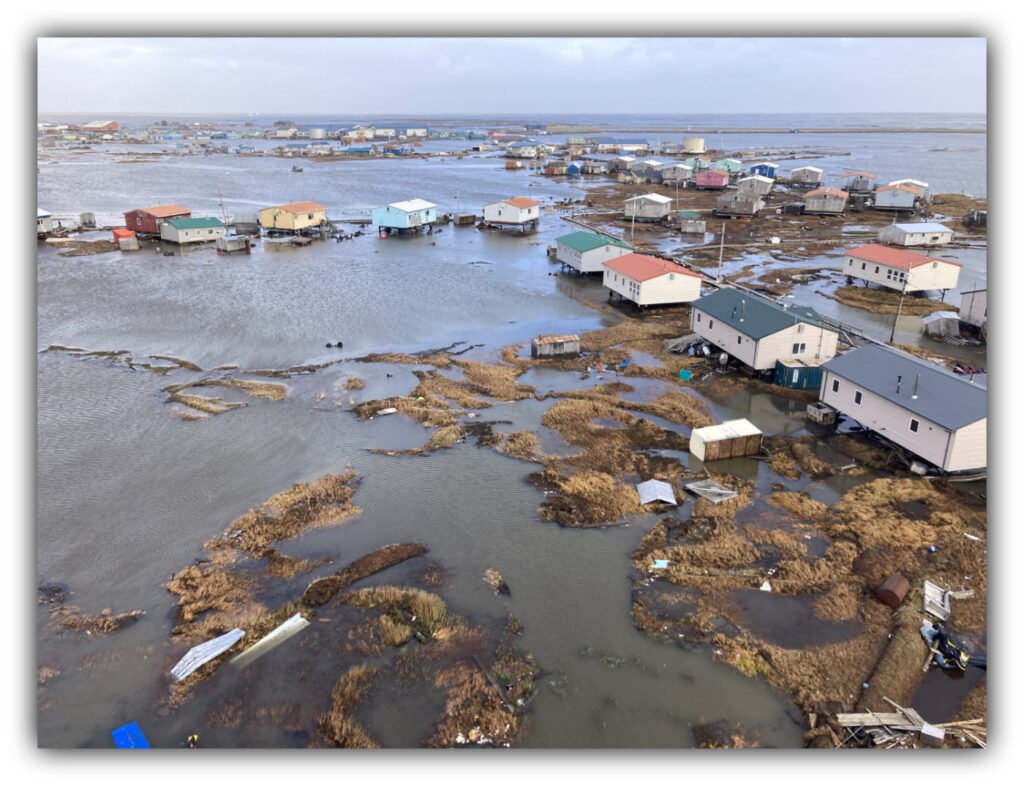
People in Alaska do not need data to know something has shifted. They see it in storms that behave differently than they used to. In rivers that rise faster. In coastlines that do not hold the same way anymore.
One example was the remnants of Typhoon Halong, which transitioned into a powerful Arctic storm and brought flooding and damage to parts of Southwest Alaska.
Events like that are no longer treated as one-offs in the way they once were. They are part of a broader pattern of changing storm behavior, where systems carry more moisture and move in ways that do not match older expectations.
For coastal communities, this shows up in erosion that steadily eats away at land, in evacuation plans that get used more often, and in emergency responses stretched across wider distances.
It does not always look like disaster. It looks like constant adjustment to conditions that are failing.
Systems That Operate Out of Sight

Most people do not find out how their personal information moves through government systems until after it has already happened.
In Alaska, voter registration data is stored by the state and can be shared with other government agencies when there is a formal legal request. During the Trump administration, the U.S. Department of Justice requested voter registration data as part of a federal election administration review process. Alaska’s Division of Elections provided the information through that request process under the Lieutenant Governor’s office.
Most residents were never asked individually. There was no public vote on it. For many people, the concern is privacy, because personal voter information moved through state and federal systems without individual consent, and questions remain about how that information is used once it is shared. It only becomes real when they hear about it later and start asking how their information moved in the first place.
That is where the frustration comes from. Not just what was shared, but that people only learn about it after the fact, when the process is already over and they have no way to respond to it.
These systems do not usually break in public. They operate in paperwork, requests, and approvals that most people never see unless something brings them to their attention afterward.
And by the time people hear about it, it is already done.
The Pattern Beneath It All
These are not separate problems. They follow the same pattern.
Slow, ongoing strain that gets managed instead of resolved, until something forces attention.
Schools are kept minimally running through partial repairs instead of full fixes. Weather is producing harsher conditions that no longer match older expectations. Public systems stay out of view until failure, pressure, or investigation brings them into the open.
Most people already feel it. They see it in the gaps, the delays, the things that don’t quite get fixed.
That is the pattern.
What do you feel about this post?

Like

Love

Happy

Haha

Sad