






Trump Names JD Vance “Fraud Czar” But Could Start With His Own Legal Record
JD Vance takes the helm of America’s new fraud oversight task force. When leaders point fingers at fraud elsewhere, history shows three more often point back at the accuser.
By Gina Hill | Alaska Headline Living | April 3, 2026
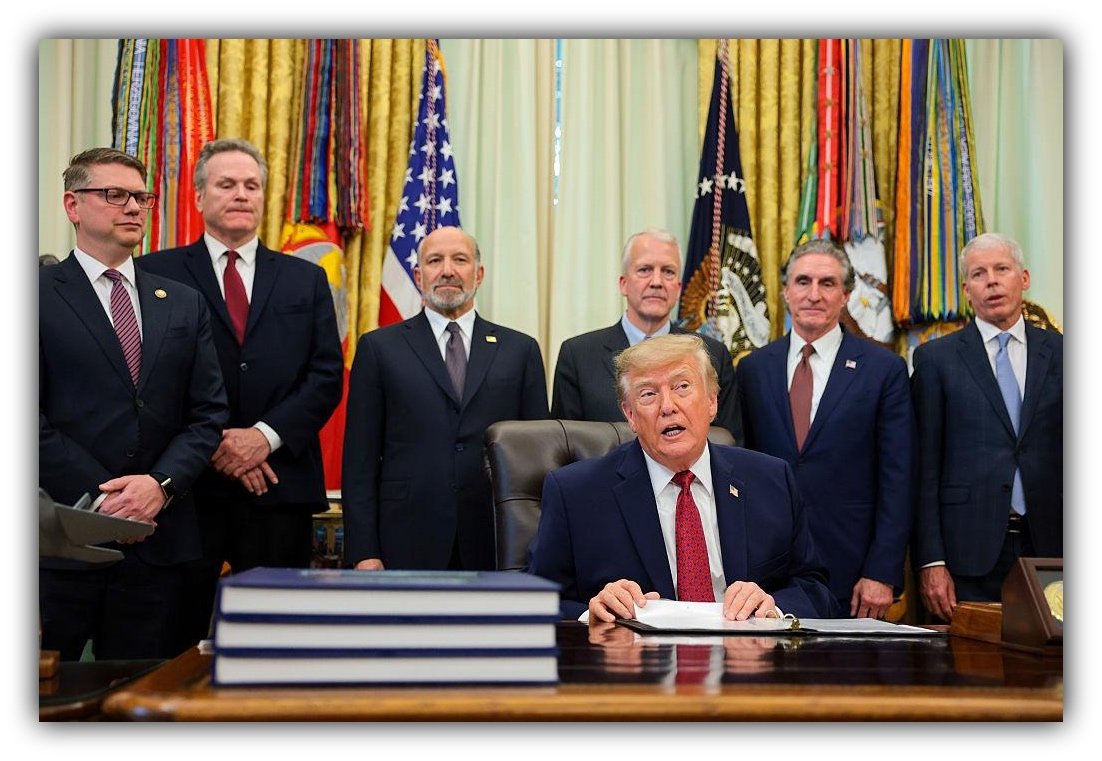
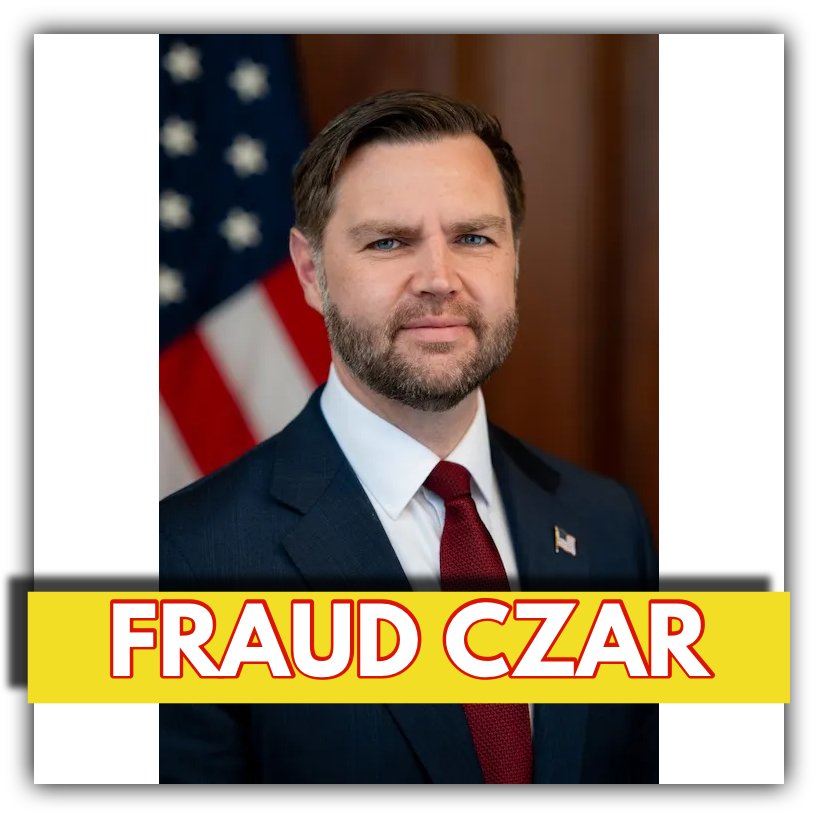
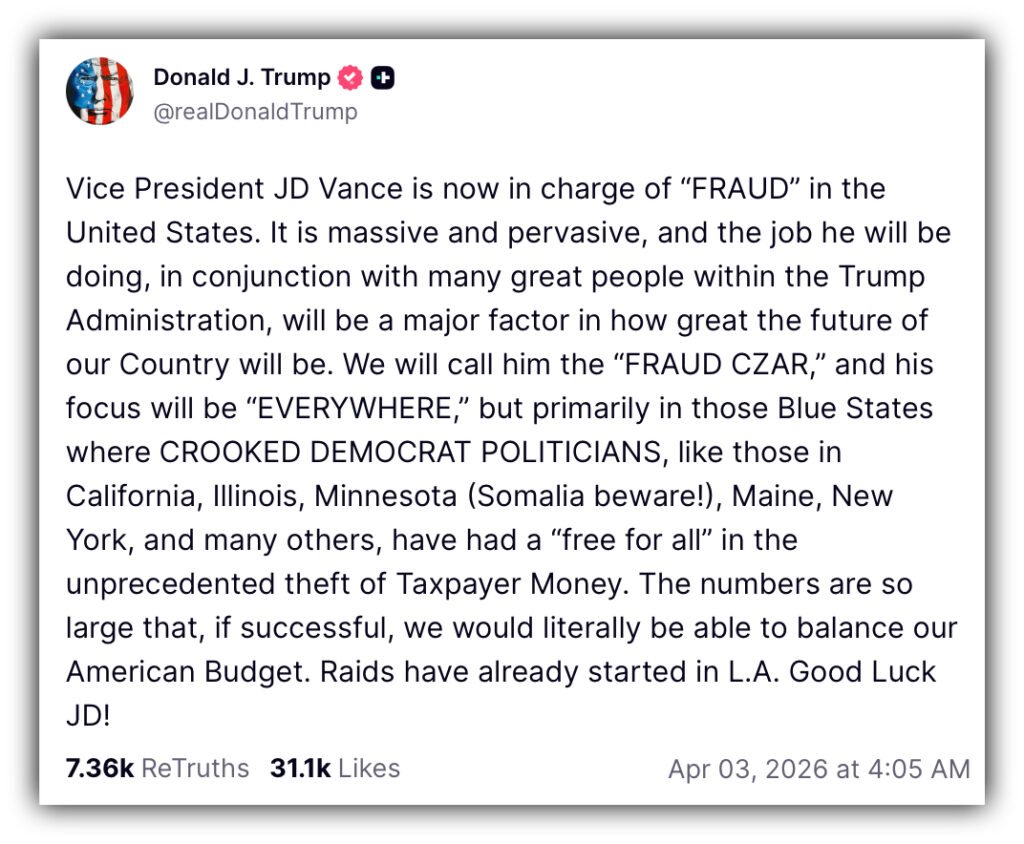
President Donald J. Trump announced early Friday that Vice President JD Vance will lead a new federal anti‑fraud initiative, calling him the nation’s “Fraud Czar.” In a post on his personal social media platform, Trump said Vance would coordinate anti‑fraud efforts nationwide, but with an emphasis on certain Democratic‑led “blue states” such as California, Illinois, Minnesota, Maine, and New York. Trump also asserted that “raids have already started” in Los Angeles.
Before analyzing those claims, it is essential to provide factual context about President Trump’s own legal history involving fraud‑related conduct. That history stands in contrast to his public rhetoric about fraud elsewhere.
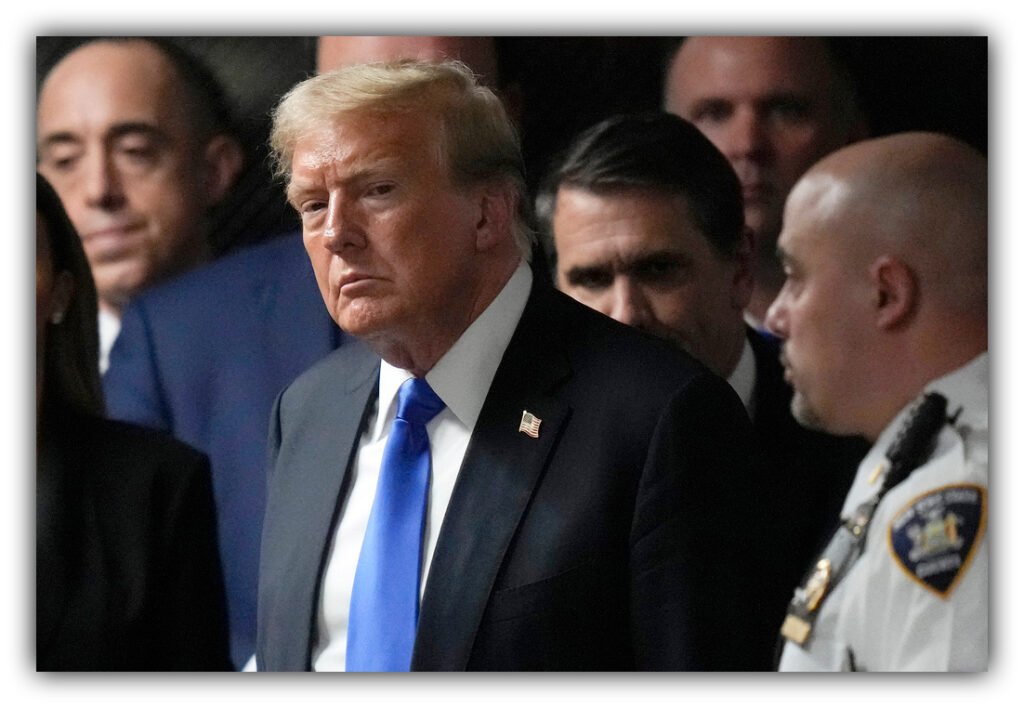
Federal records show that Trump was convicted on 34 felony counts of falsifying business records in New York in May 2024. These counts stem from entries he made to conceal payments related to the 2016 election hush money matter, and the conviction was based on New York Penal Law requiring accurate business records. He received an unconditional discharge in January 2025, meaning no prison time or fine was imposed, in part because punitive requirements were judged to conflict with presidential immunity.
In addition to that criminal conviction, a New York state civil case resulted in a finding that Trump and his businesses made materially false and misleading asset valuations in financial statements, a court labeled as long‑running fraudulent conduct in the evaluation of property values and financial representations. A New York appeals court upheld the fraud determination even while voiding certain monetary penalties.
The Trump Organization’s corporate entities also faced and were convicted in criminal cases for tax and fraud‑related offenses in Manhattan, separate from the personal conviction Trump received. Those corporate convictions legally established fraud‑related conduct by entities he controlled.
This background is important because Trump’s call to investigate fraud nationwide comes from a leader who has personally faced legal findings of fraud‑related conduct. That context adds nuance to claims that fraud is “massive and pervasive” elsewhere.
What Is Verifiable About the “Fraud Czar” Initiative
On March 16, 2026, President Trump signed an executive order establishing the Task Force to Eliminate Fraud, a White House‑led interagency group chaired by Vice President Vance. The order directs the task force to coordinate federal efforts to identify, investigate, and recoup losses related to fraud, waste, and abuse in federal benefit programs administered across agencies. It also calls for the sharing of data and strengthening eligibility verification and pre‑payment controls.
The Department of Justice officially announced that, in coordination with the Vice President’s Task Force to Eliminate Fraud, federal authorities arrested eight people in the Los Angeles area on Thursday on charges related to an alleged health care fraud scheme of more than $50 million. According to the DOJ’s press release from the U.S. Attorney’s Office for the Central District of California, those arrests involve defendants accused of running sham hospice care facilities that billed Medicare using beneficiaries who were not genuinely terminally ill.
Those cases are part of ongoing enforcement efforts that bring criminal charges against individuals suspected of defrauding federal benefit programs, including Medicare. The DOJ emphasized that the takedown reflects collaboration among multiple law‑enforcement partners and demonstrates a commitment to holding those who exploit taxpayers accountable.
Nonpartisan federal estimates also make clear that fraud and improper payments are longstanding issues. According to the Government Accountability Office (GAO), the federal government loses between approximately $233 billion and $521 billion annually due to fraud and improper payments across federal programs, based on data from fiscal years 2018 through 2022. The GAO explains that improper payments include both errors and fraud, and that efforts to strengthen controls have been ongoing for years.
Separate GAO reporting for fiscal year 2024 found that federal agencies collectively identified about $162 billion in improper payments, errors that may result from administrative mistakes, eligibility problems, or fraud. These figures highlight the scale of risks in federal spending and the interest federal agencies have long had in improving oversight.
Where the Claims Exceed the Evidence
Trump emphasized that fraud is “massive and pervasive” and suggested the task force’s work could generate budgetary savings on a scale large enough to help balance the federal budget. While the GAO’s estimates show significant improper payments and potential fraud losses, eliminating all fraud alone would not come close to balancing an annual federal budget that runs into multiple trillions of dollars. The GAO’s own figures show that the largest categories of improper payments are due to administrative errors, not fraud alone.
Trump also targeted several Democratic‑led states as hubs of fraud in his public messaging. There is no publicly released, independent data from oversight agencies showing that fraud in those states is objectively greater than in Republican‑led states on a per‑dollar or per‑capita basis. Enforcement actions in Los Angeles are real and documented by the Department of Justice, but singling out specific states reflects political framing rather than transparent, data‑driven findings from nonpartisan auditors.
Putting It All Together
The Task Force to Eliminate Fraud is a real government effort, bringing together multiple agencies to fight scams and waste in federal programs. The Justice Department confirms that enforcement actions, especially around health care fraud, are already happening. GAO data show that improper payments and fraud do cost taxpayers big money, but they are just one piece of the bigger picture of how federal spending is managed.
That said, President Trump’s claims that fraud is mostly happening in certain states or that it could single-handedly fix the federal budget don’t match up with the numbers. And it’s worth remembering that Trump himself has been found guilty of falsifying business records and civil fraud, which gives readers a factual backdrop when evaluating his statements about “massive” fraud nationwide. After all, when we point a finger at others, there are usually three more pointing right back at us.
👉🏿 To report suspected fraud, waste, abuse, or mismanagement of federal funds, visit the U.S. Government Accountability Office’s FraudNet.
Sources:
• U.S. Department of Justice press release, 8 Arrested in Health Care Fraud Takedown, Including Owners of Hospices that Billed Taxpayers Millions of Dollars to Serve the ‘Dying’ (U.S. Attorney’s Office, Central District of California, April 2, 2026).
• White House fact sheet, Trump Administration Establishes Task Force to Eliminate Fraud (March 16, 2026).
• Government Accountability Office, Fraud and Improper Payments estimates.
• GAO estimates of improper payments in FY 2024.
• Criminal conviction and record history for President Trump.
• Civil fraud findings against Trump and Trump Organization.
What do you feel about this post?

Like

Love

Happy

Haha

Sad