

Shadows Unveiled: Why You Know About Celebrities but Not Your Schools … HEADLINE NOISE
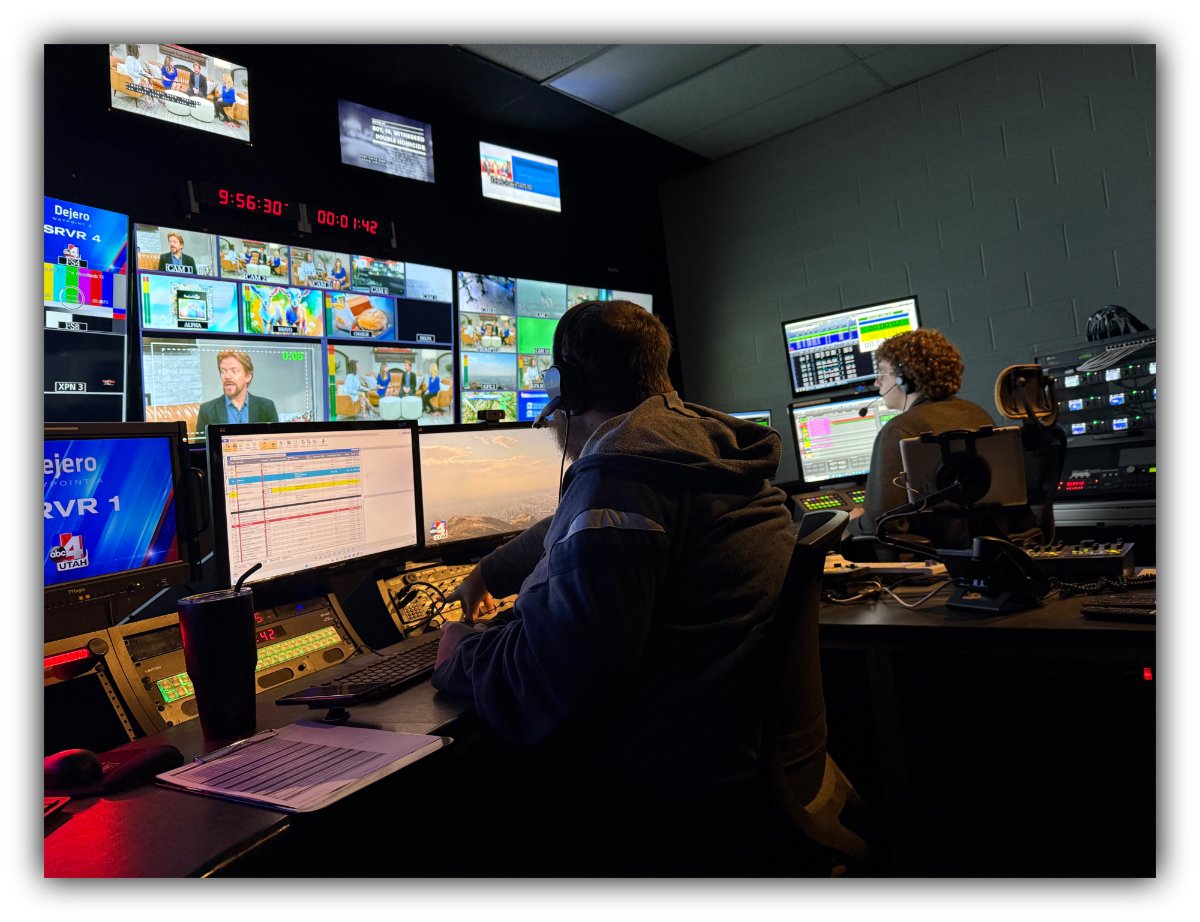
Inside a television newsroom control room, where the flow of stories is shaped long before viewers see the headlines on their screens. Photo courtesy Alaska Headline Living ©
Who’s Controlling What You See?
This final installment of the Shadows Unveiled series explores how viral content, junk food news, and pressure on journalists can bury the stories shaping your schools, your healthcare, and your community. Day 7 of 7 starts now.
By Gina Hill | Alaska Headline Living | March 22, 2025
Project Censored marked its 50th anniversary with State of the Free Press 2026, documenting a dozen major stories overlooked by mainstream media. The report highlights a “drowning in noise” problem, where constant scandals, viral content, and shallow reporting leave critical, structural issues invisible to the public.
Structural issues are the long-term systems and institutions that shape everyday life. They include government policies, economic rules, social services, education, healthcare, infrastructure, and media itself. These systems determine whether communities have safe streets, reliable schools, affordable healthcare, and access to truthful information. When media coverage ignores these frameworks, citizens are left unaware of the forces shaping their lives at home.
One major reason structural issues go unseen is the prevalence of “junk food news.” The term was coined in 1983 by Project Censored founder Carl Jensen to describe the flood of sensationalized, trivial, or superficial stories that dominate headlines while deeper problems are neglected. Just as junk food fills you up without providing nutrients, these news stories fill the media space without nourishing public understanding.
Caution: Loud music and strong language in the following viral clip show exactly how sensational content crowds out the stories that truly shape your life.
As this TikTok shows, viral clips grab attention while the stories that shape your life are largely ignored. Today, the noise appears everywhere: on social media feeds dominated by short, attention-grabbing clips; in 24/7 cable news cycles replaying dramatic sound bites; and in recommendation feeds that prioritize engagement over substance. This constant stream of trivial content crowds out coverage of housing, healthcare, school funding, climate risk, and corporate influence. The issues that shape your life at home.
Think about it. While the news cycles obsess over a celebrity breakup or a viral politician soundbite, your local schools may be underfunded, hospitals may be stretched thin, climate risks may go unaddressed, and key policy changes quietly move forward with little public awareness. These are the structural issues that shape your life at home, from whether your child gets a quality education to whether your community is prepared for extreme weather. When media coverage prioritizes spectacle, citizens are left distracted, misinformed, and less able to act on the systems that touch every household.
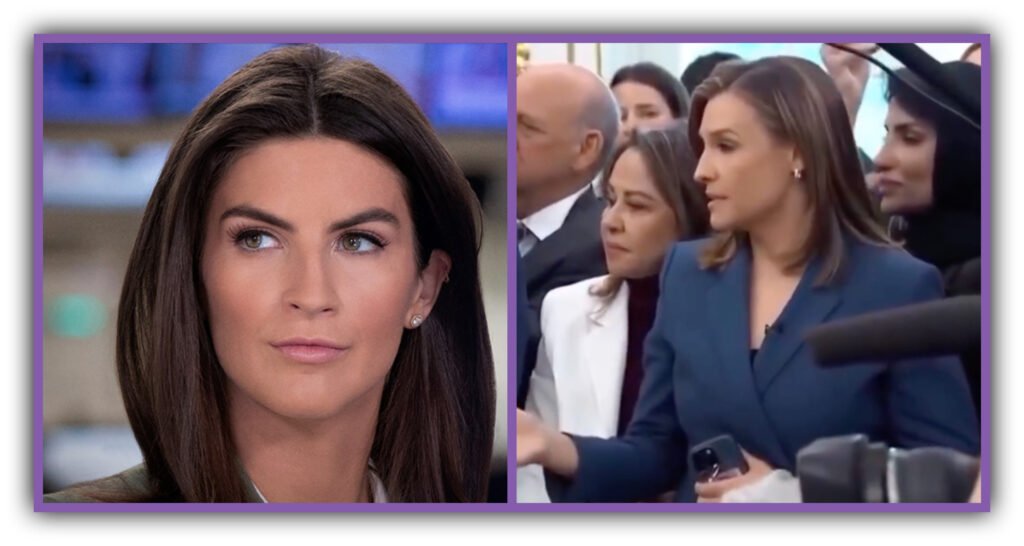
Structural pressures are compounded by attacks on the press. FCC Chair Brendan Carr has suggested that broadcasters who air what he considers “hoaxes” could face regulatory scrutiny, a statement widely seen as a threat rather than a legally enforceable action, since the FCC cannot revoke licenses simply for airing content it dislikes. These statements, backed by President Trump, create an atmosphere that may discourage outlets from covering sensitive or critical stories. Individual journalists are also under attack. Trump has repeatedly mocked female reporters, including Kaitlan Collins of CNN and Mary Bruce of ABC News, using personal insults while they ask questions on policy and accountability. These attacks signal that challenging government power may carry reputational or professional risks and contribute to self-censorship in newsrooms.
When Journalists Challenge Power, the Response Can Be Personal.
The result is a media landscape dominated by spectacle and fear, where systemic problems struggle to break through. Citizens can easily lose sight of how political and corporate decisions shape their families, finances, and communities. Project Censored warns that this structural inequality of attention, combined with threats to a free press, undermines democracy itself. Real accountability depends on an informed public that can access, understand, and act on the information that affects daily life.
Recent exchanges illustrate how confrontations with reporters can unfold when journalists press officials on accountability.
🎤 Exchange between President Donald Trump and ABC News correspondent Mary Bruce during a press interaction
Mary Bruce: “Is it appropriate, Mr. President, for your family to be doing business in Saudi Arabia while you’re president? Is that a conflict of interest? And, your royal highness, U.S. intelligence concluded that you orchestrated the brutal murder of a journalist. 9/11 families are furious that you are here in the Oval Office. Why should Americans trust you?”
President Donald Trump: “Who are you? Who are you with?”
Mary Bruce: “I’m with ABC News, sir.”
Trump: “You’re with who?”
Bruce: “ABC News, sir.”
Trump: “Fake news. ABC fake news. One of the worst. One of the worst in the business.”
Bruce’s question referred to Saudi Crown Prince Mohammed bin Salman and the 2018 killing of Washington Post journalist Jamal Khashoggi, a case that sparked global outrage and ongoing debate about accountability.
Moments like this show how journalists face public attacks for doing their jobs, but the power to demand accountability doesn’t stop with the press. It begins with you.
Actions You Can Do at Home and in Your Community
1. Boost Your News and Media Literacy
Learn how to spot bias, evaluate sources, and see through misinformation before sharing it. Resources include the News Literacy Project and online media literacy courses.
2. Check Before You Share
Verify stories with trusted sources before reposting. Practice lateral reading by comparing multiple reputable outlets to confirm facts.
3. Support Local and Independent Journalism
Subscribe, donate, or share articles from trusted local outlets. Attend events hosted by newsrooms to stay informed and engaged.
4. Engage Politically and Civically
Vote in all elections and contact elected officials to advocate for press freedom, transparency, and media accountability.
5. Use Social Media Responsibly
Avoid amplifying unverified or sensational content. Use hashtags thoughtfully to elevate substantive issues.
6. Promote Constructive Dialogue at Home and in Your Networks
Talk with family, friends, and peers about how to assess information and recognize reliable sources.
7. Organize or Join Community Actions
Start or join local media watch groups, civic forums, or workshops focused on media literacy. Partner with schools, libraries, and nonprofits to host events.
8. Recognize and Support Journalists
Show appreciation for careful reporting. Positive feedback and public recognition help sustain morale and visibility.
If spectacle keeps drowning out substance, you may miss the decisions that affect your paychecks, your kids’ schools, your healthcare, and your community’s safety, leaving you powerless to protect what matters most.
What shapes your life is rarely what goes viral. Knowing the difference is where real power begins.
Sources
- Project Censored. State of the Free Press 2026, 50th Anniversary Edition.
- Project Censored. “About Project Censored.” Wikipedia, 2026.
- Project Censored. “Junk Food News.”
- Poynter Institute. “FCC Chair Brendan Carr warns broadcasters over news coverage.” 2026.
- The Guardian. “FCC chair raises alarm over news coverage of Iran conflict.” March 15, 2026.
- Wikipedia. “Donald Trump’s conflict with the news media.” 2026.
- Harvard Kennedy School. “Today’s Media Landscape: The Attention Battlefield.” 2026.
- Penn Today. “New report unpacks crises facing American journalism.” 2025.
What do you feel about this post?

Like

Love

Happy

Haha
Sad