
Alaska’s Workplace Death Rate Is Nearly Double the National Average
No recycled commentary. No opinion blogs. We go straight to the agencies that collect the bodies, count the injuries, and write the enforcement citations.
That is where the truth lives.
By Gina Hill | Alaska Headline Living | February 2026
Alaska’s Workplaces Are Among America’s Deadliest
People do not usually die at work in Alaska in ways that dominate national news.
There is rarely a single catastrophic event.
Instead, there are small, repeated tragedies spread across mountains, water, and distance.
A fisherman disappears into cold coastal water.
A pilot loses control in shifting mountain weather.
A worker is struck by machinery far from immediate medical response.
Federal records from the Bureau of Labor Statistics show Alaska’s workplace fatality rate remains roughly twice the national average.
The state recorded 29 fatal workplace injuries in 2023.
The numbers are small in absolute count. The risk, measured per worker, is not.
Transportation Is the Primary Hazard
Transportation incidents accounted for more than sixty percent of workplace deaths in Alaska in 2023.
Aircraft accidents were responsible for 12 fatalities.
The pattern reflects how labor is structured across the state.
In many regions, transportation is not simply travel. It is employment infrastructure.
Workers rely on small aviation networks to reach communities, deliver medical services, move cargo, and maintain commerce across terrain where roads are limited.
Nationally, transportation incidents represent about 37 percent of workplace fatalities.
Safety research associated with the National Institute for Occupational Safety and Health has identified remote aviation operations as vulnerable to accident chains involving terrain, weather variability, fatigue, and operational pressure.
Commercial Fishing: A Dangerous Legacy That Has Improved but Not Disappeared
.jpg)
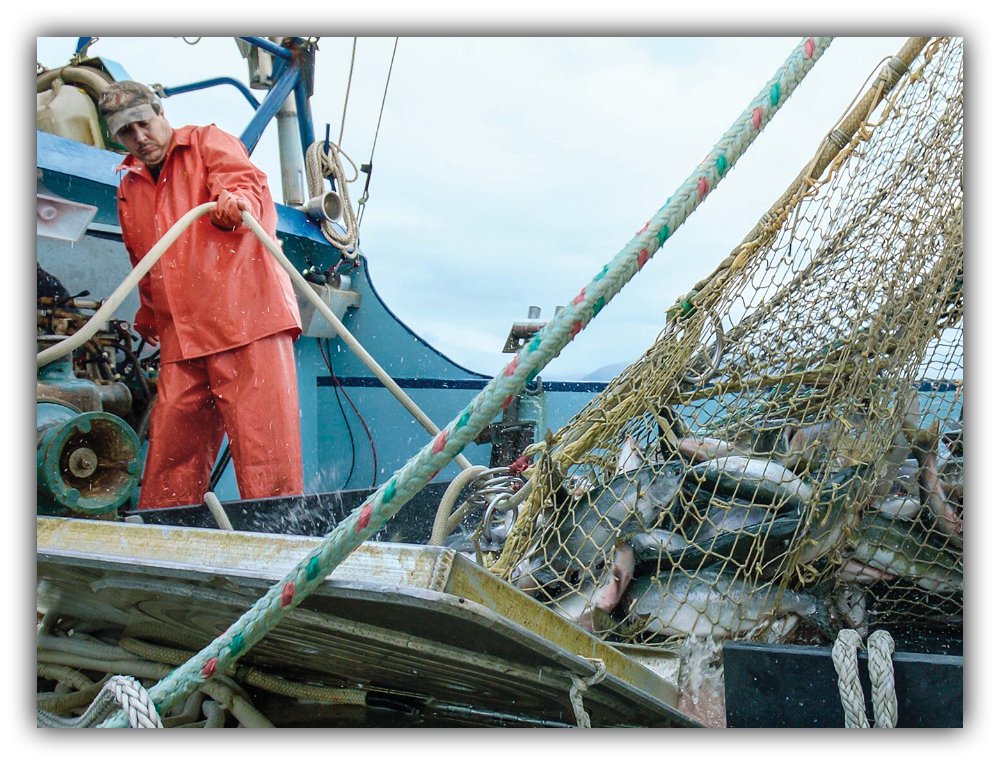
Commercial fishing remains one of Alaska’s most historically dangerous occupations.
Federal summaries show 236 fishing industry workers died in Alaska between 2000 and 2019.
Earlier decades saw drowning as the dominant cause of death.
Safety interventions have helped reduce fishing fatalities by roughly 70 percent over several decades.
Mandatory survival equipment, vessel stability improvements, and crew training programs contributed to the decline.
However, fishing remains high risk because workers operate heavy equipment in severe weather and often far from immediate rescue services.
Cold water immersion can shorten survival time dramatically.
Enforcement Limits in Remote Geography
Workplace safety enforcement is administered nationally by the Occupational Safety and Health Administration.
The agency oversees millions of workplaces but employs fewer than 2,000 inspectors nationwide.
Oversight analysis from the U.S. Government Accountability Office has repeatedly identified challenges in monitoring remote or seasonal work environments.
Alaska represents one of the most difficult enforcement landscapes.
Many worksites are reachable only by air or long-distance travel.
Inspection strategy often becomes reactive rather than preventive.
Federal statistical agencies have not demonstrated a direct causal relationship between enforcement budget changes and annual fatality totals.
Safety outcomes depend on multiple factors including employer compliance, worker training systems, equipment reliability, and environmental risk management.
People Behind the Numbers
In 2023, white non-Hispanic workers accounted for 76 percent of reported workplace deaths in Alaska.
Smaller demographic categories were sometimes suppressed in federal tables to protect privacy when counts were low.
Occupational safety researchers caution that raw fatality counts should not be interpreted as biological or cultural risk indicators.
Risk exposure is more strongly associated with industry participation, geographic work location, and physical job demands.
👉🏿 National research suggests American Indian and Alaska Native workers may experience higher fatality risk in certain high-hazard industries when employment distribution is considered.
Political Accountability and Funding Debate
Workplace safety policy reflects a balance between protection, economic productivity, and the operational realities of high-risk industries.
Federal enforcement authority rests with the Occupational Safety and Health Administration.
Critics of safety enforcement funding levels argue that inspection coverage has not scaled proportionally to geographic and industrial complexity.
Supporters of current policy frameworks argue that safety outcomes depend on employer behavior, workforce training, and technology adoption rather than enforcement presence alone.
No federal statistical agency has published evidence demonstrating a direct causal relationship between OSHA budget changes and year-to-year workplace fatality totals.
Human Geography of Risk
Alaska’s occupational safety challenge is not defined by one type of accident.
It is shaped by how work is organized.
Transportation dependence, remote operating environments, seasonal labor cycles, and high-risk resource industries combine to create exposure conditions that are difficult to eliminate completely.
Most workplace deaths in Alaska are not the result of a single catastrophic failure.
They are usually the result of environment, distance, industry design, and the physical demands of essential labor.
Closing Insight
The federal numbers are public.
The enforcement records are public.
The debate is not about whether workplace risk exists.
It is about whether safety systems are improving fast enough to protect workers who operate at the boundary between human industry and harsh geography.
Alaska’s workplace fatality story is not about whether work in the state is dangerous.
It is about how a society protects workers when danger is built into where and how the work must be done.
What do you feel about this post?

Like

Love

Happy

Haha

Sad