








Alaska’s Ancient Workshop: Secrets of Mammoths and Early Humans
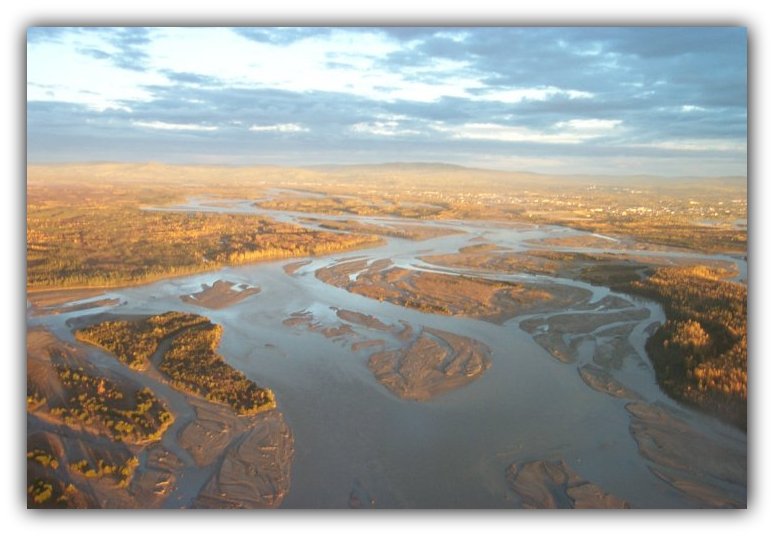
Tanana River, Interior Alaska: A braided river spreads across gravel flats near Fairbanks, its shifting channels quietly moving vast amounts of sediment. Landscapes like this defined the Tanana Valley during the Ice Age, offering water, open travel corridors, and rich hunting grounds for some of North America’s earliest people. Photo by Chris 73, U.S. Army Corps of Engineers, public domain via Wikimedia Commons.
New research from Alaska’s Tanana Valley traces early human life, megafauna, and migration routes at the end of the last Ice Age.
By Gina Hill | Alaska Headline Living | February 2026
In the remote Tanana Valley of Alaska, a river bend along Shaw Creek is giving archaeologists a rare peek into life on the Ice Age “mammoth steppe” some 14,000 years ago. The Holzman site, recently detailed in Quaternary International, is more than just a patch of dirt. It’s a frozen-in-time snapshot of early human ingenuity, megafauna encounters, and migration patterns that shaped North America.
A Site Frozen in Time
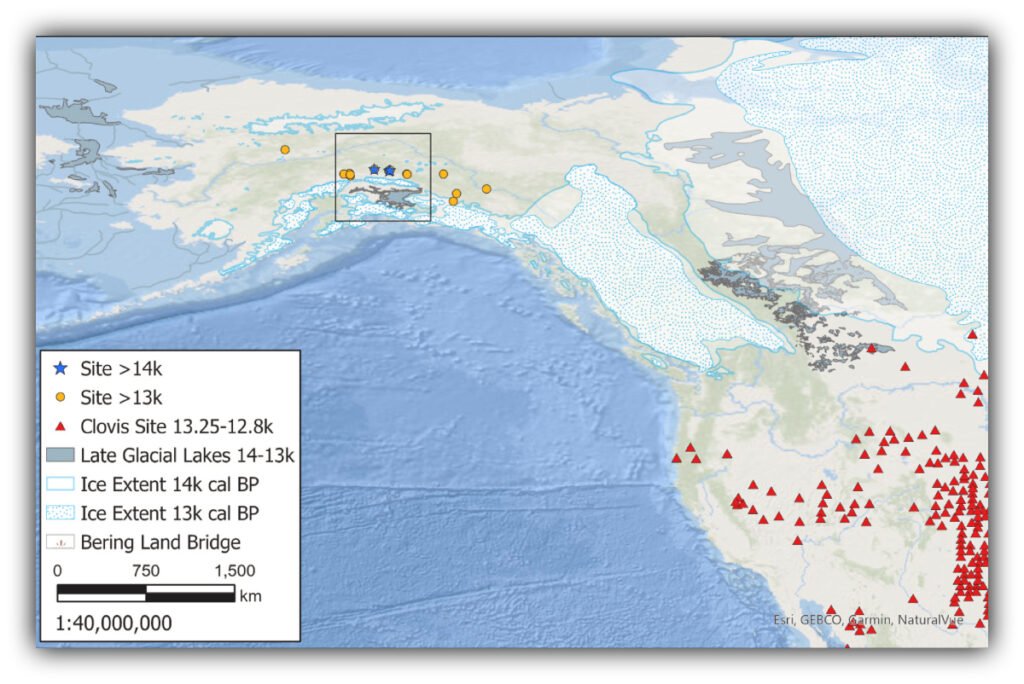
Holzman sits amid layers of loess and sand that escaped the great glacial scours of the Last Ice Age. These quiet layers preserved hearths, bones, and stone tools, all datable with precision thanks to radiocarbon testing on charcoal and ivory. Clear streams and open plains would have made this spot irresistible to both humans and the large animals they hunted, drawing repeated visits over centuries.
Digging Up the Past
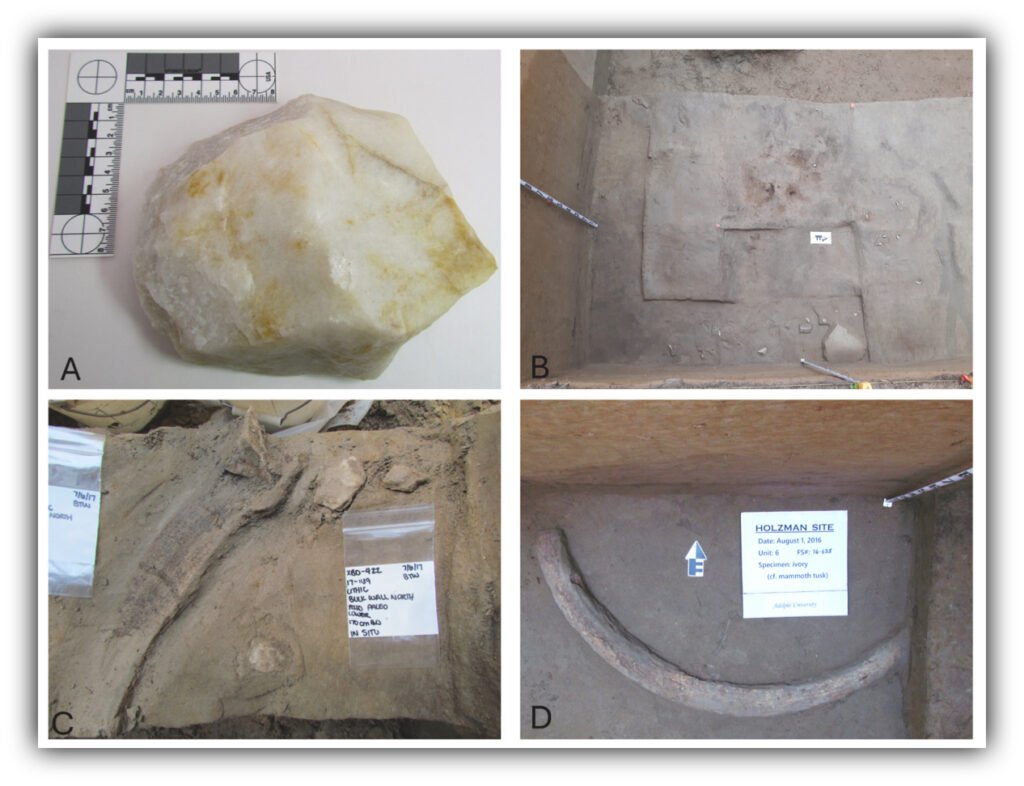
Excavations have uncovered over 4,800 stone artifacts, 2,200 bones, and what may be North America’s earliest mammoth ivory rods. Highlights from the site’s layers include:
- C5b (14.1–13.8 ka): A cached female mammoth tusk near a hearth, quartz flakes, and red ochre hint at ritual or status.
- C5a (13.8–12.8 ka): An ivory workshop with heavy quartz choppers, anvils, and scrapers. Hearths here held birds and big-game remains, painting a picture of daily life and feast alike.
Toolmaking and Daily Life
Early Alaskans relied on local quartz to shape tools for chopping ivory and scraping hides. Later, chert and basalt appear in the record, likely brought from afar as humans traveled more widely. Beveled ivory rods, some dating to 13,300 years ago, resemble tools from distant Clovis sites—hinting that technologies flowed south along the Ice-Free Corridor. Diets were eclectic: mammoth, birds, and fish. Mammoth hunts, bold and dangerous, may have been a key path to social status in these early communities.
The Bigger Picture
Genetic evidence points to a Beringian “standstill” following the Last Glacial Maximum, with the Tanana Valley acting as a hub for the ancestors of Clovis hunters arriving around 14,000 years ago. Mammoths roamed these valleys before humans made their mark, and the Holzman site challenges older “pre-Clovis” models by supporting a late, interior push into the Americas.
Holzman is more than a dig. It’s a storybook in the dirt. Each hearth, tusk, and chipped stone tells of humans learning, hunting, and moving across a vast, frozen landscape, shaping the continent long before cities or borders existed.
Read the full study on ScienceDirect
What do you feel about this post?

Like

Love

Happy

Haha

Sad