





Alaska Soldiers on Standby as Tensions Escalate in Minnesota
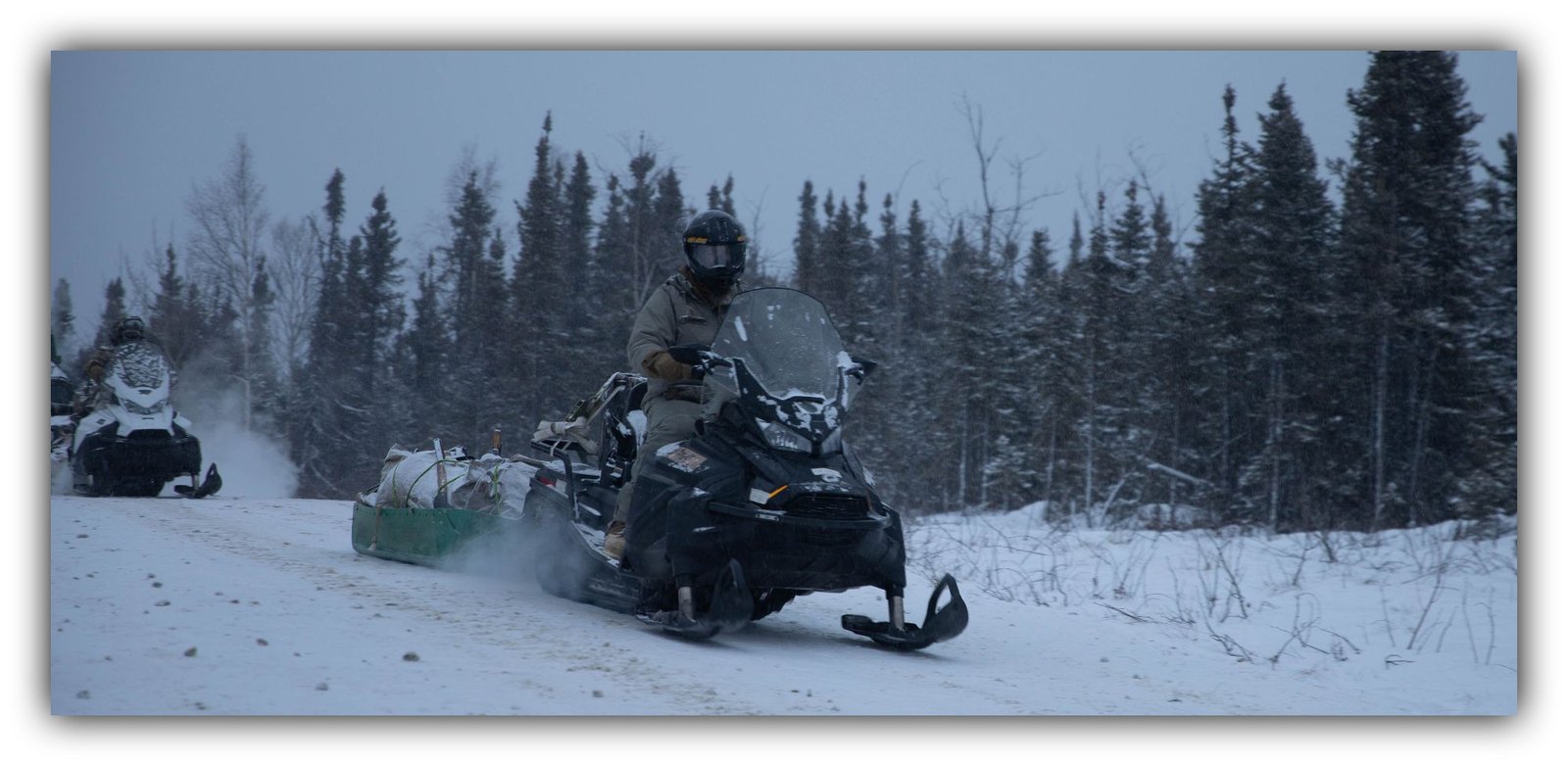
11th Airborne Division soldiers train in Alaska
Members of the 11th Airborne Division navigate snowy terrain on snowmachines, demonstrating the unit’s specialized cold-weather and over‑snow mobility capabilities. The division trains year-round in Arctic conditions to operate where others cannot. Photo courtesy of the 11th Airborne Division, December 22, 2025.
By Gina Hill | Alaska Headline Living | January 2026
The Pentagon orders about 1,500 active‑duty soldiers from the Army’s 11th Airborne Division to prepare for a possible mission to Minnesota in response to ongoing federal immigration enforcement activity and related civil unrest. Pentagon spokesperson Sean Parnell stated that the Department of Defense “is always prepared to execute the orders of the Commander‑in‑Chief if called upon,” and emphasized that readiness orders do not equate to a deployment order. The troops remain stationed in Alaska at Joint Base Elmendorf Richardson and Fort Wainwright unless a lawful directive from the President is issued.

The surge of federal immigration agents into the Twin Cities region dates back to the federal government’s “Operation Metro Surge,” a Department of Homeland Security initiative involving a large deployment of Immigrations and Customs Enforcement and Customs and Border Protection personnel to conduct immigration enforcement in the area. On January 12, Minnesota Attorney General Keith Ellison, on behalf of the State of Minnesota and alongside the cities of Minneapolis and Saint Paul, filed a federal lawsuit against the Department of Homeland Security and related agencies and officials asking the court to end the surge of agents and declare it unconstitutional and unlawful. The lawsuit alleges that the presence and actions of thousands of armed, masked federal agents have caused harm to the state, diverted local public safety resources and violated the First and Tenth Amendments as well as the Administrative Procedure Act. In a press release, Ellison described the deployment of these agents as a “federal invasion” of Minnesota and argued that local officials have been forced to address the disruptions to schools, businesses and public safety caused by the federal operation.

Tensions escalated in early January after a Minnesota Bureau of Criminal Apprehension statement reported that the FBI had reversed course on a joint investigation into the fatal shooting of 37‑year‑old Renee Nicole Good by an Immigration and Customs Enforcement officer in Minneapolis. The bureau’s statement said that without full access to evidence and investigative interviews, it could not meet Minnesota’s investigative standards and had withdrawn from the case, leaving the FBI as the lead investigative agency. The bureau said it remains open to conducting a full investigation if federal authorities reassess their approach and share the evidence necessary for an independent state inquiry.
Minnesota Governor Tim Walz speaks to residents about the ongoing deployment of federal immigration enforcement personnel, the state’s response, and public safety measures. He urges Minnesotans to remain peaceful, document federal actions, and support one another during the operations. Watch the full video
Governor Tim Walz has urged Minnesotans to protest peacefully and has mobilized the Minnesota National Guard to support local law enforcement and emergency management agencies if needed. The Minnesota Department of Public Safety clarified that the Guard is not deployed to city streets at this time but is ready to help support public safety, protect life, preserve property and support the rights of all who assemble peacefully. In online statements the governor appealed for restraint and emphasized the need for peaceful demonstrations.
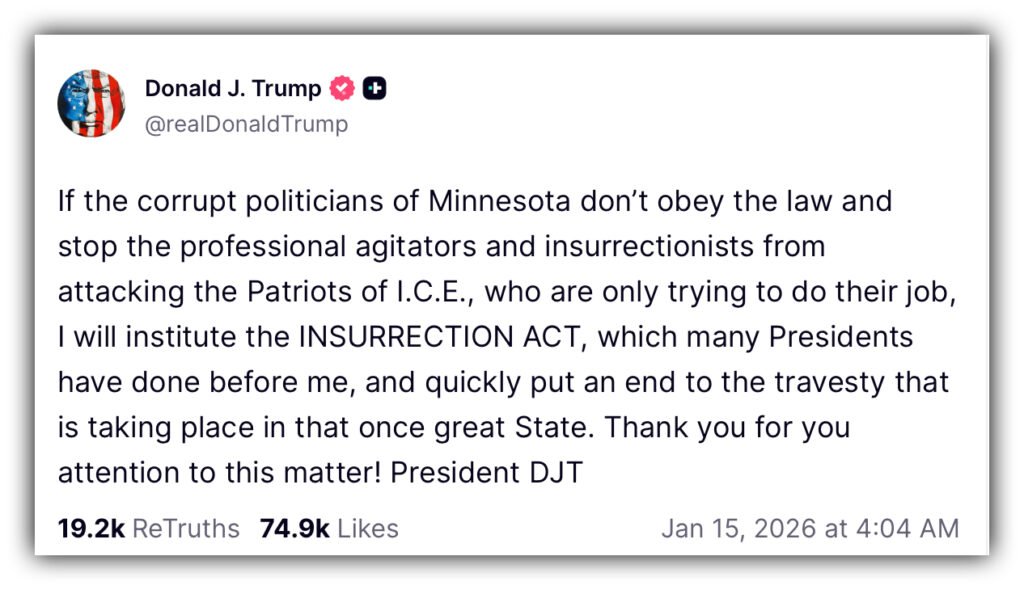
President Donald Trump, on his official social media platform, stated that he could invoke the Insurrection Act of 1807 if Minnesota officials failed to prevent assaults on federal agents, noting that the statute authorizes the President to employ federal military forces domestically under certain conditions. No formal presidential order invoking that law has been published, and the Alaska‑based soldiers remain on standby pending any such lawful directive.
The situation is still unfolding as Minnesota officials challenge federal enforcement in court and the Pentagon keeps about 1,500 Alaska‑based 11th Airborne Division soldiers on standby. Federal, state, and local authorities continue to manage a tense mix of immigration operations, public protests, and the potential deployment of these Arctic-trained troops to the Twin Cities if ordered.
What do you feel about this post?

Like

Love

Happy

Haha

Sad