
Memaw’s Winter Commute: Chasing Daylight and Dodging Ice
By Gina Hill | Alaska Headline Living | January 20226
Good morning, sugar. It’s Tuesday, January 13, 2026, and we are still living on borrowed daylight. The sun peeks up around 10:03 AM and scoots back down about 4:10 PM, so blink and you’ll miss it. That short window means cold roads, long shadows, and no room for hurry. NOAA and Weather.gov say winter is very much in charge today, so let’s talk smart driving before you grab the keys.
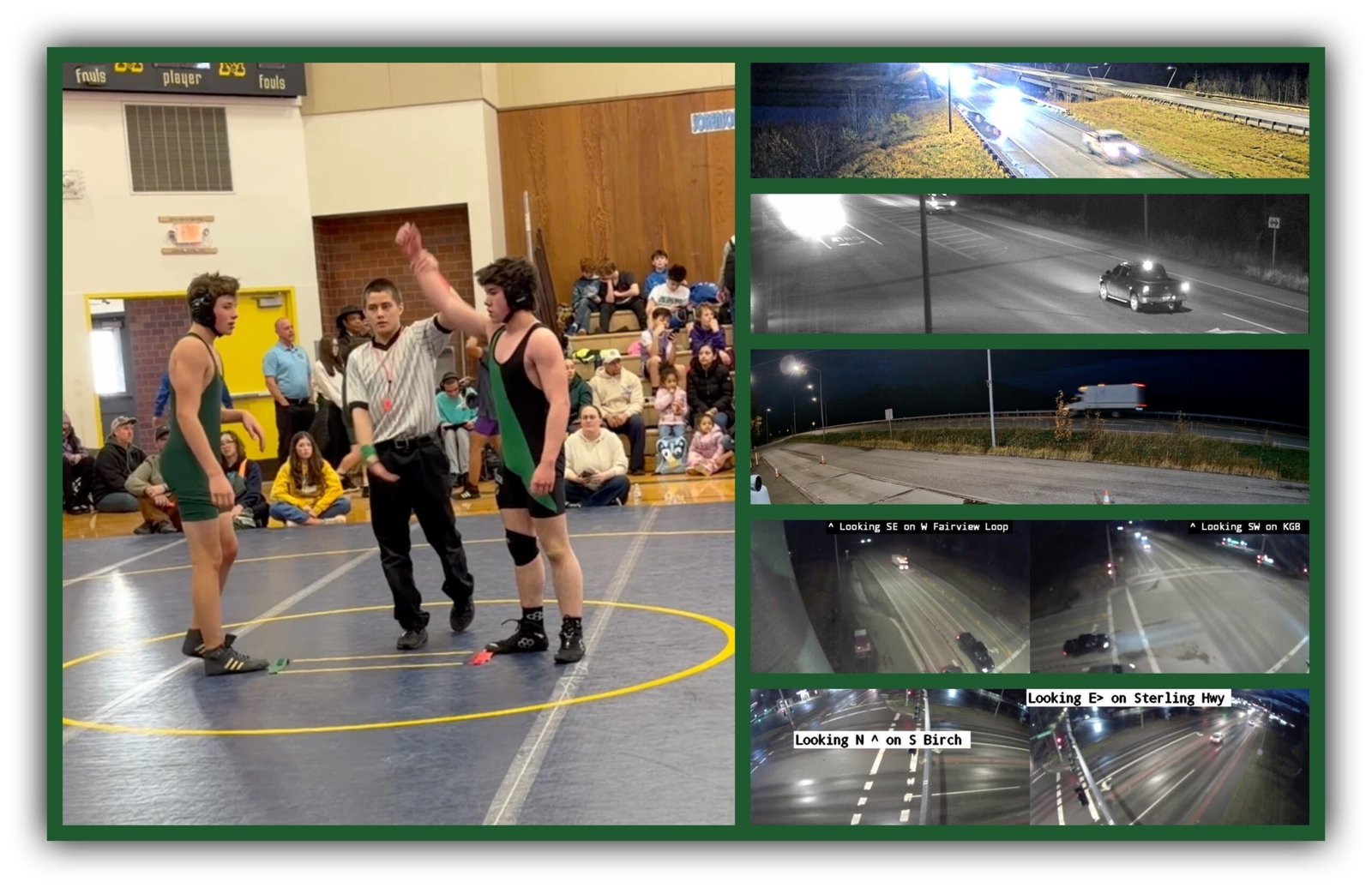
Anchorage and Eagle River roads are showing orange on the Alaska 511 map, meaning difficult driving conditions. Freezing drizzle, compact snow, and icy surfaces are making traction poor across parts of the Municipality of Anchorage, especially near the Hillside and Eagle River corridors.
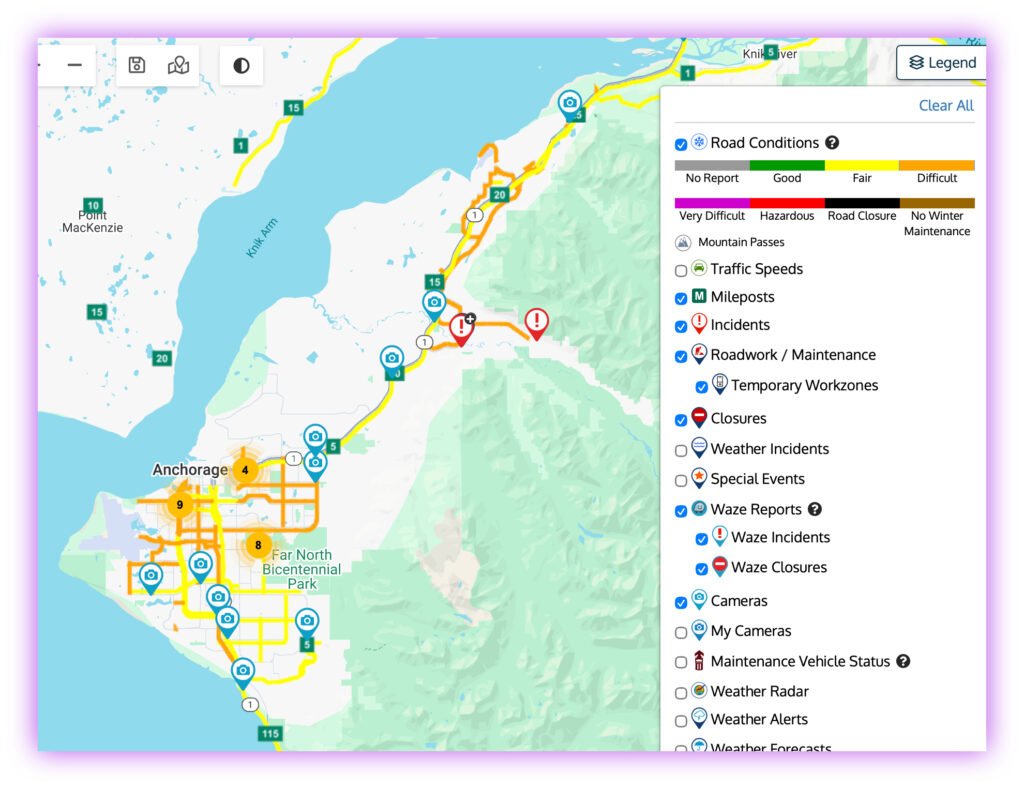
If you’re wondering why so much of Anchorage and Eagle River is glowing orange on the Alaska 511 map, here’s the plain truth. NOAA’s National Weather Service says freezing drizzle and winter weather impacts are creating slick, icy roads, particularly on the Hillside and through Eagle River. That kind of cold moisture freezes on contact, turning pavement into a skating rink before you can say slow down. State and local agencies are urging drivers to reduce speed, increase following distance, and expect tough travel conditions through the day. Memaw says this is not the morning to rush, show off, or test your tires. Orange means difficult, and difficult means patience, caution, and maybe another sip of coffee before you roll.
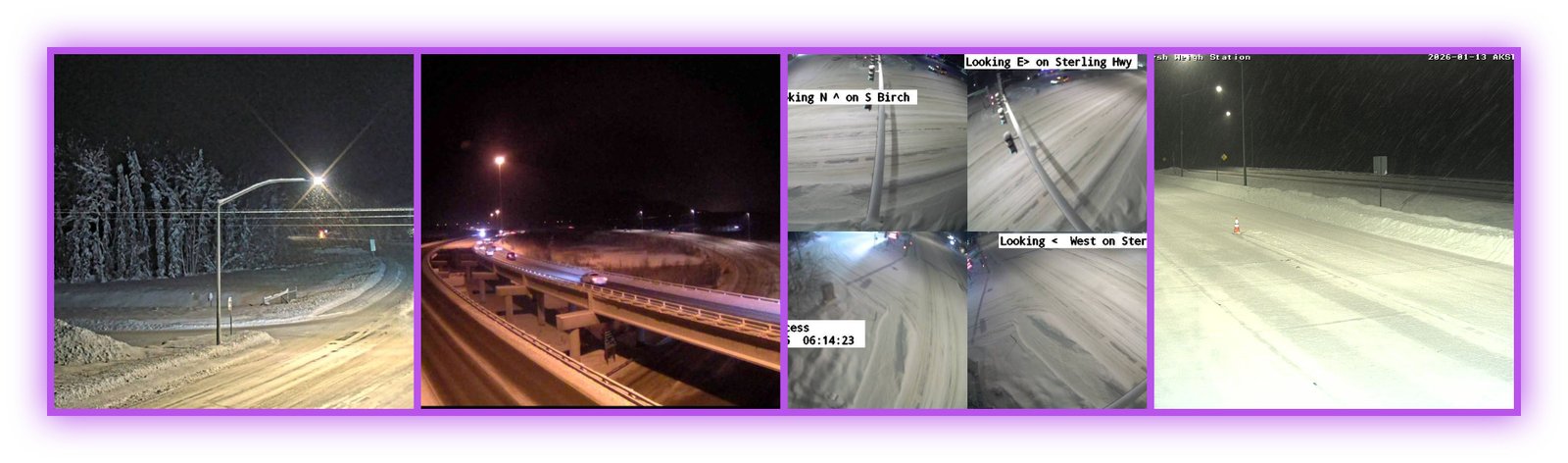
❄️ Parks Highway
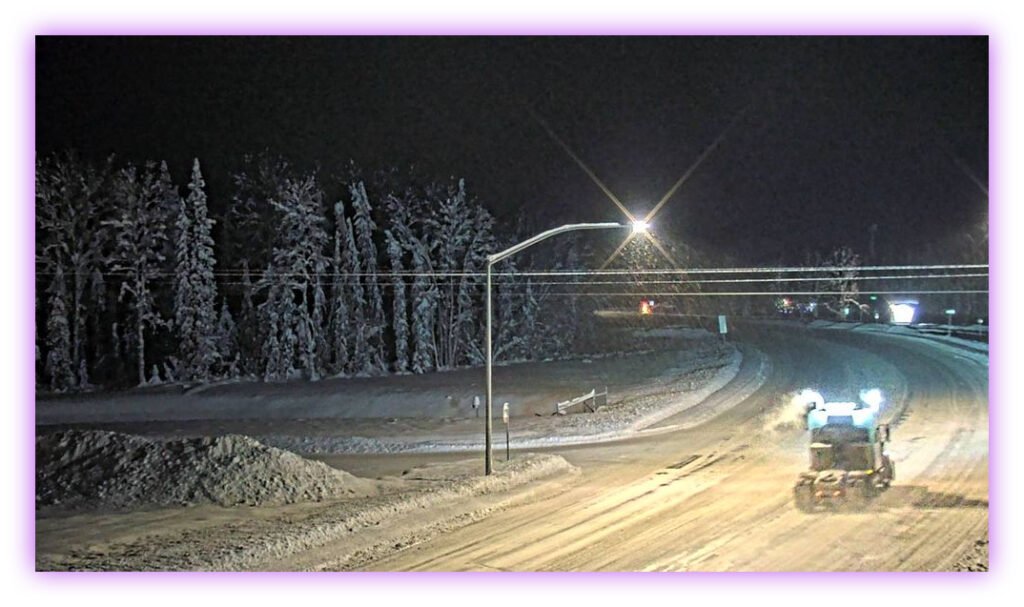
| Time of Day | Hi/Lo Temperatures | Driving Tips |
|---|---|---|
| Morning | -6°F to -2°F | Snow-packed and slick first thing. Leave early and drive like you’re carrying a crockpot of stew. |
| Afternoon | -1°F to 4°F | Light snow and wind drifting it back across the lanes. Extra following distance is your friend. |
| Evening | 0°F to 6°F | Darkness comes fast. Watch for black ice near curves and shaded stretches. |
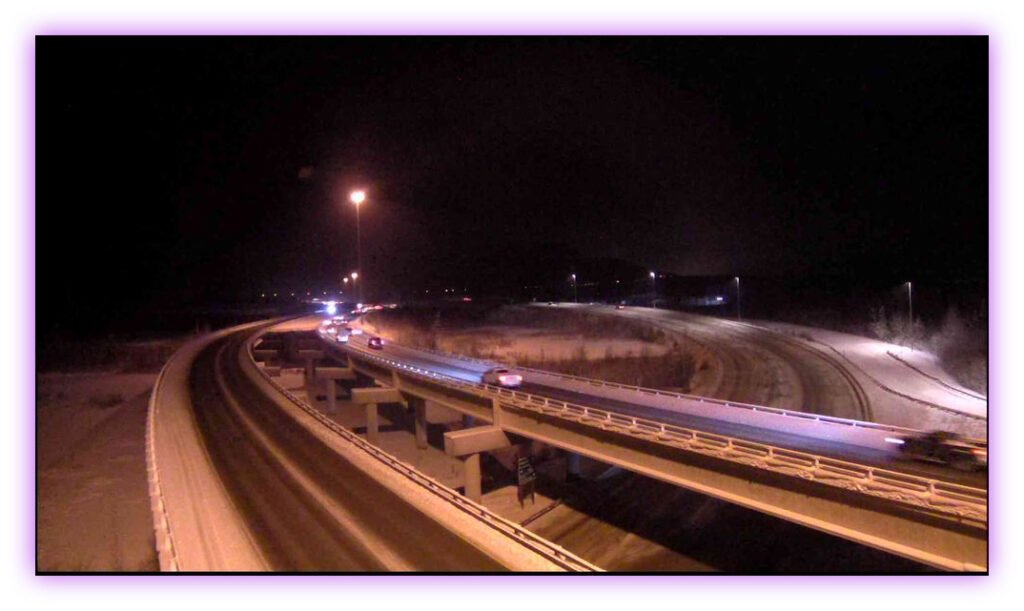
🚗 Glenn Highway
| Time of Day | Hi/Lo Temperatures | Driving Tips |
|---|---|---|
| Morning | -8°F to -3°F | Bitter cold means icy bridges. Slow down before you hit them, not after. |
| Afternoon | -1°F to 5°F | Snow showers possible. Steady speed, gentle braking, no sudden moves. |
| Evening | 0°F to 7°F | Traffic thickens and patience thins. Keep blankets and gloves handy just in case. |
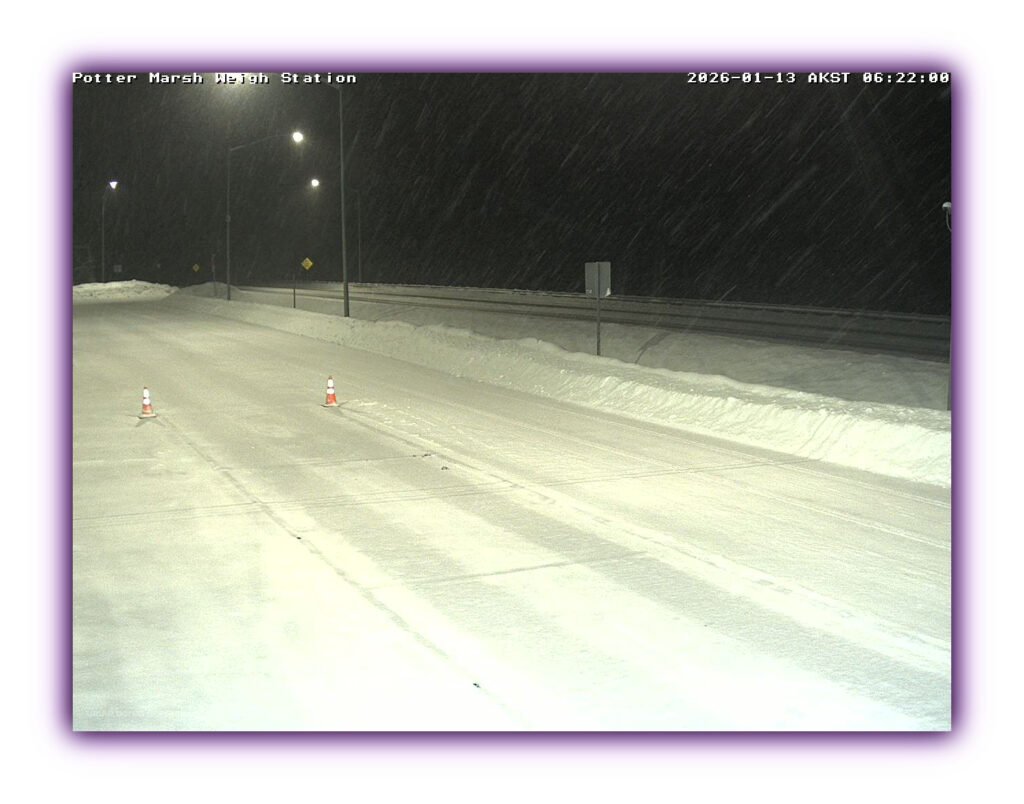
❄️ Seward Highway: Potter Marsh Weigh Station
| Time of Day | Hi/Lo Temperatures | Driving Tips |
|---|---|---|
| Morning | 15°F to 20°F | Warmer temps mean refreeze spots. Ice likes to hide along Turnagain Arm. |
| Afternoon | 18°F to 22°F | Slush possible in lower elevations. Brake early and smooth. |
| Evening | 17°F to 19°F | Temps drop again. Shiny pavement is a warning, not a decoration. |
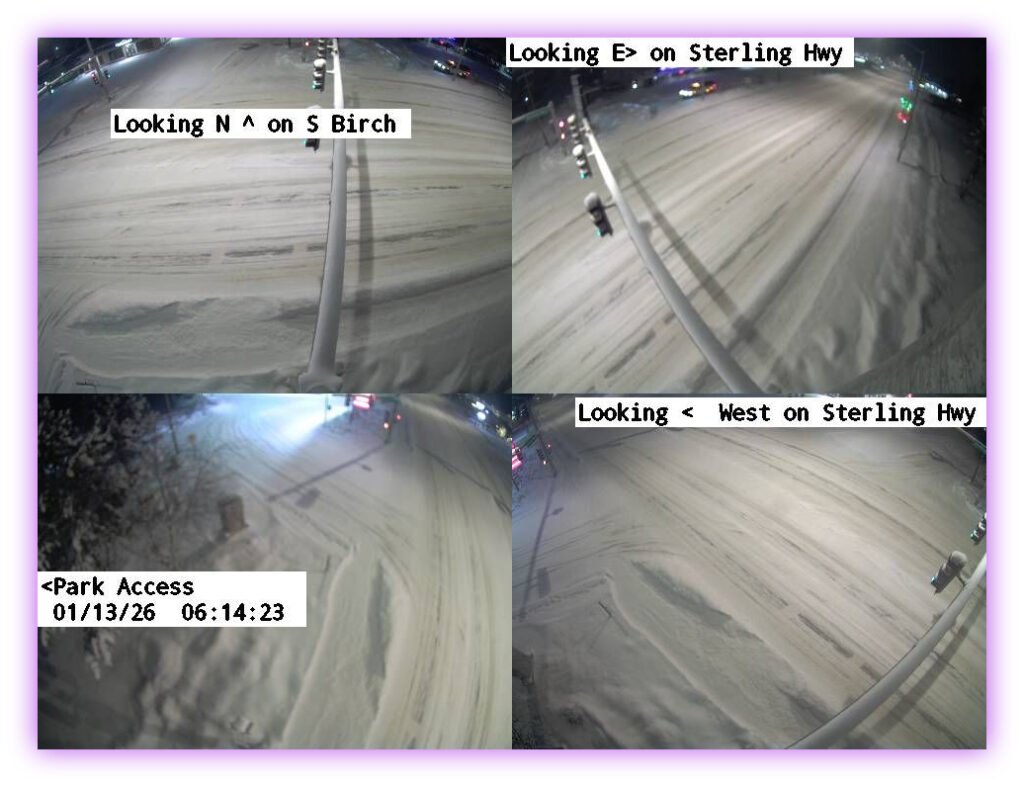
🛣 Sterling Highway
| Time of Day | Hi/Lo Temperatures | Driving Tips |
|---|---|---|
| Morning | 15°F to 20°F | Icy patches early on. Good winter tires are not optional, sweetheart. |
| Afternoon | 18°F to 22°F | Snow showers possible. Give plows and big rigs plenty of room. |
| Evening | 16°F to 19°F | Cold settles back in. If you’re tired, pull over safe and regroup. |
👵 Freezing Drizzle. How Are We Getting That at Zero Degrees?
Great question. This one trips people up every winter.
Short answer. Freezing drizzle does not care what your thermometer says at ground level. Here’s why it happens.
Freezing drizzle forms aloft, not at your bumper.
Up in the lower clouds, temperatures are often warmer than the surface, sometimes just above freezing. That allows tiny liquid droplets to form instead of snow. When those droplets fall into surface air that’s at or below 32°F, they freeze on contact. Even if your dashboard says 0°F, those droplets are already liquid when they hit the road.
No ice crystals, no snowflakes.
In colder clouds, ice crystals form and grow into snow. But when there’s a warm layer aloft and very little ice in the cloud, precipitation falls as supercooled liquid droplets. That’s drizzle, not snow.
Cold air near the ground seals the deal.
Anchorage and Eagle River often trap cold air near the surface, especially in valleys and along the Hillside. Road surfaces are well below freezing, so when drizzle hits, it flash-freezes into a thin, nearly invisible glaze. That’s why roads can suddenly flip to orange on Alaska 511 with very little warning.
Why it’s worse than snow
Snow gives you texture and traction. Freezing drizzle gives you clear ice, the kind you don’t see until your tires start sliding sideways at 15 miles an hour.
Memaw Says
If NOAA says freezing drizzle, it does not matter that it’s zero degrees. That’s actually when it’s most dangerous. Treat every road like it has black ice, slow way down, and never trust pavement just because it looks dry.
💅
What do you feel about this post?

Like

Love

Happy

Haha

Sad