

By Gina Hill | Alaska Headline Living | December 2025
A massive new lithium discovery has been found right here in the United States and it could shape everyday life in ways most people haven’t even thought about. Scientists say the McDermitt Caldera, a long-quiet supervolcano on the Nevada–Oregon border, may hold one of the biggest lithium deposits ever discovered. Early estimates put its value at around $1.5 trillion.
Why should the average person care? Because lithium is the stuff that keeps our modern world running. It’s in electric-vehicle batteries, your phone, your laptop, and the big energy-storage systems that help keep the lights on. A find this huge could influence everything from car prices to how reliable our power grids are in the future.

So what does this actually mean for you and me?
Cheaper, more available electric vehicles.
Right now, the price of EVs is heavily tied to the cost and availability of lithium. If the U.S. begins producing a lot more of it at home, EV prices could finally start dropping, making them realistic for everyday families, not just tech lovers.
More stable energy bills down the road.
As more renewable energy is added to the grid, storage becomes the big challenge. Lithium batteries store energy when the wind isn’t blowing or the sun isn’t shining. A domestic supply means we can build more grid storage without relying on foreign minerals, helping keep long-term energy costs steadier.
Less dependence on other countries.
Right now, most of the world’s lithium is processed overseas. Producing more of it here means fewer supply-chain headaches, especially during global conflicts or shipping disruptions. The kinds of things that ultimately trickle down into higher prices for consumers.
What’s actually in this supervolcano?
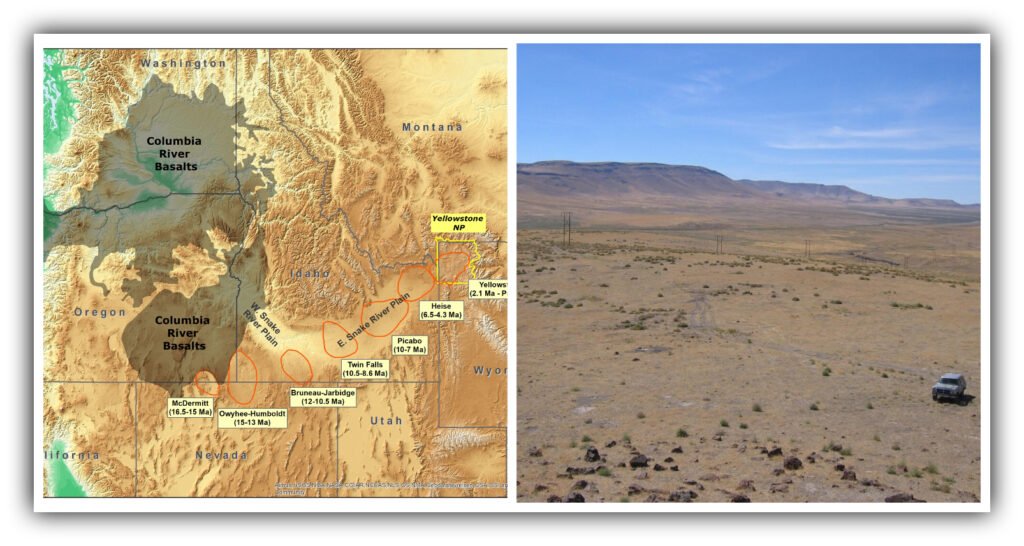
Millions of years ago, magma from the Yellowstone hotspot rose under the region, enriching the area with lithium. Over time, volcanic activity, hot water, and ancient lake beds worked together to trap unusually high concentrations of lithium in clay-rich layers near the surface making them easier to reach than deeper deposits elsewhere.
Scientists now believe the caldera may hold 20 to 40 million metric tons of lithium. That would put it among the largest known deposits on the planet.
But there’s a catch: lithium in clay can be harder and more energy-intensive to extract than other types, and it must be processed carefully to avoid environmental damage.
What could slow this down?
Environmental concerns.
Mining can take a toll on water, wildlife, and nearby communities. Parts of the caldera are tied to Indigenous lands, so any project will require thorough consultation and real safeguards.
Regulatory hurdles.
Even if the deposit is massive, it could take years before a shovel ever hits the ground. Permits, lawsuits, and environmental reviews will all play a role.
Technical challenges.
Clay-based lithium isn’t simple to extract. Companies will need to prove they can do it efficiently and without causing long-term harm.
Why this still matters for everyday Americans
Even with all the complications, this discovery could be a turning point in the race toward cleaner, more reliable energy. A homegrown supply of lithium means more affordable EVs, stronger power grids, and fewer global supply chain shocks.
In other words:
A quiet supervolcano in the desert might help power the entire next era of American life.