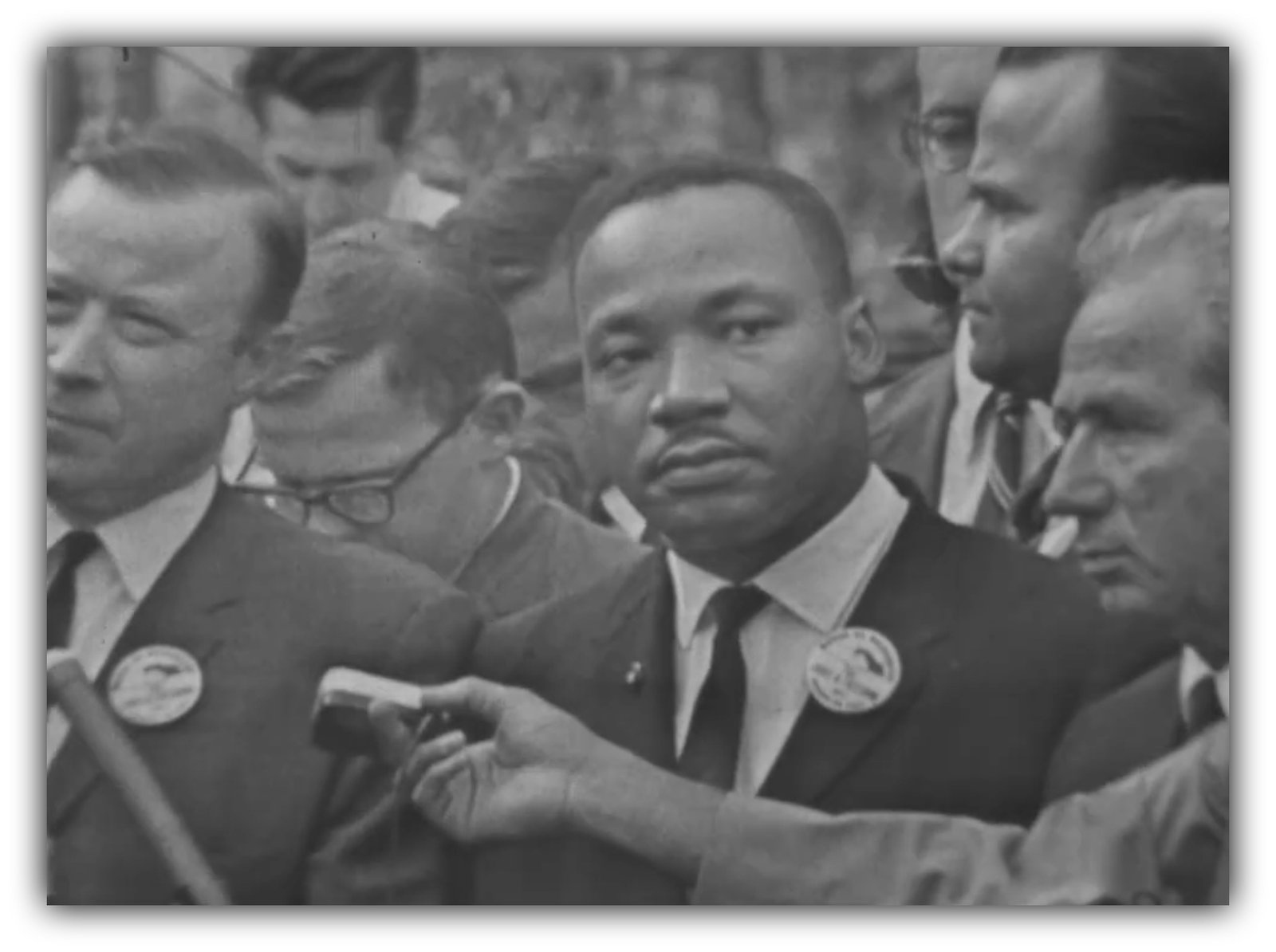
Dr. Martin Luther King Jr. at the March on Washington, 1963. The iconic demonstration for civil and economic rights drew hundreds of thousands to the nation’s capital. Courtesy: U.S. National Archives.
By Gina Hill | Alaska Headline Living | January 2026
As Americans pause this Martin Luther King Jr. Day, it’s easy to remember the speeches, marches, and iconic images. But King’s real legacy lives in the words he left behind—words that, nearly 70 years later, still guide us toward a better tomorrow. Reading King directly, in the documents he authored, offers lessons that feel urgent and deeply personal in 2026.
In his “I Have a Dream” speech, delivered on the steps of the Lincoln Memorial in 1963, King envisioned a nation where his children—and all children—would be judged by their character, not skin color. His words weren’t just aspirational; they were instructions: “Now is the time to make justice a reality for all of God’s children.” The full transcript repeatedly emphasizes urgency, equality, and hope—principles just as necessary today. (Full Transcript)
From a jail cell in Birmingham, King penned the Letter from Birmingham Jail, a direct, unfiltered manifesto on justice and moral responsibility. He reminded readers: “Injustice anywhere is a threat to justice everywhere. We are caught in an inescapable network of mutuality, tied in a single garment of destiny.” The letter doesn’t just inspire—it demands action, urging each of us to challenge injustice wherever we see it. (Full Text)
King’s vision reached the world stage when he accepted the Nobel Peace Prize in 1964, laying out a philosophy of nonviolence and moral courage. “I believe that unarmed truth and unconditional love will have the final word in reality,”he said, framing struggle and hope as tools to reshape society. (Full Speech)
Taken together, these archival documents are more than historical artifacts—they are a blueprint for 2026 and beyond. They remind us that:
- Justice requires urgency and persistent action.
- Equality is rooted in character and shared humanity.
- Nonviolence and moral courage are powerful, practical tools.
- Each individual is tied to the welfare of the larger community.
- Hope and faith are essential drivers of lasting change.
Those lessons are especially relevant in 2026, a year that also reflects ongoing debates over how we honor King’s legacy. For the first time in decades, the National Park Service will no longer offer free admission to U.S. national parks on Martin Luther King Jr. Day, ending a tradition that allowed millions to visit parks and monuments in his honor without charge. The policy change also removed Juneteenth from the free-admission schedule, replacing both with President Donald Trump’s birthday (June 14) as a fee-free day, alongside other patriotic holidays. The decision has sparked discussion about how best to commemorate national figures and ensure public access to history. (mountainjournal.org)

Meanwhile, across the country, civil rights advocates and youth activists continue to carry King’s vision forward. In Nebraska, the ACLU hosted its MLK Day Youth Rally this morning, bringing students together to advocate for equality, justice, and community engagement. Other cities, like Houston, have consolidated MLK Day marches and parades into unified celebrations, reflecting ongoing conversations about how to honor King while fostering activism in 2026.
Reading King directly today allows us to bring his vision forward, applying it to modern challenges—whether addressing systemic injustice, fostering equity in our workplaces, or simply ensuring that we treat one another with dignity. As we reflect this MLK Day, his words aren’t a relic, they’re a call to action.
For readers who want to dive deeper:
- I Have a Dream – Full Transcript
- Letter from Birmingham Jail – Full Text
- Nobel Peace Prize Acceptance Speech – Full Text
This MLK Day, don’t just remember the dream. Read the documents, carry the lessons, and make the future he envisioned real.