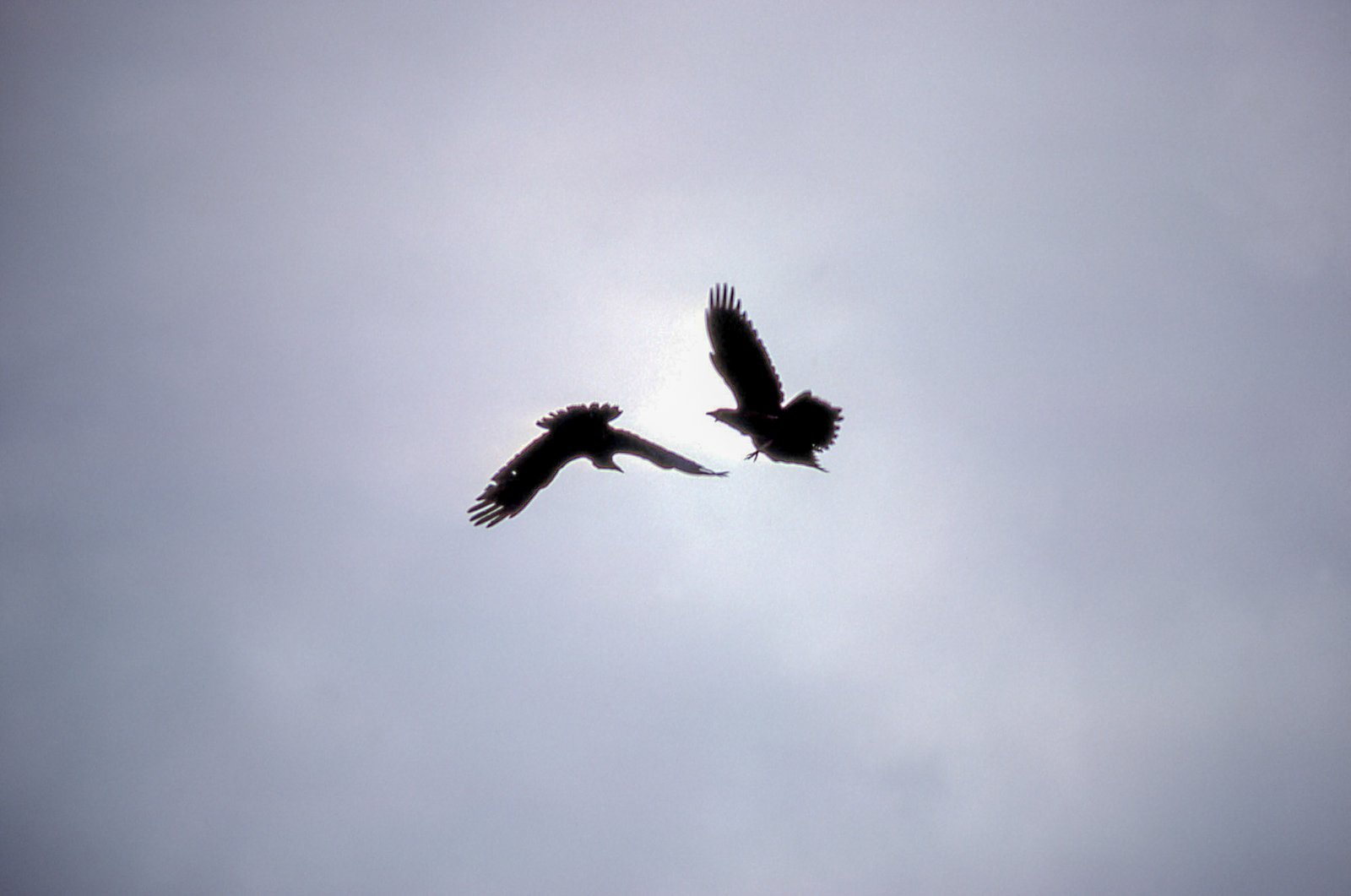
Two bald eagles engage in an aerial dance over Alaska, showcasing their agility and social interaction in flight. Photo credit: J. Schmidt, 1977 via National Park Service .
By Gina Hill | Alaska Headline Living | January 2026
If you think winter in Alaska is tough, try being a raven. And if you happen to be watching in January or February, you might catch them performing their very own rom-com in the sky. 🖤 These jet-black acrobats twist, dive, and swoop with aerial flair while exchanging gifts, preening each other like spa-goers, and making a racket of vocalizations … all in the name of love. Ravens are everywhere in Alaska, from the frozen tundra of the Interior to the spruce-lined roads south of the Yukon River. They are true year-round residents, and not just surviving. They are thriving.
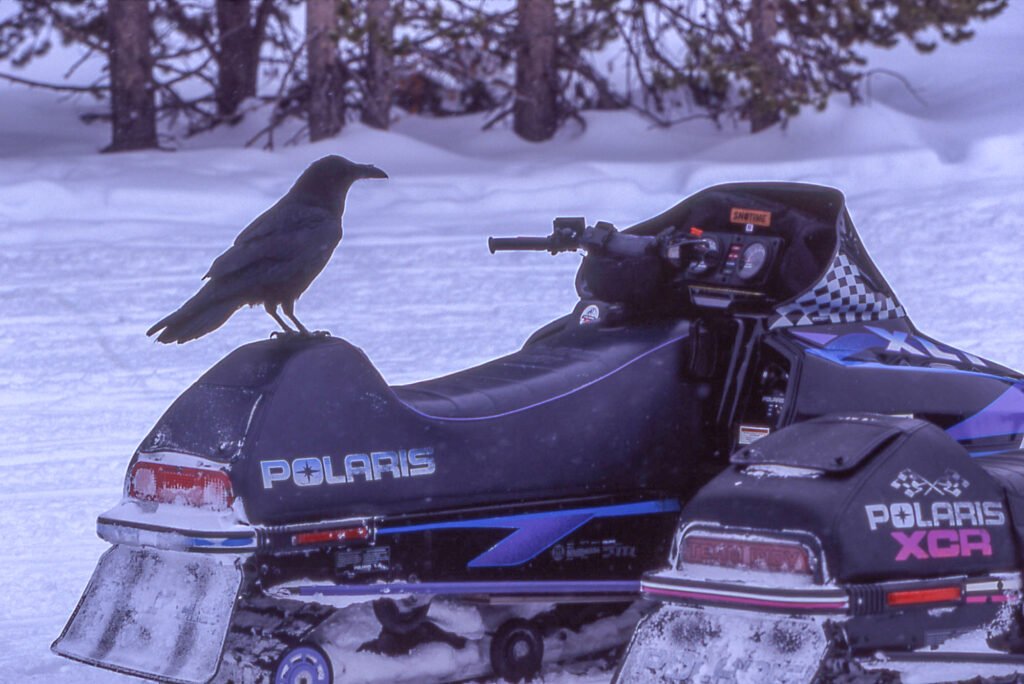
Known for their intelligence that rivals some primates, ravens have earned a reputation as cunning problem-solvers. They will manipulate containers, steal from each other, and even watch humans closely to figure out how to score a free meal. And yes, they do love garbage. Landfills, open trash bins, and roadside scraps are all fair game. In winter especially, when natural food sources shrink, a raven will happily snack on what we leave behind.

But their genius does not stop at finding snacks. Ravens are social creatures with complex behaviors. Watching them in January or February is like watching Shakespeare with wings. Their courtship rituals … dizzying aerial acrobatics, gift-giving, mutual preening, and operatic caws … are all meant to strengthen pair bonds and show off just how clever they are. If you thought humans were dramatic about dating, clearly you haven’t met a raven.

Ravens also hold a special place in Alaska Native traditions. They appear as tricksters and creators in stories passed down through generations. Their intelligence and playfulness are celebrated, and they are often depicted as clever problem-solvers, sometimes a little cheeky, sometimes downright mischievous.
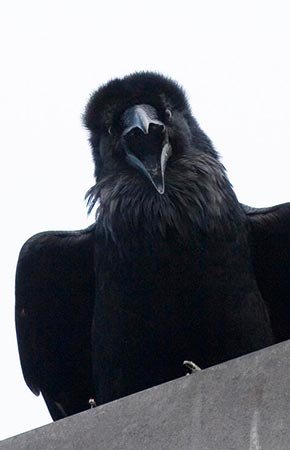
If you want to see Alaska ravens in action, just step outside. Or, check out Alaska public lands managed by the Bureau of Land Management. From highways to river corridors, these birds are easy to spot. They perch on spruce trees, soar above frozen rivers, and keep an ever-watchful eye on any nearby human activity, probably wondering why we leave perfectly good food lying around. And if you’re lucky and it’s January or February, you might catch the grand finale of their romance season: a looping, twisting, gift-dropping display that says, in no uncertain terms, “I am clever, I am bold, and you should mate with me.”
So, next time you are braving the snow and wind, keep an eye out for Alaska’s raven. They are more than just birds. They are clever, adaptable, endlessly entertaining, and apparently, passionate about romance. And, if your trash can mysteriously empties overnight leaving a mess behind, you can bet a raven was involved.
To finish, let’s honor the original Raven of Alaska Native tradition, who brought light to the world:

Raven Steals the Sun
In early days, everything was dark: there were no stars, no moon, and no sun. Raven saw that a rich family had the sun, moon, and stars hanging in a box from the ceiling.
A girl and a man went after water. Raven made himself into a feather, and dropped into the water. The girl drank the water, and Raven turned into a baby inside her. The child was born a short time after, and no one knew how it happened. The child kept looking at the box. He was able to fly five or six days after birth. He kept crying for the box, and at last, his grandfather gave it to him. Then he flew with them, the sun, moon, and stars, through the smokehole.
People were fishing in a dark place, getting lots of fish. Raven had come to them before and had wanted fish, but could not see. He stopped at the fishing place and opened the box. Sun, moon, and stars flew into the sky. Then people could not sleep; it was light all the time. Then Raven turned into a man with leaves for clothes, but he still had the raven’s beak.
Then he went to the first house. The people all went to sleep, but they had left a watchman on duty. He saw a faint light appearing in the east, but he didn’t know what it was. It grew lighter and lighter. He called the people and they all came out and looked with wonder. No one knew what had happened except the grandfather who had let the sun go. The people went in to eat and the Raven kept looking at his mother, so everyone suspected he was the strange baby who had been born to her, but they were not quite sure.
🐦⬛ Read the full story and other Indigenous Raven tales here:
• Raven Steals the Sun — Eyak Story (Native‑Languages.org)
• Alaska Native Storytelling Overview — Wikipedia
• Sealaska Heritage Institute Raven Tales
• Northwest Coast Raven Stories — Smithsonian National Postal Museum