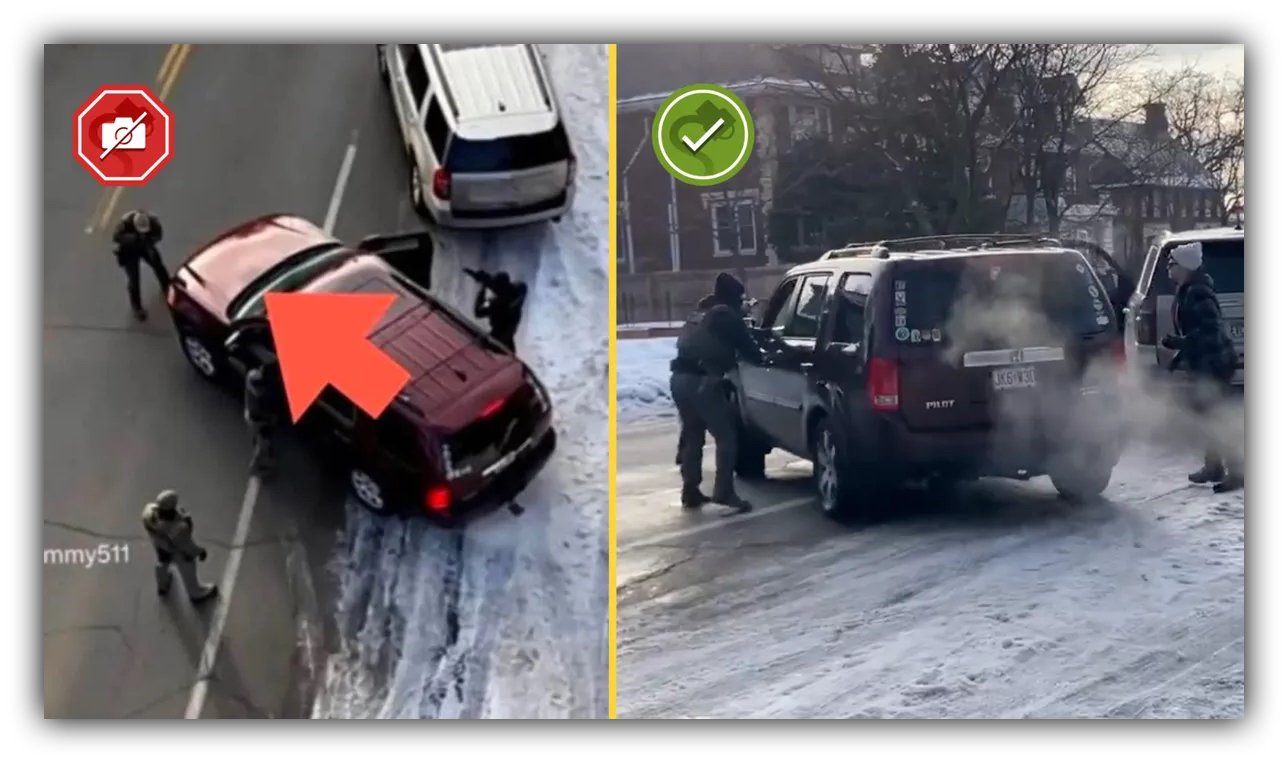
Side by side comparison of the fabricated image circulating online, left, and verified video from the scene, right. Independent fact checkers including Snopes have confirmed the left image does not match real footage and shows signs of digital manipulation. Image courtesy of X user @ScummyMummy511, Max Nesterak, and Snopes illustration.
By Gina Hill | Alaska Headline Living | January 2026
A viral video and still images circulated online claiming to show Renee Good deliberately driving a vehicle toward an ICE officer. That claim is false.
Independent fact checkers across the media landscape have reviewed the footage and concluded that the image and video being promoted are not authentic. Snopes reports the image does not match verified footage from the scene and shows multiple inconsistencies that point to fabrication. AFP Fact Check independently reached the same conclusion, reporting the image was AI generated and does not align with confirmed video, vehicle positioning, or bystander placement. Lead Stories also determined the overhead image is fake and traced its spread to accounts known for publishing fabricated or parody content.
Despite this, senior government officials including Department of Homeland Security leadership have continued to reference the fake imagery as if it were real. Officials have also publicly claimed that the officer who shot Renee Good suffered internal injuries, without releasing medical documentation or corroborating records.
👉🏿 That combination should alarm Americans across the political spectrum.
This is not a dispute over opinions. It is a dispute over factual evidence.
When senior officials promote fabricated media and unverified injury claims to justify lethal force, the damage extends beyond one case. It undermines public trust, contaminates legal proceedings, and sets a precedent where repetition replaces proof.
So what can Americans actually do.
Demand Records, Not Rhetoric
📊 The most effective response to official misinformation is documentation. Citizens, journalists, and advocacy groups can file Freedom of Information Act requests with DHS and the relevant law enforcement agencies requesting:
Incident and use of force reports
Body camera footage
Medical evaluations related to claimed officer injuries
Internal communications referencing the viral video or images
👉🏿 Even when agencies deny or delay, those denials create appeal rights and potential court challenges. Paper trails matter.
Insist on Evidence for Injury Claims
When officials claim an officer suffered internal injuries, the appropriate response is to ask for specifics, not to argue online.
What diagnosis was made.
What medical facility treated the officer.
Whether the officer was admitted or released.
Whether those records were reviewed by prosecutors or courts.
👉🏿 If the information cannot be produced, the claim should not be repeated as fact.

Use Congressional Oversight
Americans can contact their U.S. senators and representatives and request formal oversight. Congressional offices can issue letters demanding clarification from DHS and place questions into the official record. Oversight correspondence is public and forces agencies to respond in writing with legal accountability attached.
Support Evidence Based Journalism
AFP, Snopes, Lead Stories, and AP affiliated reporting have demonstrated the value of primary source verification in this case. Supporting outlets that publish documents, correct errors, and explain their sourcing weakens the influence of fabricated media. Sharing verified reporting is more effective than amplifying official statements that lack proof.
Protect the Court Process
If a case is before the courts or likely to be, the circulation of fake evidence by public officials risks tainting proceedings. Defense attorneys and civil rights organizations can raise concerns about evidentiary contamination. Courts take false or misleading public claims seriously when they threaten due process.
Refuse to Normalize It
The most dangerous response is resignation. When fabricated videos are treated as justification for lethal force, the issue is no longer partisan. It is whether facts still matter in government decision making.
Americans cannot control what senior officials say. But they can control what they accept, what they repeat, and what they challenge through lawful, documented channels.
The video is fake. Multiple independent outlets have confirmed that. The remaining question is whether the public will demand the same standard of evidence from those in power that the justice system demands from everyone else.