By Gina Hill | Alaska Headline Living | February 2026
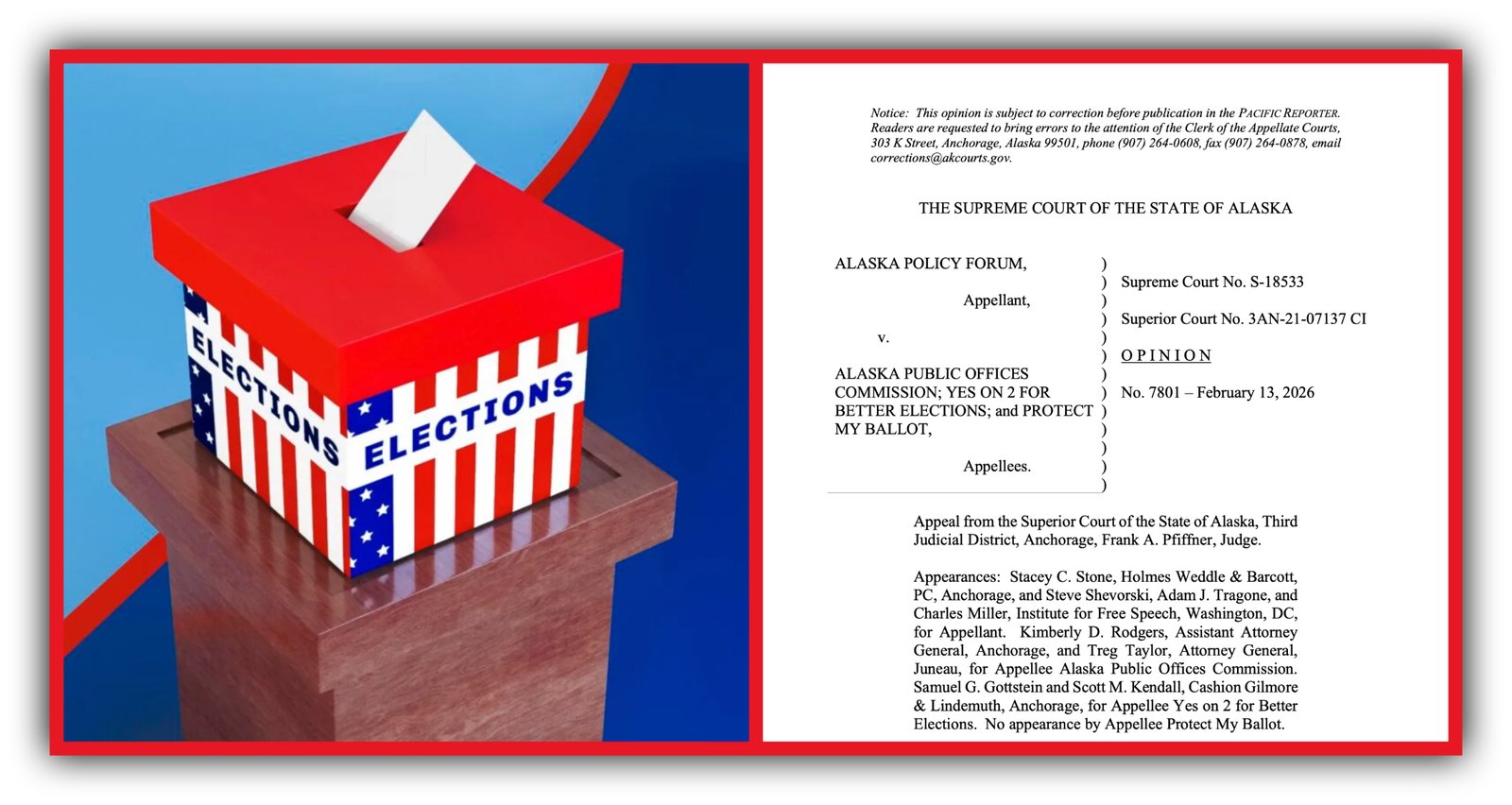
Alaska voters just got a reminder that campaign finance rules are very real and they apply to organizations trying to influence elections, even through blog posts, videos, and press releases. On February 13, 2026, the Alaska Supreme Court issued Opinion No. 7801, fully affirming a ruling by the Alaska Public Offices Commission (APOC) against the Alaska Policy Forum (APF).
What this means: nonprofits and other groups in Alaska must follow the state’s campaign finance disclosure rules whenever they publish materials that clearly try to sway voters, such as opposing or supporting ballot measures. In APF’s case, this related to their 2020 efforts opposing ranked-choice voting, which was part of Ballot Measure 2.
What Happened
APF released a series of materials before the November 2020 election: A press release announcing their “Protect My Ballot” coalition, a video titled “Say No to Ranked Choice Voting,” an October press release claiming RCV “has no place in Alaska,” and a blog post calling RCV “disenfranchising.”
APOC found that APF failed to:
- Register with the state as a campaign entity
- Report $643 worth of staff time spent creating the materials
- Include “paid for by” disclosures on their communications
The Alaska Superior Court upheld these findings, and now the Supreme Court has confirmed them in full. The Court rejected APF’s arguments that the rules were too vague or violated their First Amendment rights.
Why This Is Important
The Supreme Court used the “express communication” test from federal case law: if a communication clearly tells voters to vote for or against a proposition, it counts as electioneering and triggers disclosure rules. APF’s materials were crystal clear. They directly urged Alaskans to vote no on ranked-choice voting.
The Court also clarified that small amounts of spending are not automatically exempt. That $643 in staff time? Not trivial. It matters enough to require reporting.
Vagueness and Free Speech Concerns
APF argued the law was vague and infringed on free speech. The Court disagreed. The rules only apply after a petition qualifies for the ballot, and they provide advisory guidance so groups know the boundaries. Transparency about who is trying to influence voters is considered a legitimate interest that outweighs minor burdens on speech. Even through blogs or social media.
Practical Takeaways for Alaskans
- Nonprofits and political groups must disclose spending and funding if their communications clearly advocate for or against ballot measures.
- Small or personal expenditures under $500 are still generally exempt, but larger amounts or coordinated efforts are not.
- Transparency trumps minor administrative burdens, meaning voters have the right to know who’s behind messages attempting to influence elections.
APF doesn’t face a penalty in this case, but the precedent is now set.
👉🏿 Any group in Alaska thinking about weighing in on a future ballot measure will need to be upfront about their spending and funding sources.
For voters, the takeaway is simple: You can expect a little more transparency about who’s funding campaigns and advocacy in Alaska, helping you make more informed choices at the ballot box.